Bent’s Old Fort National Historic Site lets you step back in time to an 1840s adobe trading post along the Santa Fe Trail. Here, American traders, trappers, and Native American tribes met for commerce on the frontier.
The fort is near La Junta in southeastern Colorado. This reconstructed site sits along the Arkansas River, which once marked the boundary between the United States and Mexican territory.
You’ll find living history demonstrations, guided tours, and interactive experiences that bring the era of westward expansion to life. The fort is about 80 miles from Pueblo and 90 miles from Trinidad, making it accessible for a day trip or as part of a longer regional exploration.
This guide covers everything you need to plan your visit, including operating hours, tour schedules, and what you’ll see inside the fort. You’ll also learn about the site’s historical significance and discover other nearby national historic sites.
Book Your Flight to Bent’s Old Fort
Quick Visitor Information
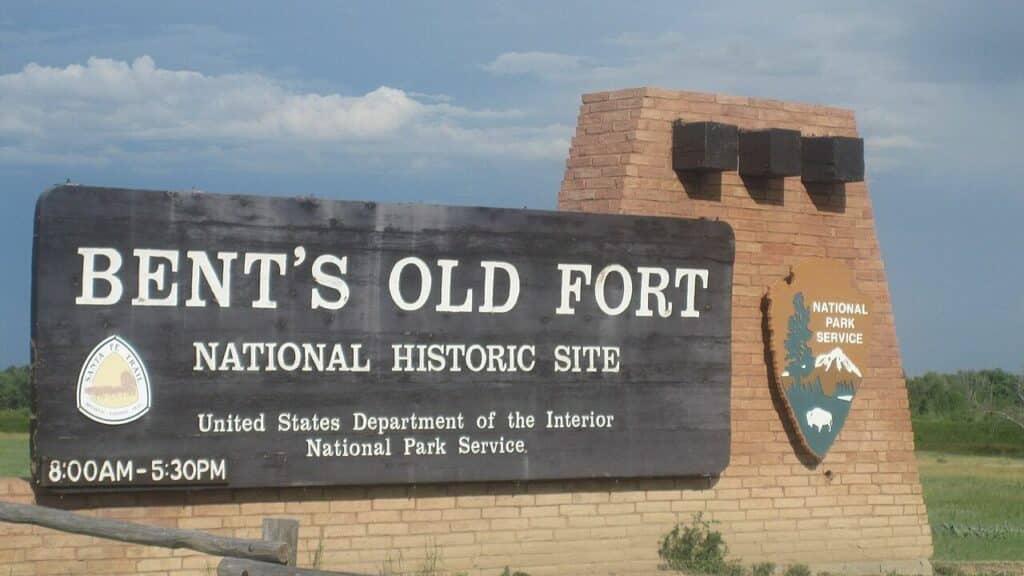
By Billy Hathorn – Own work, CC BY-SA 3.0, https://commons.wikimedia.org/w/index.php?curid=11360695
Location: Bent’s Old Fort National Historic Site is in southeastern Colorado, about 7 miles from La Junta along the Arkansas River.
Operating Hours: The site opens from Memorial Day through Labor Day, with guided tours daily at 10:00 am and 2:00 pm. Check the park’s event calendar for current hours and seasonal changes before your visit.
What You’ll Find: This reconstructed 1840s adobe trading post served as a crucial hub on the Santa Fe Trail. The fort brings together the history of traders, trappers, travelers, and the Cheyenne and Arapaho peoples who engaged in peaceful commerce here.
Visitor Services:
- Park store operated by Western National Parks
- Books, maps, travel guides, and educational materials for purchase
- Guided tours about daily life in the 1840s
- Self-guided exploration of reconstructed rooms and areas
Historical Context: In the 1840s, the Arkansas River marked the border between United States territory and Mexico. Bent’s Fort was the last American outpost before travelers crossed into Mexican territory.
Access: Some areas of the fort may be closed depending on staffing and maintenance. You can still explore several rooms and gain an authentic understanding of this frontier trading post.
Coordinates: Latitude 38.040498596, Longitude -103.429573828
The History of Bent’s Old Fort
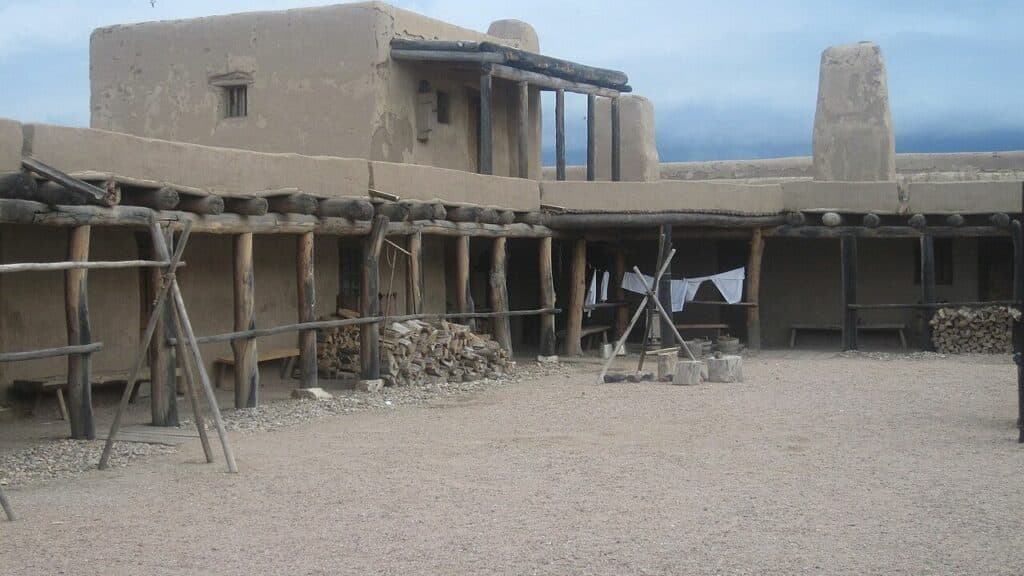
By Billy Hathorn – Own work, CC BY-SA 3.0, https://commons.wikimedia.org/w/index.php?curid=11360714
Brothers Charles and William Bent partnered with Ceran St. Vrain to build Bent’s Old Fort between 1833 and 1834.
The Adobe Trading Post sat along the Santa Fe Trail in what is now southeastern Colorado, about 8 miles east of present-day La Junta.
The fort was the only major permanent white American settlement in the region during its operation. It stood along the Arkansas River, which marked the border between United States territory and Mexico in the 1840s.
Primary functions of the fort included:
- Trading center for buffalo robes with the Southern Cheyenne and Arapaho tribes
- Rest stop for trappers and travelers on the Santa Fe Trail
- A diplomatic meeting place between different groups
- Military outpost during territorial expansion
The fort operated for about 16 years as an active trading post. It became known as the “castle of the Plains” and represented the last U.S. outpost before travelers crossed into Mexican territory.
The original fort closed in the late 1840s. The structure you see today is a reconstruction built in 1976 using similar materials and construction methods as the original.
Researchers used detailed drawings from period visitors, written descriptions, and archaeological findings to recreate the fort’s appearance.
The reconstruction is one of only 21 National Historic Landmarks in Colorado, recognizing its significance in the development of the state and the nation.
What to See at Bent’s Old Fort
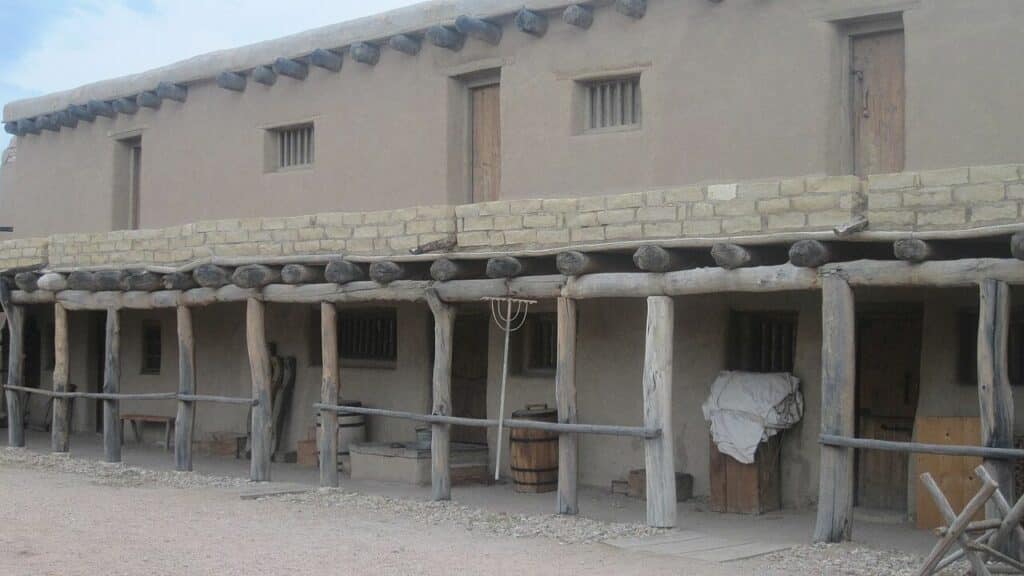
By Billy Hathorn – Own work, CC BY-SA 3.0, https://commons.wikimedia.org/w/index.php?curid=11360747
The reconstructed trading post lets you explore authentic rooms, exhibits, and demonstrations that bring the 1840s to life.
Staff members in historical clothing explain daily operations along the Santa Fe Trail and showcase period-accurate furnishings and trade goods.
The Reconstructed Adobe Fort
The fort you see today is a faithful reconstruction built in 1976, based on archaeological excavations and detailed drawings by an Army engineer. The adobe walls and towers replicate the materials and construction methods used in the 1830s when Charles and William Bent and Ceran St. Vrain first established the trading post.
You can walk through several rooms that show how the fort served as both a commercial hub and a temporary home for traders, trappers, and travelers. Its impressive size and strategic location along the Arkansas River earned it the nickname “castle of the Plains.”
The Central Plaza
The courtyard is the heart of the fort where most daily activities happened. This open-air space is surrounded by rooms and workshops that housed trading and living operations.
Native American tribes, especially the Cheyenne and Arapaho, met with traders here to exchange furs and goods. The plaza provided neutral ground for peaceful commerce between different cultures.
Trade Rooms and Storerooms
Several rooms display the types of goods that passed through this trading post. You’ll see reproductions of trade items like blankets, tools, beads, and other merchandise that attracted Native American traders and mountain men.
The storerooms contain examples of furs, buffalo robes, and other items that traders collected for shipment east. Some rooms may be off-limits due to budget constraints, but you can still access enough areas to understand the fort’s operations.
Living History Demonstrations
Rangers and volunteers wear period clothing and demonstrate activities from the 1840s. You might see blacksmithing, cooking, or other crafts performed with authentic techniques and tools.
Living historians answer questions about daily life, trade practices, and the relationships between European-American traders and Native American communities. The demonstrations change throughout the year, so each visit may offer new experiences.
Guided tours run daily at 10:00 am and 2:00 pm from Memorial Day through Labor Day. These tours provide structured opportunities to learn from knowledgeable staff.
Santa Fe Trail Exhibits
The fort offers displays about the Santa Fe Trail and westward expansion. You’ll learn how this location served as a critical stop along the trade route connecting Missouri to Santa Fe.
Exhibits explain the fort’s role in facilitating commerce between 1833 and the 1840s. Maps and interpretive materials show the trail’s path and the fort’s strategic position. The park store sells books, maps, and educational materials about the Santa Fe Trail and the fort’s history.
Things to Do at Bent’s Old Fort
Guided tours are available daily and provide insights into life at the fort during the 1840s. These tours run at scheduled times and let you explore various rooms and areas with knowledgeable interpreters.
You can walk through the reconstructed adobe trading post and watch living history demonstrations throughout the site. These demonstrations are interactive and showcase daily activities from this important Santa Fe Trail outpost.
Self-guided exploration of the grounds, plaza, and surrounding trails lets you move at your own pace. You’ll see where traders, trappers, and Native Americans conducted business nearly 200 years ago.
The fort features multiple rooms open for viewing, including:
- Trading areas
- Living quarters
- Blacksmith shop
- Kitchen and dining spaces
- Storage rooms
Living history programs bring the 1840s to life through hands-on activities. These programs engage visitors, especially children, by offering interactive experiences.
You can browse the park store operated by Western National Parks, which sells books, maps, travel guides, educational games, and historical items related to the fort and Santa Fe Trail.
Photography opportunities are available throughout the fort’s adobe structures and surrounding landscape. The authentic reconstruction offers a genuine look at frontier trading post architecture and design.
Amenities and accessible areas may vary depending on staffing and budget, so some sections of the fort might be closed during your visit.
Is Bent’s Old Fort Worth Visiting?
Bent’s Old Fort National Historic Site gives you a unique glimpse into 1840s frontier life along the Santa Fe Trail. The reconstructed adobe trading post shows where traders, trappers, and indigenous peoples gathered for commerce and cultural exchange.
The reconstruction in 1976 used archaeological excavations and detailed drawings from an Army engineer who documented the original structure. This careful work creates an experience that closely matches what visitors would have seen during the fort’s operational years.
What makes the visit worthwhile:
- Living history demonstrations by rangers and volunteers in period costume
- Well-preserved rooms showing daily life at a frontier trading post
- Historical importance as a meeting point between U.S. territory and Mexico
- Educational programming about the Santa Fe Trail and westward expansion
The site offers guided, park ranger-led tours due to structural maintenance needs. This format enhances the experience, as knowledgeable rangers provide context and answer questions throughout your visit.
The location near La Junta in southeastern Colorado means fewer crowds than at more popular Colorado destinations. The park store offers books, maps, and educational materials to help you learn more.
For history enthusiasts and families, Bent’s Old Fort delivers educational experiences about frontier commerce and cultural interaction. The combination of authentic reconstruction, ranger expertise, and historical significance makes it a worthwhile stop when traveling through the region.
Tips for Visiting Bent’s Old Fort
Plan to spend at least two hours exploring the fort to fully appreciate the furnished rooms and working spaces. Costumed interpreters demonstrate period-appropriate activities like blacksmithing and cooking throughout the day.
The fort is near La Junta in southeastern Colorado, about 1.5 hours from both Pueblo and Trinidad. This area sees fewer visitors than other Colorado attractions, so you’ll likely enjoy a less crowded experience.
Before You Visit:
- Check the National Park Service website for current operating hours and any seasonal closures
- Bring water and sunscreen, as the plains environment offers limited shade
- Wear comfortable walking shoes for exploring adobe structures
- Allow extra time to browse the park store, which offers books, maps, and educational materials
The fort is interactive and welcomes families, school groups, and history enthusiasts. You can explore multiple rooms set up as they appeared in the 1840s for an authentic glimpse into frontier trading post life.
Some areas may be closed depending on staffing and budget. The accessible rooms still provide a comprehensive understanding of how the trading post functioned along the Santa Fe Trail.
Photography is permitted throughout the site, so bring your camera to capture the adobe architecture. The fort’s role as a meeting place for traders, trappers, travelers, and Native American peoples makes it a significant historical location worth documenting.
Consider visiting during special events or living history demonstrations for an enhanced experience.
Nearby Attractions
Several significant historic sites sit within driving distance of Bent’s Old Fort. Sand Creek Massacre National Historic Site is about one hour away and preserves the location of an 1864 tragedy.
Amache National Historic Site, also about an hour’s drive, commemorates a World War II Japanese American incarceration camp.
The town of La Junta serves as the nearest community to Bent’s Old Fort. You’ll find local restaurants, hotels, and basic services here.
The Koshare Indian Museum in La Junta showcases Native American art and cultural artifacts.
Additional Nearby Options:
- Comanche National Grassland offers hiking and wildlife viewing opportunities.
- John Martin Reservoir State Park provides fishing and water recreation.
- Historic downtown La Junta features local shops and dining.
Pueblo sits about 80 miles north of the fort. Trinidad is approximately 90 miles south.
Both towns offer additional lodging and dining choices if you plan an extended stay in the area.
The surrounding landscape remains much as it was in the 1840s. You can drive along portions of the original Santa Fe Trail route to see the terrain that traders and travelers once crossed.
The open prairie and the Arkansas River valley help explain why the fort was built in this specific location.

Cory is a website owner and content creator who enjoys fishing, history, coin collecting, and sports, among other hobbies. He is a husband and father of four.
Romans 15:4 For whatever was written in former days was written for our instruction, that through endurance and through the encouragement of the Scriptures we might have hope.