
Fort Necessity National Battlefield sits about 60 miles south of Pittsburgh in southwestern Pennsylvania. This small fort marks the site of a young George Washington’s first major battle and his only military surrender.
The site played a key role in starting the French and Indian War in 1754.
The Battle of Fort Necessity took place on July 3, 1754, when French forces and their Native American allies attacked Washington’s hastily built fort, leading to his surrender after hours of fighting in the rain.
This defeat shaped Washington’s future military career and changed the course of North American history.
Today, you can explore the reconstructed fort, walk the battlefield, and learn about the clash between British, French, and Native American cultures in the Ohio River Valley.
The site offers a look at colonial military life and the events that sparked a global conflict.
BOOK YOUR TRIP TO FORT NECESSITY
Fort Necessity Visitor Information
Fort Necessity National Battlefield is in Pennsylvania along what is now Interstate 40. The park grounds are open daily from sunrise to sunset all year.
Admission is free for everyone. The Visitor Center is where most people start their visit.
Inside, you can watch a film about the historic battle and check out exhibits about the site. Most folks spend about 1.5 to 2 hours seeing the main park areas, including the reconstructed fort and Mount Washington Tavern.
Main Attractions:
- Fort Necessity (reconstructed)
- Fort Necessity/National Road Interpretive and Education Center
- Mount Washington Tavern (open May through October)
- General Edward Braddock’s Grave
- Jumonville Glen
If you want to see everything, including Braddock’s Grave and Jumonville Glen, add another hour to your visit. Summer programs feature 18th-century weapons demonstrations—pretty cool if you’re into history coming alive.
The park tells two main stories: the Battle of Fort Necessity in July 1754, which started the French and Indian War, and the history of the National Road, America’s first federally funded highway.
The Visitor Center has info about the park, upcoming events, and educational programs. Staff are friendly and can help you plan your route through the historic sites.
BOOK YOUR TRIP TO FORT NECESSITY
The History of Fort Necessity
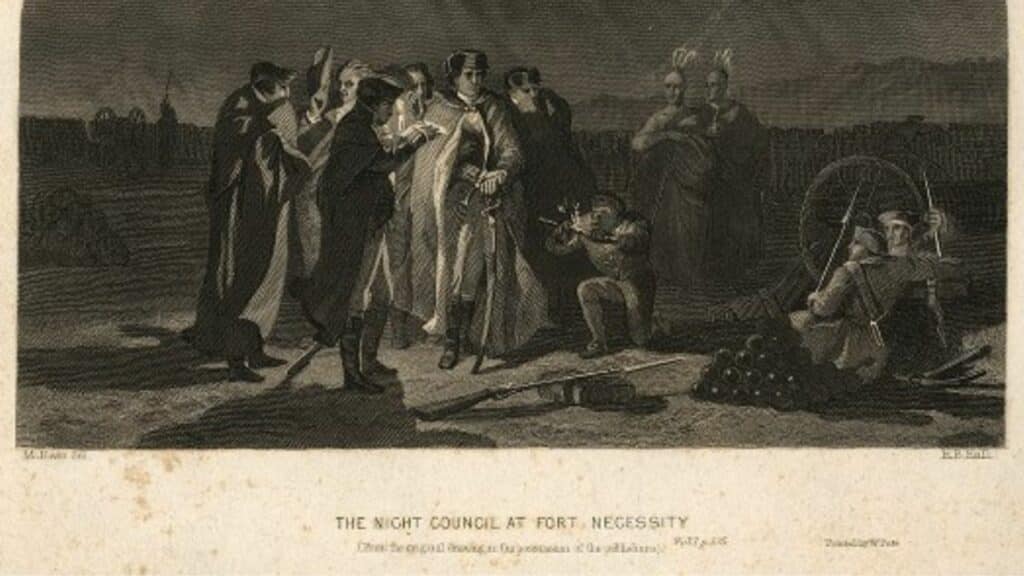
British colonial forces under a young George Washington built Fort Necessity in 1754. The fort sat in the Great Meadows of what is now Fayette County, Pennsylvania.
Washington put up this simple stockade, expecting the French to strike back after an earlier clash. The Battle of Fort Necessity happened on July 3, 1754.
This fight was one of the first conflicts of the French and Indian War, which grew into the Seven Years’ War. It was also the only battle Washington ever surrendered.
Key Events:
- Washington and his troops faced French and Indian forces led by Louis Coulon de Villiers
- The battle happened after the May 28 skirmish at Jumonville Glen
- Washington surrendered the fort to French forces
- The French burned Fort Necessity after the surrender
The day after surrendering, Washington’s troops retreated to present-day Cumberland, Maryland. The French destroyed the fort and then returned to Fort Duquesne.
This confrontation set the stage for a bigger war between England and France over North America. The battle helped spark a conflict that would reshape the continent.
Today, the site is preserved as Fort Necessity National Battlefield. You can explore the reconstructed fort and Great Meadow where the battle took place.
The site includes a visitor center, Mount Washington Tavern, and General Edward Braddock’s Grave. There’s a lot to learn here about this critical moment in early American history.
What to See at Fort Necessity
Fort Necessity National Battlefield features several key sites that tell the story of George Washington’s first military battle and the opening conflict of the French and Indian War.
You can explore the reconstructed fort, walk the battlegrounds, and learn about early American history through exhibits and trails.
The Reconstructed Fort
The reconstructed fort stands at the center of the battlefield where George Washington and his men fought on July 3, 1754. The small circular stockade shows just how basic the fortifications were.
You can walk inside the fort and get a sense of how cramped it was for Washington’s troops. The fort’s design reflects the rushed construction before the battle.
Split-rail fencing surrounds the circular stockade, and simple trenches mark where soldiers tried to shelter during the fight. This spot marks Washington’s only military surrender, which makes it pretty significant in American history.
Great Meadows Battlefield
The Great Meadows surrounds the fort and covers the actual battlefield. This open field gives you a clear view of the terrain that Washington and his men had to defend against French and Native American forces.
Walking paths lead through the meadow, helping you picture the battle’s layout. The meadow looks much like it did in 1754—just open grassland, not much cover at all.
This lack of protection made things tough for Washington’s forces. Interpretive signs throughout the area explain troop positions and key moments during the fight.
Visitor Center and Museum
The Fort Necessity Interpretive and Education Center houses exhibits about the battle and its historical significance. There’s a film here that gives context for the French and Indian War and Washington’s role in it.
The park store has books and materials if you want to dig deeper. Museum exhibits include artifacts from the battle period and interactive displays that explain the causes and consequences of the conflict.
The displays show how this battle led to a worldwide conflict between European powers. It’s a good idea to start here before heading outside to the other sites.
Interpretive Trails
Several trails wind through the battlefield and surrounding areas. These paths connect the fort to other significant locations and give you different perspectives of the battlefield.
The trails are short and accessible for most people. Signs along the trails explain what happened at specific spots during and after the battle.
Some paths lead to overlooks that show the strategic challenges Washington faced. Trails also connect to Mount Washington Tavern, a historic stagecoach stop on the National Road.
Jumonville Glen (if visiting both sites)
Jumonville Glen sits about seven miles from the main battlefield. This is where Washington’s forces ambushed a French scouting party on May 28, 1754, about six weeks before the Battle of Fort Necessity.
The skirmish at Jumonville Glen directly led to the larger conflict at Fort Necessity. A short trail leads to the glen where the encounter happened.
The site has monuments and markers explaining what went down during this controversial attack. French commander Joseph Coulon de Jumonville died here, which sparked international tensions.
Visiting this site helps complete the story of Washington’s 1754 campaign and shows how one small conflict escalated into war.
Things to Do at Fort Necessity
The Visitor Center is the starting point for most guests. Rangers are there to answer questions and share info about the site.
You can watch “Road of Necessity,” a twenty-minute film that covers the park’s history. A short paved path leads from the Visitor Center to the Great Meadow and the reconstructed Fort Necessity.
The walk is about 300 yards. This is where the French and Indian War began on July 3, 1754.
Historic Sites to Explore:
- Fort Necessity – Reconstructed fort and battlefield
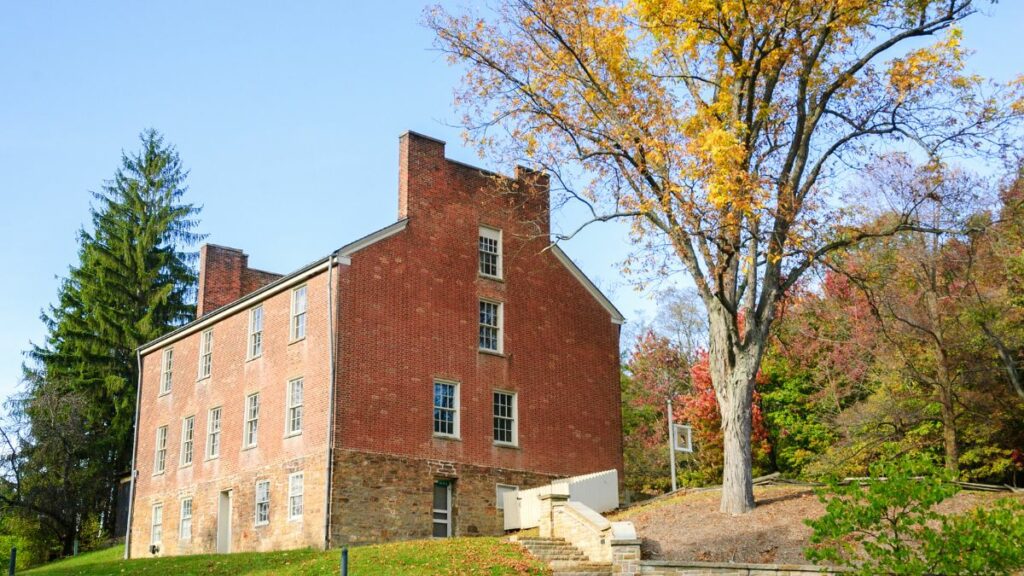
- Mount Washington Tavern – Stage stop from 1828 to 1855, now a museum about the National Road
- Braddock Grave – Monument and final resting place of British General Edward Braddock
- Jumonville Glen – Site of George Washington’s first encounter with the French
The Mount Washington Tavern is open May 1st through October 31st. You can take self-guided tours between 10 AM and 4 PM, seven days a week.
During summer, the park offers talks, tours, and historic weapons demonstrations. Check the Visitor Center for the full schedule.
Plan on 1.5 to 2 hours to see the main historic sites. If you want to visit Braddock’s Grave and Jumonville Glen, add another hour.
Hiking trails let you explore the area and learn about the events that happened there.
Is Fort Necessity Worth Visiting?
Fort Necessity National Battlefield gives you a chance to see where the French and Indian War began. It’s also where George Washington fought his first military battle and surrendered in July 1754.
The park includes several attractions that make it worth stopping by. You can explore a reconstructed fort, walk the battlefield trails, and check out a visitor center with museum exhibits.
The center features artifacts and displays that explain the battle’s importance in American history.
What to See at Fort Necessity:
- Reconstructed fort at the Great Meadow
- Visitor center with film and exhibits
- Mount Washington Tavern (open May through October)
- General Edward Braddock’s Grave
- Jumonville Glen historical site
- Hiking trails around the battlefield
The park tells the story of the opening battle of the French and Indian War and the history of the National Road, America’s first federally funded highway.
Families will find the site educational and pretty accessible. There’s even a playground for kids and ranger-led programs throughout the day.
The staff know their stuff and are happy to help. Fort Necessity fits nicely into a trip along the National Road between Cumberland, Maryland and Wheeling, West Virginia.
Most people spend a few hours exploring the grounds and learning about this key moment in history. The park’s compact size makes it easy to see everything without feeling rushed.
Tips for Visiting Fort Necessity
Plan to spend 1.5 to 2 hours exploring the main sites at Fort Necessity National Battlefield. That gives you enough time to see the reconstructed fort and Mount Washington Tavern.
The best months to visit are May through October. All park facilities are open, and the weather is usually comfortable for walking around outside.
Summer temperatures are typically in the 70s and 80s, but be ready for afternoon thunderstorms. Start at the Visitor Center to watch the film and check out the museum exhibits.
The center helps you understand the 1754 battle and Washington’s first military experience. There are artifacts and interactive displays that explain the site’s historical importance.
The park offers several key sites to explore:
- The reconstructed Fort Necessity in the Great Meadow
- Mount Washington Tavern (open May-October only)
- General Edward Braddock’s Grave
- Jumonville Glen
If you’re visiting with kids, grab a Junior Ranger Activity Book at the visitor center. Kids can complete activities while exploring and earn a Fort Necessity Junior Ranger badge.
Wear comfortable walking shoes for hiking the trails around the battlefield. The park has paths through the Great Meadow and to historical markers.
Bring water and sun protection, especially during summer. The Fort Necessity/National Road Interpretive and Education Center features exhibits about both 18th and 19th-century Pennsylvania.
This helps you understand the site’s dual significance as a battlefield and a stop along America’s first federally funded highway.
Nearby Attractions
Fort Necessity sits in the Laurel Highlands region of southwestern Pennsylvania. The area offers several interesting places to visit within a short drive.
Natural Attractions
Ohiopyle State Park is about ten miles north on Route 381. The park has hiking trails and some pretty amazing waterfalls.
If you like a bit of adventure, you can try whitewater rafting there. Laurel Caverns is another option, just six miles west of Farmington off Route 40, where you can take underground cave tours.
Historic Sites
The Mount Washington Tavern stands near Fort Necessity. This old inn once served travelers along the National Road.
Braddock’s Grave marks the burial site of British General Edward Braddock, who died in the French and Indian War. It’s a spot with a lot of history, if that’s your thing.
Architecture
Two homes designed by Frank Lloyd Wright are close to Fort Necessity. Fallingwater, probably his most famous work, sits twelve miles north on Route 381.
Kentuck Knob, another Wright creation, lies six miles north of Chalk Hill. Both are worth a look if you appreciate architecture or just want to see something unique.
Other National Park Sites
You can reach several National Park Service locations within three hours. Friendship Hill National Historic Site, Flight 93 National Memorial, and Johnstown Flood National Memorial are all options.
Gettysburg National Military Park and Antietam National Battlefield are also doable for a day trip. They’re not exactly next door, but you can get there without too much hassle.
If you’ve got time, the region offers wineries, recreational trails, and wildlife centers. There’s a mix of outdoor activities and cultural experiences, so it’s tough to get bored around here.

Cory is a website owner and content creator who enjoys fishing, history, coin collecting, and sports, among other hobbies. He is a husband and father of four.
Romans 15:4 For whatever was written in former days was written for our instruction, that through endurance and through the encouragement of the Scriptures we might have hope.