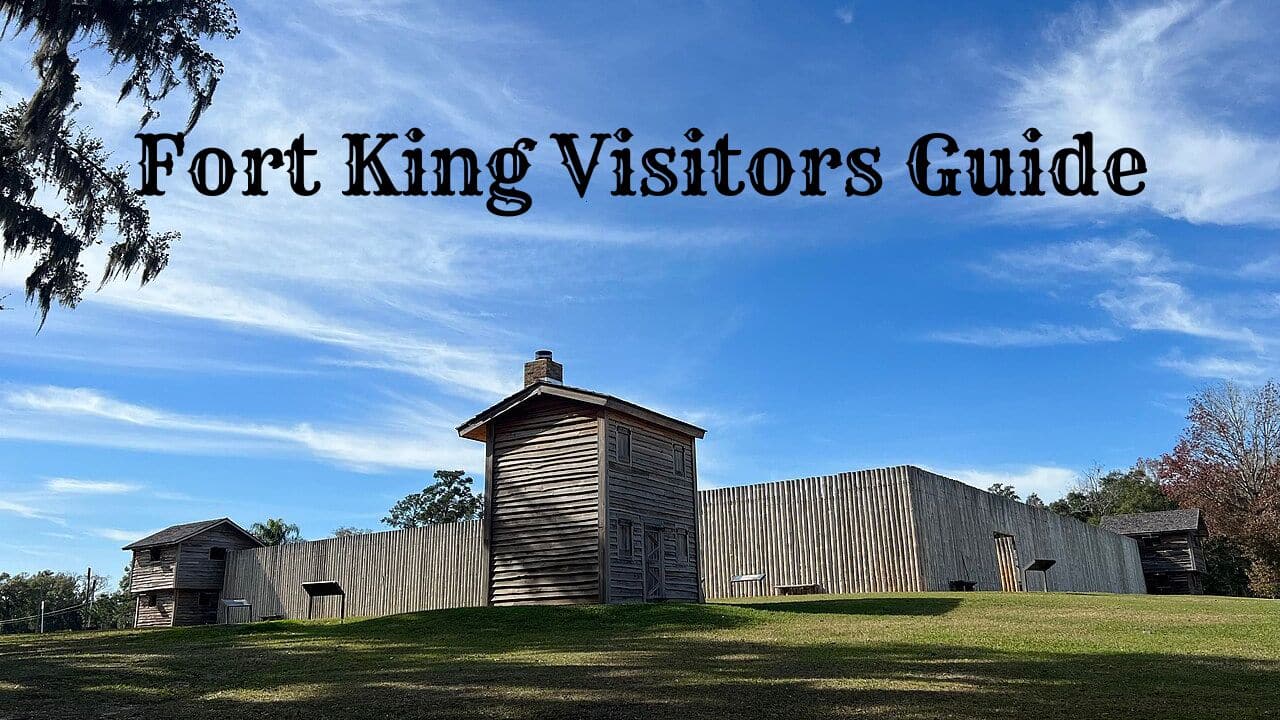
Fort King National Historic Landmark sits on 40 acres in Ocala, Florida, where a U.S. Army fort once stood during one of America’s most significant conflicts with native peoples.
This site marks the location of Fort King, built in 1827, which played a central role during the Second Seminole War from 1835 to 1842.
The fort was named after Colonel William King and served as a frontier outpost in what was then wild, uncharted Florida.
Today, you can explore a reconstructed fort, walk scenic trails, and visit a museum that brings this chapter of Florida history to life.
The site became a National Historic Landmark in 2004 and now offers living history events, archaeological programs, and educational exhibits year-round.
This Fort King travel guide covers everything you need to plan a visit, from what to see to nearby attractions to explore.
BOOK YOUR TRIP TO FORT KING HERE
Fort King Visitor Information
Fort King National Historic Landmark is at 3925 E Fort King St in Ocala, Florida.
The park covers 40 acres and is owned by the City of Ocala and Marion County.
Park Hours
- Grounds: Open 7 days a week from sunrise to sunset or 7 p.m., whichever comes first
- Visitor Center and Archaeology Resource Center: Fridays and Saturdays from 12:00 PM to 5:00 PM
What to See
Visitors can explore several features on the property.
The Visitor Center shares information about Fort King and Florida history, plus a library for research. The Archaeology Center displays artifacts discovered at the site.
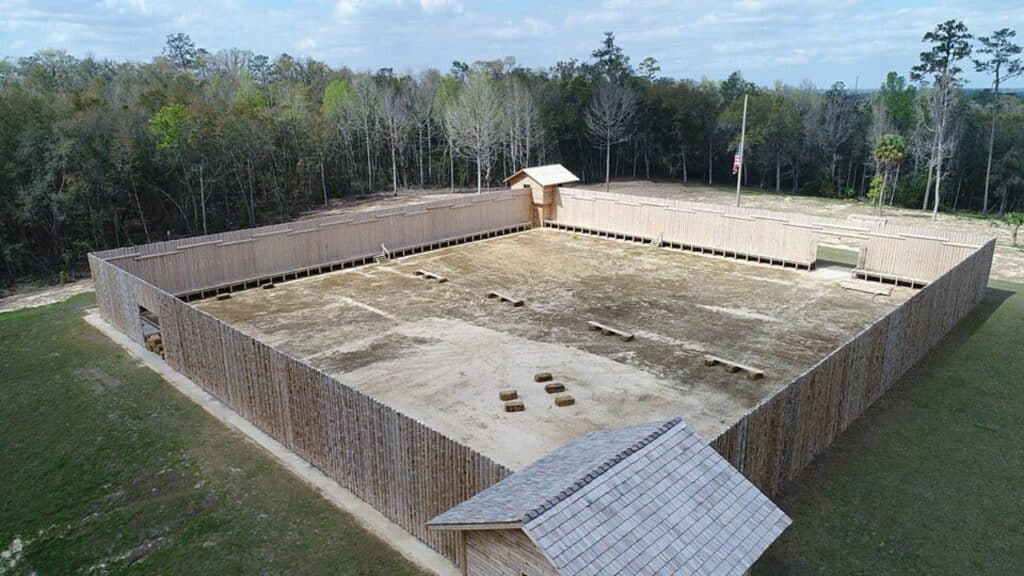
A replica of the original fort was built on the historic location in 2017. You can walk an interpretive trail winding from the fort down to Seep Spring and through a ravine filled with native plants.
The trail forms a one-mile loop through the wooded property.
Special Features
The site includes a Blacksmith Shop, a Chickee structure, and ongoing archaeological dig areas.
Fort King hosts living-history events throughout the year, including the annual Festival of Fort King, with demonstrations and educational programs.
Admission
The park is free to visit. Tours and educational programs are available for groups and school visits.
Visiting Fort King offers a chance to experience an important site from the Second Seminole War era while exploring nature trails in a historic setting.
BOOK YOUR TRIP TO FORT KING HERE
The History of Fort King
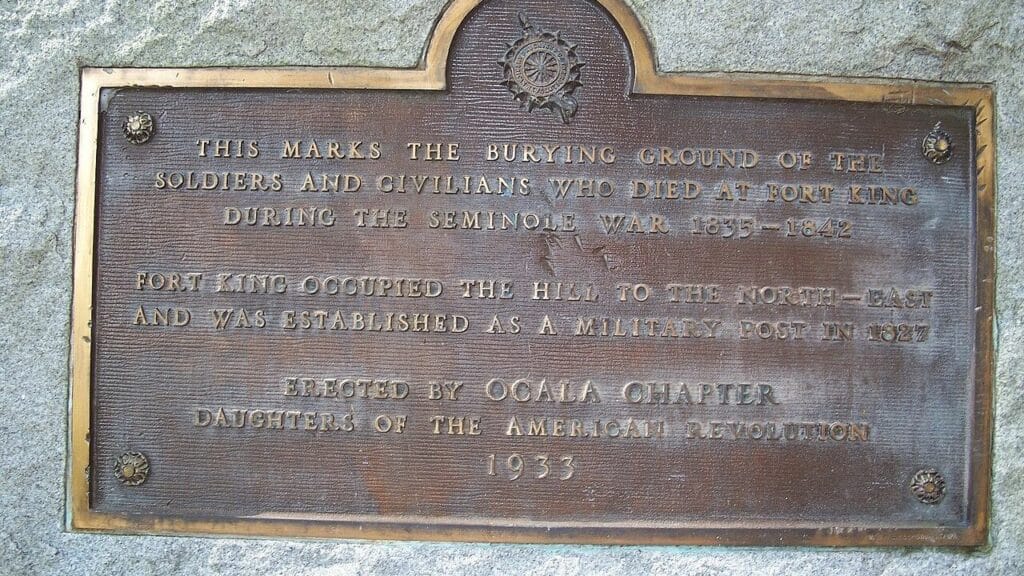
Fort King was established in 1827 and named after Colonel William King, who commanded the Fourth Infantry.
The U.S. Army built the fort using native longleaf pine trees as part of America’s effort to expand into Florida’s wilderness.
The fort served as a military outpost between settlers and the Seminole Indians. Government agents used this location to inform the Seminoles about their forced removal if they refused to leave Florida voluntarily.
The Second Seminole War (1835-1842) made Fort King a central location in American frontier history. Seminole War Chief Osceola first gained prominence at this site.
The U.S. Army kept a garrison at the fort during the seven-year conflict, which was the longest and costliest war between America and Native peoples.
The Seminoles abandoned and burned the fort in 1836. In 1844, the site of the former fort served as Marion County’s first courthouse.
The Ocala Chapter of the Daughters of the American Revolution bought the fort’s memorial property in October 1927. These founding members committed to promoting and protecting the site’s history for future generations.
Fort King received National Historic Landmark status on February 24, 2004, when Secretary of the Interior Gale Norton officially designated it.
A replica of the original fort was reconstructed at the historic site in 2017, allowing visitors to experience this piece of Florida’s frontier past.
What to See During Your Visit
Fort King National Historic Landmark spans 40 acres and gives visitors multiple ways to explore Florida’s frontier history.
The site includes a full-scale fort reconstruction, museum exhibits, nature trails, and active archaeological work.
The Reconstructed Fort
The reconstructed fort stands on its original 1827 location and was completed in 2017.
Builders used the same methods and materials as the U.S. Army did in the 1800s, including native longleaf pine timber.
You can walk through the fort’s wooden walls and explore the interior buildings. The structure shows how soldiers lived and worked during the Second Seminole War.
The fort includes officers’ quarters, enlisted men’s barracks, and storage buildings.
The fort’s elevated spot on the hill provides views of the surrounding landscape that soldiers once watched for threats.
Visitor Center and Museum
The Visitor Center usually serves as the starting point for tours. Staff members share information about Fort King’s role in Florida history and the Seminole Wars.
The museum displays artifacts from the fort’s active period and items recovered from archaeological digs.
Exhibits cover Colonel William King, Seminole War Chief Osceola, and the conflict between settlers and Seminole Indians.
The center includes a research library with books and documents about Florida’s frontier period.
Interpretive Trails
A trail system winds from the fort at the top of the hill down to Seep Spring and through a wooded ravine.
The trails cover about one mile and connect different parts of the 40-acre site.
Signs along the paths explain the area’s natural and historical features.
The ravine contains native plant species that grew here during the fort’s active years. The spring provided water for the fort’s garrison.
The trails pass through shaded areas and open sections. You can see how the landscape influenced the fort’s strategic value and daily operations.
Archaeological Site
Fort King maintains an active Archaeology Center where ongoing digs continue to uncover artifacts. The site has yielded thousands of items from the 1820s through 1840s.
You can view excavation areas and learn about archaeological methods. The finds include military equipment, household items, and building materials.
These objects provide evidence about daily life at the frontier outpost. Some artifacts show damage from the 1836 burning when Seminole forces abandoned and destroyed the fort.
Living History Programs and Special Events
The annual Festival of Fort King brings the site to life with reenactors demonstrating 1830s frontier skills.
Participants show military drills, blacksmithing, cooking methods, and period crafts.
The Blacksmith Shop and Chickee (a traditional Seminole structure) host demonstrations throughout the year. These programs explain both settler and Seminole cultures during the fort’s active period.
Educational programs serve Marion County students and the public. The programs cover frontier life, the Seminole Wars, and archaeology techniques.
Special events pop up throughout the year and showcase different aspects of the site’s history.
Activities and Experiences
Fort King National Historic Landmark gives visitors a bunch of ways to explore Florida’s frontier history.
The 40-acre site features reconstructed fort structures that let guests step back into the 1800s era.
Living History Events
Throughout the year, the landmark hosts reenactments that bring the Second Seminole War period to life.
Costumed interpreters demonstrate military drills, cooking techniques, and daily activities from the frontier era. These events provide hands-on learning opportunities for all ages.
Educational Programs
The site offers guided tours that explain the fort’s role in American history. Field trip programs are available for school groups.
Educational activities focus on the complex relationships between the U.S. Army and Seminole people during the 1800s.
Self-Guided Exploration
You can walk scenic trails throughout the property. The paths lead to archaeological sites and interpretive displays.
A heritage garden shows crops and plants that people grew in the 19th century. The visitor center contains museum exhibits and archaeological displays.
Special Events
Fort King hosts community events such as the Festival at Fort King and the Summer Nights Lecture Series. These programs attract both residents and tourists to the historic site.
The landmark is open year-round for exploration. Visitors can contact the site at (352) 368-5533 for information about current programs and events.
Is It Worth the Trip?
Fort King National Historic Landmark offers a solid experience for history enthusiasts and families looking for an educational outing.
The 40-acre site provides a well-rounded visit with its replica fort, museum, and interpretive trails.
What Makes It Worth Visiting:
- A reconstructed fort built on the original 1827 site
- Museum with artifacts from the Second Seminole War
- Living history demonstrations and events
- Well-maintained trails through 40 wooded acres
- Free admission to the grounds
You can explore the replica fort, walk through a heritage garden, and visit a blacksmith shop. The Visitor Center contains extensive information about the fort’s role in Florida history.
The National Historic Landmark designation confirms the site’s historical importance. Fort King played a central role in the Second Seminole War and served as a key frontier outpost in the 1830s.
Best For:
- History buffs interested in Florida’s past
- Families seeking educational activities
- People who enjoy living history events
- Those wanting a short outdoor experience
The site works well for a two- to three-hour visit. It’s not a full-day destination, but it pairs nicely with other Ocala attractions.
The annual Festival of Fort King and special living history events add extra value for those who can time their visit accordingly.
Just a heads up—this is a smaller historic site. If you’re expecting a huge attraction, you might find it modest, but the quality of preservation and presentation makes it worthwhile for anyone interested in Florida’s frontier history.
Tips for a Smooth Visit
Fort King National Historic Landmark is open daily from sunrise to sunset or 7 p.m., whichever comes first.
The Heritage Center is open from noon to 5 p.m. Visitors should plan their arrival accordingly to allow enough time to explore the 40-acre site.
The landmark is located at 3925 E. Fort King St., Ocala, Florida 34470. Ample parking is available on-site for guests arriving by car.
What to Bring:
- Comfortable walking shoes for the mile-long trail circuit
- Water bottles, especially during warm weather
- Sunscreen and hats for sun protection
- Cameras for photos of the reconstructed fort and grounds
The site features wooded trails that wind through the property. Wear appropriate footwear for walking on natural paths.
The grounds include picnic facilities if you want to bring your own lunch.
Fort King hosts special events throughout the year, including living history demonstrations and educational programs. Checking the events calendar before visiting can help guests plan around workshops, reenactments, or festivals.
The annual Fort King Festival features battle reenactments, blacksmith demonstrations, and cannon firings.
Most programs and grounds access are free to the public. Some special workshops may charge a fee.
The site is family-friendly and welcomes visitors of all ages. Educational programs range from activities for children under five to adult workshops like basket weaving.
Nearby Attractions
Fort King National Historic Landmark sits near several standout attractions. If you’re looking for more to do, the area blends natural beauty with plenty of history.
Silver Springs State Park is just a few miles away. Those famous glass-bottom boats glide over crystal-clear springs, giving you a peek at the underwater world.
You can check out the Silver River Museum or rent a kayak and paddle down the river. The park opens at 8:00 am and closes at sundown, so there’s time to explore.
The Yearling Trail winds through Ocala National Forest and offers a unique hike. This 5.3-mile loop connects to Florida’s literary past, thanks to Marjorie Kinnan Rawlings’ classic novel.
You’ll pass old homesteads and a frontier cemetery along the way. There are even a few historical artifacts scattered near the trail.
Downtown Ocala is a good spot for shopping or grabbing a bite. The historic district still has preserved buildings and local markets, giving the area real character.
Ma Barker House stands in the Carney Island Recreation & Conservation Area. This landmark marks the site of the longest FBI shootout in history.
You can tour the house with a docent and see original furnishings from 1935. It’s a place that honestly feels frozen in time.
Frequently Asked Questions
Fort King National Historic Landmark covers 40 acres in Ocala, Florida. Here, you can wander through a reconstructed frontier fort from the Second Seminole War era and catch living-history demonstrations or educational programs.
What are the main things to see and do during a visit?
Walk through the reconstructed U.S. Army frontier fort, a key site from the Second Seminole War. The museum on-site displays artifacts and stories about the war and daily life at the fort back in the 1800s.
The blacksmith shop is always working, showing off old-school ironwork. Check out the heritage garden to see what folks used to grow and how they did it.
Trails wind through the property, letting you see the land as it once was. Living history demonstrations bring the 1800s to life in a way that’s hard to find elsewhere.
What are the visiting hours, admission fees, and parking options?
Fort King National Historic Landmark stays open all year. There’s plenty of free parking right on site.
The address is 3925 E. Fort King St., Ocala, Florida 34470. It’s an easy drive from anywhere in central Florida.
What historical events and people are most closely associated with the site?
Fort King played a crucial role in the Second Seminole War during the 1800s. The fort was a U.S. Army outpost in what was once the Florida Territory.
This spot is where Ocala got its start. The fort’s location made it a big deal for both the military and early settlers.
Are there guided tours, exhibits, or educational programs available?
The museum at Fort King has exhibits packed with artifacts and stories from the Seminole War era. You’ll find displays explaining daily life at the fort in the 1800s.
They run educational programs all year for different age groups. If you like hands-on learning, there are plenty of demos and activities about Florida’s frontier history.
Living history presentations show how soldiers and settlers lived in the past. The blacksmith shop is also a favorite for those who want to see metalworking up close.
What events, reenactments, or seasonal activities are scheduled throughout the year?
The annual Festival at Fort King draws crowds with Seminole battle reenactments and cannon firings. Blacksmiths showcase their skills, and other living-history presentations pop up throughout the event.
Pine Needle Basket Weaving workshops teach traditional crafts for $85 per person (ages 13 and up). These classes usually run from 10 a.m. to 5 p.m.
Pioneer Pals: Tykes at the Fort is a free program for kids 5 and under. It runs from 9 to 10 a.m. on select Thursday mornings in the summer.
Cast-iron cooking demos and even yoga sessions take place at the fort, which is a fun twist. Sometimes you can meet archeologists or join in other seasonal activities—it just depends on the time of year.
What trails or walking paths are available, and how long do they take?
Scenic trails wind through the 40-acre National Historic Landmark property. You can wander these paths to soak in the landscape and get a real sense of the natural environment that once surrounded the old fort.
The walking paths connect different features, such as the fort itself, the blacksmith shop, the heritage garden, and the museum. Trail lengths and difficulty levels change as you move around the property, so there’s a bit of something for everyone.

Cory is a website owner and content creator who enjoys fishing, history, coin collecting, and sports, among other hobbies. He is a husband and father of four.
Romans 15:4 For whatever was written in former days was written for our instruction, that through endurance and through the encouragement of the Scriptures we might have hope.