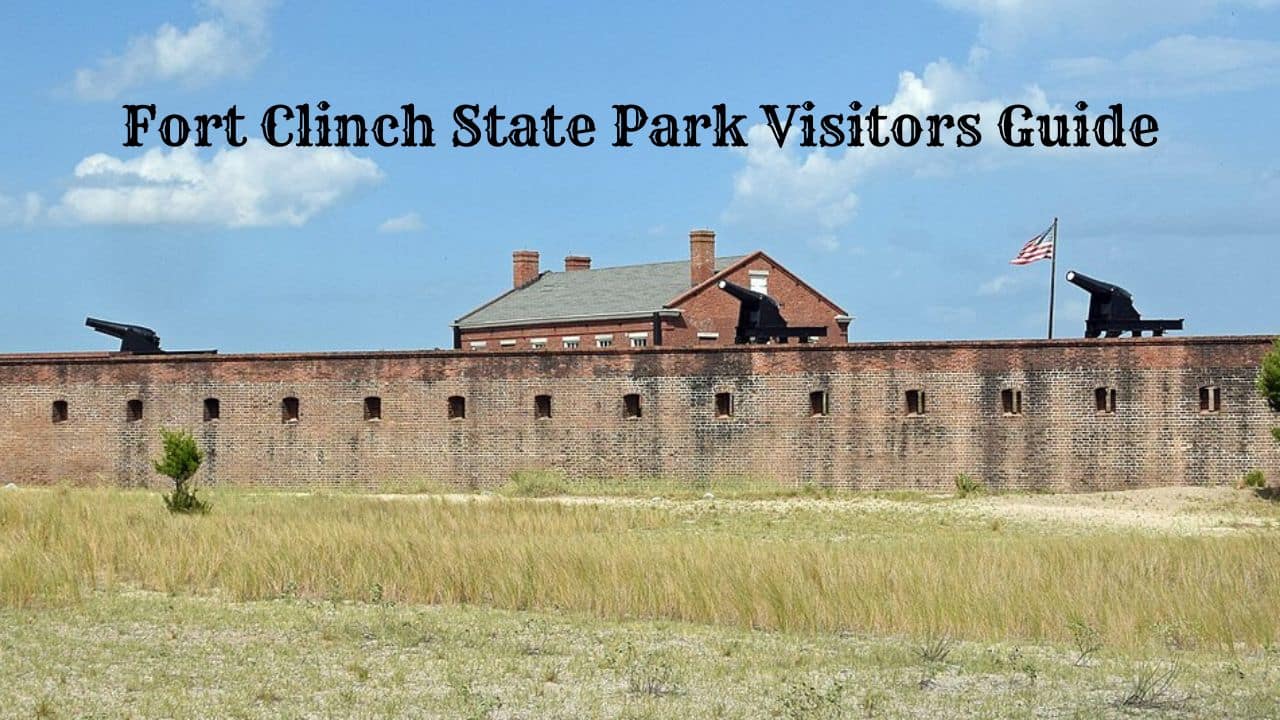
Fort Clinch State Park sits on Amelia Island’s north end, where a Civil War-era brick fort meets beaches, trails, and campgrounds.
The park covers about 1,400 acres. It’s open daily from 8 a.m. to sunset. Entry is $6 per vehicle for two to eight people.
People visit for the fort tours, but they end up staying for shark tooth hunting, surf fishing, and the bike paths winding through the maritime forest.
BOOK YOUR TRIP TO FORT CLINCH STATE PARK HERE
Fort Clinch State Park Visitor Info
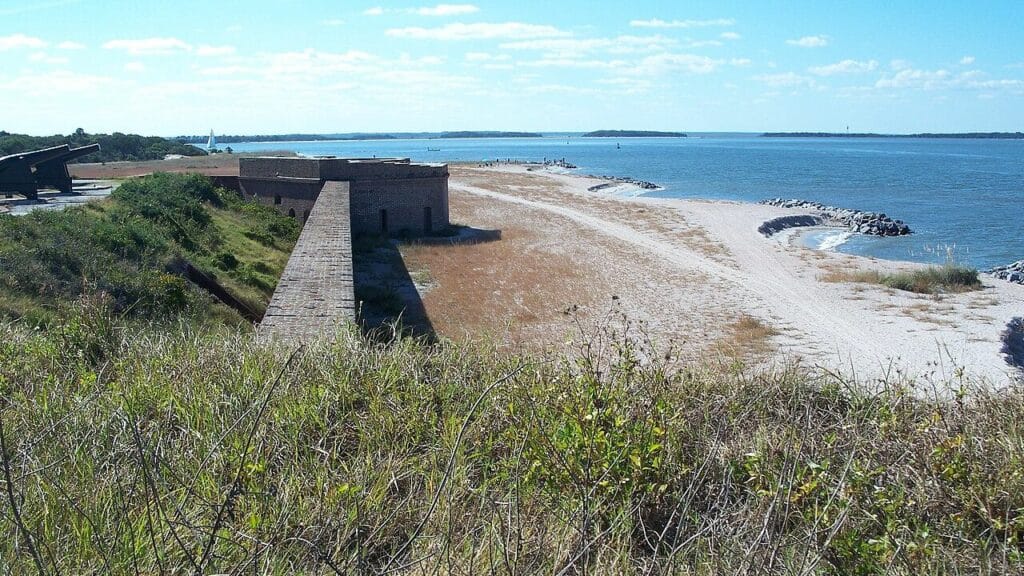
Fort Clinch State Park is at the northern tip of Amelia Island in Fernandina Beach, Florida. The park covers more than 1,400 acres, right where the Atlantic Ocean meets Cumberland Sound.
Hours
| Area | Open |
|---|---|
| Park grounds | 8 a.m. to sunset, daily |
| Fort Clinch | 9 a.m. to 5 p.m., daily |
| Visitor center | 9 a.m. to 4:30 p.m., daily |
| Ranger station | 10:30 a.m. to 5:30 p.m. |
Entrance Fees
- $6 per vehicle with two to eight people
- $4 for a single-occupant vehicle
- $2 for walkers, cyclists, and extra passengers
- $2.50 per person to tour the fort (ages 6 and up)
The fort fee is separate from park admission, so plan for both costs.
Planning the Trip
Most folks spend about one to two hours walking through Fort Clinch. If you want to hit the beach, the fishing pier, or the trails, add more time.
The park has six miles of shoreline. The shaded trail system is popular with hikers and cyclists. There are two campgrounds—one near the beach, the other along the river.
Living history programs happen on the first full weekend of each month, with reenactors portraying Civil War soldiers at the fort.
Pets are welcome on leash in most areas, but not inside the fort or on the beach. You’ll find restrooms, picnic tables, and a small park store near the entrance.
BOOK YOUR TRIP TO FORT CLINCH STATE PARK HERE
The History of Fort Clinch
People have guarded this spot for a long time. The first defenses near the mouth of the St. Marys River and Cumberland Sound went up in 1736.
Work on Fort Clinch itself started in 1847. It was one of many brick forts built along the coast after the War of 1812, part of what became known as the Third System of coastal defense.
The fort was never finished. When the Civil War began in 1861, only about two-thirds of the structure was complete, and no cannons sat on the walls.
Confederate troops held the fort first. General Robert E. Lee later ordered the island evacuated, and Union soldiers took over in March 1862.
Key dates at a glance:
| Year | What happened |
|---|---|
| 1736 | First defenses built on the site |
| 1847 | Construction of Fort Clinch begins |
| 1862 | Union troops occupy the fort |
| 1898 | Reopened during the Spanish-American War |
| 1935 | Becomes one of Florida’s first state parks |
By 1869, the fort sat empty. It came back to life briefly in 1898, when the Spanish-American War turned it into a barracks and ammunition depot.
The Army sold the property in 1926. Sand and storms wore down the brick walls over the following years.
Florida bought the site and made it a state park in 1935. The Civilian Conservation Corps arrived in 1936 and cleared out more than 10,000 cubic yards of sand and debris. They also built the museum, campground, and park roads.
During World War II, the fort served as a communications and surveillance post.
What to See at Fort Clinch

The heart of this 1,400-acre park is a brick fort from the 1800s, with restored soldier quarters, gun positions, and a museum. Costumed interpreters bring the daily routine of a Union garrison to life on the grounds.
The Historic Masonry Fort
Fort Clinch is a pentagon-shaped masonry fort at the northern tip of Amelia Island. It overlooks the St. Marys River and Cumberland Sound, which separates Florida from Georgia.
Construction started in 1847. The fort was never finished, and it never saw a battle, though both Confederate and Union troops held it during the Civil War.
Visitors walk in through the sally port, the main gated entrance, and then explore the interior at their own pace. The parade ground sits in the middle, with brick buildings lining the walls.
Across the water, you can often see Cumberland Island National Seashore. Wild horses sometimes wander that shoreline.
Barracks and Soldiers’ Quarters
Several buildings inside the fort walls have been restored and furnished to show how soldiers lived in the 1860s. Rooms are open to walk through, with period furniture and everyday items.
Key spaces include:
- Enlisted men’s barracks — rows of bunks, footlockers, and simple bedding
- Officers’ quarters — separate, slightly more comfortable rooms
- Kitchen and mess area — cooking gear, cast iron pots, and a large hearth
- Blacksmith shop — tools used for repairs and metalwork
- Prison cells — small, plain rooms used for discipline
- Laundry and storehouses — supplies, barrels, and work areas
The rooms give a clear sense of how crowded and basic daily life was. Signs in each area explain what the space was used for.
Bastions, Ramparts and Cannon Positions
Five bastions sit at the corners of the fort. These angled points let defenders cover the walls from more than one direction.
Stairs and ramps lead up to the ramparts, the raised walkway along the top of the walls. From there, you get wide views of the river, the ocean, and the surrounding marsh.
Cannons line the walls and face the water. Whoever controlled this point could control ships moving in and out of Fernandina’s harbor.
The gun galleries below the ramparts are also open. Their thick brick arches were built to protect artillery crews.
Museum and Interpretive Exhibits
The visitor center near the fort entrance holds a small museum with displays on the fort’s construction, its Civil War role, and its use during the Spanish-American War.
Exhibits include:
| Display Topic | What Visitors Learn |
|---|---|
| Fort construction | Brickwork, engineering plans, and why the project stalled |
| Civil War occupation | Confederate control in 1861 and Union takeover in 1862 |
| Soldier life | Uniforms, rations, weapons, and daily duties |
| Park restoration | Civilian Conservation Corps work in the 1930s |
A short film plays in the visitor center and gives background before touring the grounds. Staff at the desk answer questions and hand out site maps.
Living History Programs
Interpreters in Union uniform work inside the fort throughout the year. They stay in character and describe garrison duty as if it’s still 1864.
On the first weekend of each month, a full garrison takes over the fort. Visitors can watch cannon firings, musket drills, cooking demonstrations, and blacksmithing.
Candlelight tours are offered on select Saturday evenings. Guides lead small groups through the fort by lantern, stopping at rooms where interpreters describe their roles.
These programs are included with park admission on regular days. Candlelight tours require reservations and a separate fee. It’s a good idea to check the park calendar before you visit.
Things to Do at Fort Clinch State Park
This 1,121-acre park at the northern tip of Amelia Island packs a 19th-century brick fort, three miles of shoreline, six miles of off-road trails, and 69 campsites into one place.
You can spend a morning walking through soldiers’ quarters and an afternoon hunting for shark teeth on the sand.
Tour the Fort
Construction on Fort Clinch began in 1847, and the fort was never fully finished. It changed hands during the Civil War and stands as one of the best-preserved 19th-century forts in the country.
Visitors reach it by driving the 3.3-mile park road, which ends at the visitor center. Inside the fort walls, you can walk through the kitchen, barracks, blacksmith shop, and prison, then climb to the ramparts for views of the St. Marys Inlet and Cumberland Island.
Park rangers dressed as 1864 Union soldiers often work the grounds and answer questions about daily life at the post. The visitor center also sells a small selection of fishing tackle and bait.
Explore the Beaches
The park has beach access on both the Atlantic Ocean and Cumberland Sound.
Swimming is allowed in the Atlantic south of the jetty only. There are no lifeguards, so check the beach warning flags at the welcome station and the main beach boardwalk before heading in. Swimming elsewhere in the park isn’t permitted because of strong currents and steep drop-offs.
Shell collectors and fossil hunters do well here. The areas north and south of the jetty rocks are popular for shells, while fossilized shark teeth turn up along the shoreline near the fort.
Tip: Plan a trip around low tide, when the most beach is exposed.
Anglers fish the surf, the inlet, and the jetties. Common catches include:
- Redfish
- Black drum
- Whiting
- Flounder
- Sheepshead
- Sea trout
- Mullet
You’ll need a Florida saltwater fishing license, and the park doesn’t sell them.
Hiking and Biking
A six-mile multi-use trail runs alongside the park drive, starting at the fort parking lot. It follows the road for about three miles, crosses over, and loops back.
The trail cuts through maritime forest and climbs ancient dunes, which makes it an intermediate ride. It’s one-way for cyclists and two-way for hikers, so riders should watch for people on foot. Helmets are required on this trail.
The Willow Pond Nature Trail sits midway along the park drive and circles a group of freshwater ponds. The short loop takes about 20 minutes; the longer one takes 45 to 50 minutes.
A ranger-led nature walk starts there Saturdays at 10:30 a.m., weather permitting. A quarter-mile trail also leaves from the west inlet parking area.
Cyclists who prefer pavement can ride the shaded park drive, though traffic is heaviest between 10 a.m. and 4 p.m.
Wildlife Watching
Fort Clinch is one of the first stops on the Great Florida Birding and Wildlife Trail. Over 100 bird species have been recorded here.
| Location | What visitors often see |
|---|---|
| Jetty boardwalk | Shorebirds, osprey, pelicans, dolphins, sea turtles |
| Willow Pond trail | Alligators, raccoons, songbirds, occasional bobcat |
| Egans Creek Overlook | Great blue herons, egrets, roseate spoonbills |
| Bird pavilion | Painted buntings and other migratory songbirds |
| St. Marys Inlet shore | Dolphins, and rarely, right whales |
Deer graze the grasslands near the fort and in the dunes during early morning and late afternoon. Gopher tortoises show up along the dune ridges when it’s warm.
With binoculars, you might spot wild horses on Cumberland Island across the water.
Camping and Picnicking
The park has two campgrounds with a total of 69 sites.
Amelia River Campground sits at the north end along the river. It has 42 shaded sites under live oaks draped in Spanish moss.
Atlantic Beach Campground offers 21 RV sites and six tent-only spots just steps from the ocean, surrounded by dunes.
Both campgrounds have a dump station, laundry, and heated accessible restrooms with showers. Each site comes with a fire ring, picnic table, drinking water, and 30- or 50-amp electric hookups.
Pets are welcome at both campgrounds.
Reservations open 11 months ahead through the Florida State Parks website or at 800-326-3521.
A primitive group camp near Egans Creek Marsh holds up to 75 people across three sites.
Day visitors can use the picnic area near the visitor center, which has grills, tables, and a playground. There’s another picnic area by the main beach boardwalk, but it doesn’t offer much shade.
Is Fort Clinch Worth Visiting?
For most folks, yeah, it’s worth a stop. The park packs a lot into one spot, and the entry fee covers both the fort and the natural areas.
Here’s what you get for the price of admission:
| Feature | What to Expect |
|---|---|
| The fort | A brick fort from the 1800s with rooms, galleries, and cannons you can walk through |
| Beaches | Shorelines for swimming, fishing, shelling, and hunting for shark teeth |
| Trails | Miles of paths for hiking and biking under live oaks |
| Wildlife | Gopher tortoises, painted buntings, and shorebirds |
| Camping | Sites near the beach and in shaded hammock areas |
The fort itself is the main draw. You can climb the walls, step into the soldiers’ quarters, and read displays about life during the Civil War.
Timing makes a difference. On the first weekend of every month, staff in period uniforms fire cannons and show off camp skills. If you’re after the full living history vibe, you’ll want to visit then.
The park sits on Amelia Island in the far northeast corner of Florida. It’s a bit of a haul from Orlando or Miami, but it works well as a day trip from Jacksonville.
Families with restless kids might find the fort tour short, but the beach and trails can fill the rest of the day.
History buffs, birders, cyclists, and campers all find something to do here. If you’re only hunting for a swimming beach, you’ll find closer options elsewhere on the island.
Tips for Visiting Fort Clinch
A little planning helps you get the most out of the park’s 1,400 acres.
Timing matters. The fort and grounds get busiest on the first weekend of each month, when reenactors fire cannons and show off soldier skills. If you want a quieter tour, pick a weekday.
Mornings are usually cooler and better for biking the shaded trails. Afternoons are great for the beach.
What to bring:
- Water and snacks, since food options inside the park are limited
- Sunscreen and a hat for the open fort walls and beach
- Bug spray for the maritime hammock trails
- Closed-toe shoes for climbing stairs and walking uneven brick
- A small bag for shells and shark teeth
Fees are charged per vehicle at the entrance, with a separate admission for the fort itself. Cash isn’t always the fastest, so a card is handy.
Campers should reserve sites well ahead of time. Spots near the beach fill up quickly during spring and fall.
A few things worth knowing:
| Tip | Why it helps |
|---|---|
| Arrive early on holidays | Parking near the beach fills up |
| Check the tide chart | Low tide is best for shelling |
| Allow 45–60 minutes for the fort | Rooms and galleries take time to explore |
Pets are allowed on trails and in campgrounds on a leash, but they’re not permitted inside the fort or on the swimming beach.
Nearby Attractions
Fort Clinch sits on the northern tip of Amelia Island, so you’ve got plenty of options within a short drive.
Historic Fernandina Beach is about three miles south of the park entrance. The downtown area covers roughly 50 blocks of Victorian-era buildings, with shops, restaurants, and the Amelia Island Museum of History in the old county jail.
Centre Street cuts through the middle. Most people park once and walk the whole area.
Other spots worth adding to your trip:
| Attraction | Distance from Fort Clinch | What to Expect |
|---|---|---|
| Main Beach Park | ~4 miles | Public beach access, playground, mini golf |
| Amelia Island State Park | ~15 miles | Horseback riding on the beach |
| Egans Creek Greenway | ~3 miles | Free trails through marsh and wetlands |
| Cumberland Island National Seashore | Ferry from St. Marys, GA | Wild horses, ruins, undeveloped beaches |
| Little Talbot Island State Park | ~20 miles | Beaches, kayaking, camping |
Egans Creek Greenway is a good pick for anyone who likes the trails inside the park. It covers about 300 acres and is known for alligator and bird sightings.
Amelia Island also has a working shrimping harbor. Boat tours leave from the downtown marina and cover the Amelia River and nearby waterways.
For a longer day trip, Jacksonville is about 40 minutes southwest. There you’ll find a zoo, several museums, and the Jacksonville Landing riverfront area.
Frequently Asked Questions
People planning a trip to Fort Clinch State Park usually want details about gate hours, entry fees, camping reservations, and the park’s trails and wildlife.
Here are the basics you’ll want before arriving at 2601 Atlantic Avenue in Fernandina Beach.
What are the park’s hours of operation?
The park gates open at 8 a.m. and close at sundown, every day of the year. That’s the same schedule as most Florida state parks.
The fort itself keeps shorter hours, usually 9 a.m. to 5 p.m. daily. If you arrive late in the afternoon, head to the fort first, then explore the beach or trails afterward.
Campers and registered guests can enter and exit outside regular gate hours.
How much does admission cost, and are tickets required?
Entry is charged per vehicle, not per person. The standard rate is $6 for a vehicle with two to eight people, $4 for a solo driver, and $2 for anyone walking or biking in.
The fort charges its own admission of $2.50 per person, separate from the park entrance fee. It’s smart to bring cash for this part.
No advance tickets are needed for day use. You’ll pay at the ranger station near the entrance.
How can I reserve a campsite or cabin?
Fort Clinch has two campgrounds: the Atlantic Beach campground near the shoreline, and the Amelia River campground shaded by live oaks. Both offer sites with water and electric hookups.
Reservations go through Florida State Parks’ booking system, either online at FloridaStateParks.org or by phone. You can book up to 11 months ahead, and waterfront spots fill quickly in spring and fall.
The park doesn’t have cabins. A youth camping area is available for organized groups if you arrange it with park staff.
What are the best things to do during a visit?
Touring the fort is the main draw. You can walk through the soldiers’ quarters, kitchen, prison, and gun galleries, then climb to the ramparts for views across the St. Marys River into Georgia.
On the first weekend of each month, reenactors staff the fort as a Union garrison, firing cannons and showing off daily military routines.
Other popular activities include:
- Beachcombing for shells and fossilized shark teeth
- Fishing from the pier or surf
- Biking the six-mile paved park road
- Picnicking at shaded tables near the beach
Where can I find a map and directions?
Fort Clinch sits at the northeast tip of Amelia Island. The entrance is on Atlantic Avenue, just east of the Atlantic Recreation Center and about three blocks west of Main Beach.
From I-95, take exit 373 onto State Road A1A east, then follow signs through Fernandina Beach to Atlantic Avenue.
Printed maps are handed out at the entrance station. There’s also a downloadable version on the Florida State Parks website.
What hiking trails and wildlife viewing opportunities are available?
The park covers about 1,400 acres. You’ll find several miles of trails winding through this space.
The Willow Pond Nature Trail loops past freshwater ponds and into a patch of hardwood forest. Meanwhile, the Magnolia Trail weaves through maritime hammock, where live oaks reach out and create these dramatic, arching canopies.
If you’re into biking, there’s a six-mile off-road trail that runs next to the main park road. Hikers can use it too, so you don’t have to pick just one way to explore.
Gopher tortoises often wander along the sandy edges of the trails. Birdwatchers keep an eye out for painted buntings in spring and summer, and you might spot herons, shorebirds, or even a migrating warbler if you’re lucky.

Cory is a website owner and content creator who enjoys fishing, history, coin collecting, and sports, among other hobbies. He is a husband and father of four.
Romans 15:4 For whatever was written in former days was written for our instruction, that through endurance and through the encouragement of the Scriptures we might have hope.