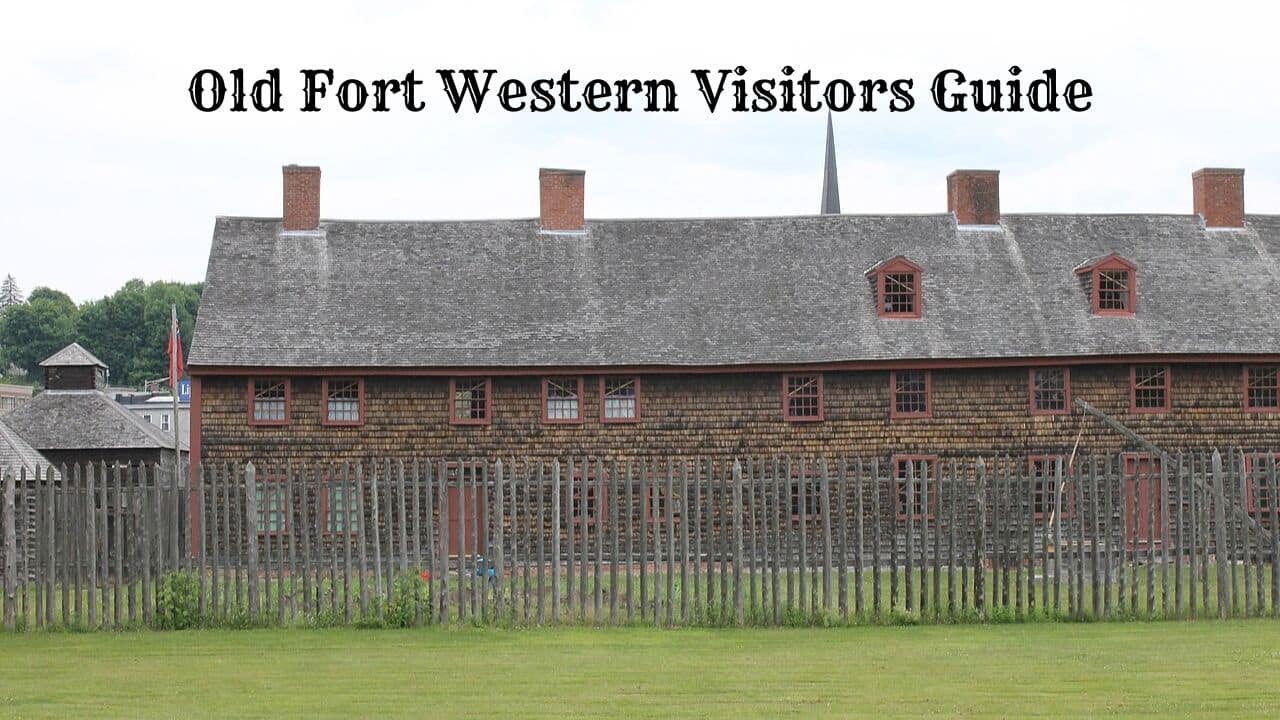
Old Fort Western sits on the east bank of the Kennebec River in Augusta, Maine. It is home to the oldest surviving wooden garrison building of its era in the United States, a two-and-a-half-story timber structure built in 1754.
For travelers passing through Augusta, the fort makes for an ideal 90-minute stop. A guided tour leads visitors directly through the original 1754 garrison, and admission is $15 for adults while children under 5 enter free.
Visiting the landmark makes the most sense once you distinguish original architecture from modern preservation efforts.
While the central main house and store date back to colonial times, the surrounding blockhouses, watch boxes, and palisade were reconstructed in the 20th century.
BOOK YOUR TRIP TO OLD FORT WESTERN
Old Fort Western Visitor Information
The fort is open only from late May to mid-October, on a reduced schedule outside July and August. Every visit centers on a guided tour, and the last one starts at 3:30 PM.
Where Is the Fort in Augusta?
Fort Western is at 16 Cony Street, Augusta, ME 04330, on the east side of the Kennebec River near Augusta City Hall. The phone number is (207) 626-2385.
The site stands where ships could no longer sail upriver, which is why it was built here. You’ll find a large parking lot behind the main entrance. Admission and the gift shop are just inside the wooden fence, in the north blockhouse.
When Is It Open, and How Much Is Admission?
The city runs the fort as a seasonal museum. The 2026 season schedule and admission rates are:
| Period | Days | Hours |
|---|---|---|
| Memorial Day weekend | Saturday to Monday | 10 AM to 4 PM |
| June | Friday to Monday | 10 AM to 4 PM |
| July and August | Daily | 10 AM to 4 PM |
| September to October 13 | Friday to Monday | 10 AM to 4 PM |
| Ticket | Price |
|---|---|
| Adults | $15 |
| Seniors (60+) | $13 |
| Veterans | $13 |
| Students | $10 |
| Children 5-14 | $8 |
| Children under 5 | Free |
| Family household (up to 5) | $35 |
| Active military | Free |
Group discounts are available. Hours and prices can change, so check the official Old Fort Western site before you drive over.
How Do Tours Work?
Tours are guided and move through the fort, store, and house with interpreters. Plan on about 75 minutes for the guided tour, plus extra time to wander the grounds afterward.
Because the last tour begins at 3:30 PM, arriving after 3 leaves you rushed. The first floor of the main house and the south blockhouse are wheelchair accessible, and strollers are allowed.
BOOK YOUR TRIP TO OLD FORT WESTERN
Why Was Fort Western Built?
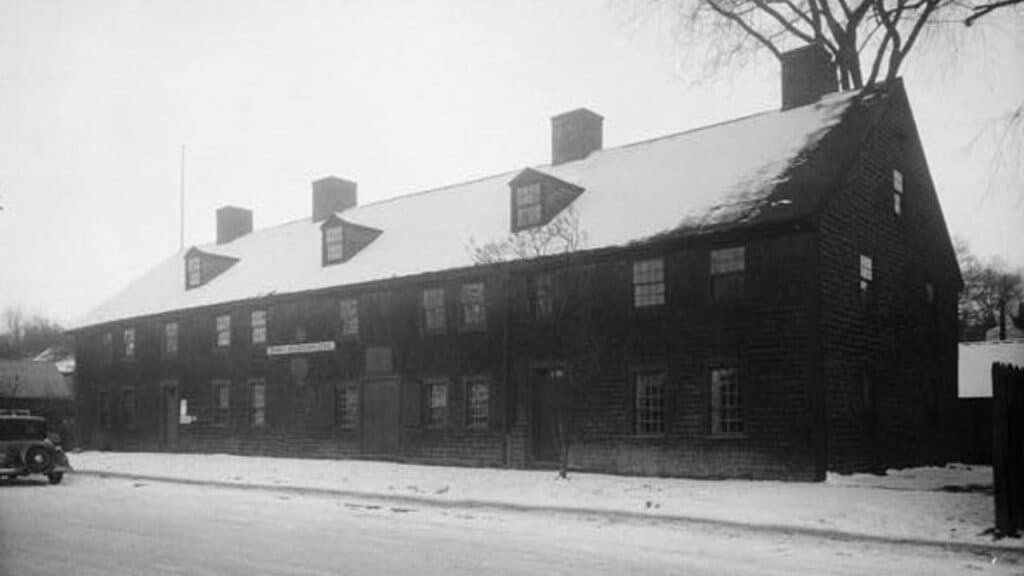
Fort Western was built in 1754 as a fortified supply depot and trading post during the French and Indian War. Its later role as a staging point for Benedict Arnold’s march on Quebec gave it a place in Revolutionary War history.
A Trading Post and Garrison on the Kennebec
A Boston land company called the Kennebec Proprietors made a deal with Massachusetts in 1754.
The Proprietors would build a fortified storehouse at Cushnoc (today’s Augusta), and the province would build Fort Halifax farther upriver in what is now Winslow.
A “garrison” here means a fortified building where soldiers lived and guarded supplies.
They chose the location because ships could sail up the Kennebec only as far as Cushnoc.
According to the City of Augusta’s history of the fort, supplies were unloaded here and moved 17 miles upriver on bateaux, which were flat-bottomed boats rowed by several men.
Captain James Howard commanded 23 men at the fort, including four of his sons.
The fort was never attacked. The colony decommissioned it in 1767, and Howard bought the property. His sons ran a store and blacksmith shop from the building for about forty years.
One common mix-up: the Plymouth Colony ran a trading post at Cushnoc starting in 1628. That earlier post burned in 1676. Fort Western itself dates to 1754.
Benedict Arnold’s 1775 Expedition
In September 1775, Benedict Arnold and 1,100 soldiers used the fort as a staging area before attacking Quebec.
The fort’s own history page notes that Arnold stayed at Captain Howard’s house upriver, while officers Daniel Morgan and Aaron Burr stayed with William Howard in the garrison.
It was the fort’s last military chapter. By then, the building worked mainly as a family store and home.
What Is Original and What Has Been Reconstructed?
The main garrison building from 1754 is original. Everything else you see around it was later rebuilt based on research.
After the Howard family moved out in the 1850s, the house was split into as many as eight tenement apartments for mill workers.
Maine’s Atlas Project explains that Howard descendants, the Gannett family, regained the property after the city took it in 1919, restored it, and gave it back to Augusta. It reopened as a museum on July 4, 1922.
The city lists the pieces this way:
- Original: the 1754 garrison (main house and store)
- Reconstructed in 1921: the two blockhouses, modeled on the original blockhouse still standing at Fort Halifax
- Reconstructed in 1988: the watch boxes
- Reconstructed: the palisade, or wooden stockade wall
Archaeological digs in the 1980s, tied to building the new City Hall, helped guide the reconstruction and furnishing.
What Can You See at the Fort?
The heart of the visit is the furnished 1754 house, surrounded by rebuilt defenses and set right on the river. Most of what you’ll see is inside the main house and the blockhouses.
The Original 1754 Main House and Store
The garrison is a plain, side-gabled building clad in wood shingles, with no exterior decoration. The Maine Historic Preservation Commission calls it a rare surviving example of an 18th-century military outpost in Maine.
Inside, rooms are set up to show how the Howards lived and traded. Look for William Howard’s original desk, a set of 1799 chairs donated by family descendants, and more than a dozen fireplaces.
Reconstructed Blockhouses and Palisade
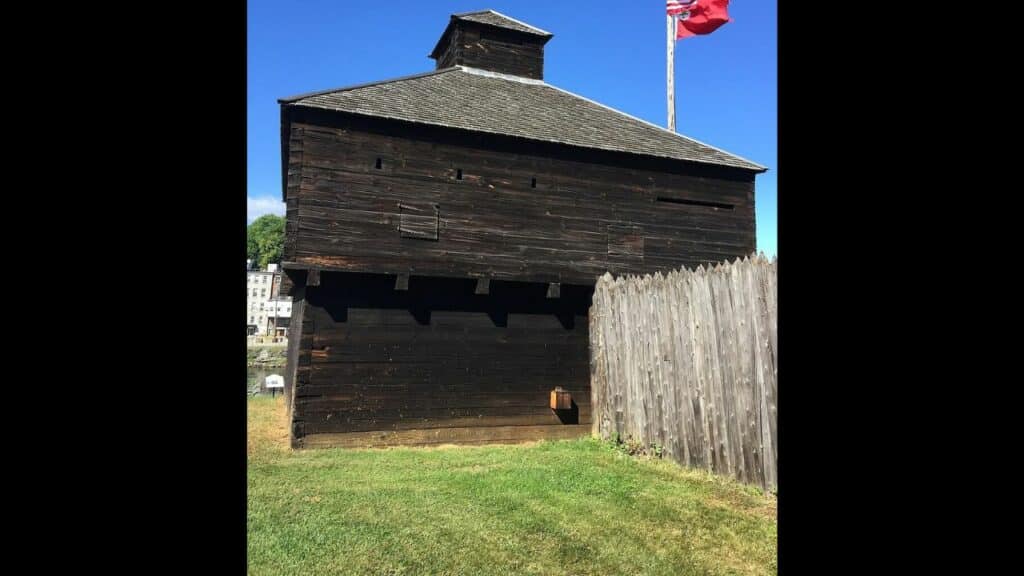
The blockhouses are square, two-story towers at the palisade’s corners. The second floor of one blockhouse displays four 4-pound cannons and a smaller 1-pound cannon.
Oars for a bateau hang on the walls, and murals show ships coming up the Kennebec from Boston. A rebuilt powder magazine, an 18-foot-deep storage pit for gunpowder found during the 1980s digs, is also on the grounds.
Period Rooms and Colonial Store
The rooms are furnished using a 1799 probate inventory, a list of everything in the house when Samuel Howard died. You’ll see a kitchen hearth, parlors, bedrooms, and a textile room with spinning wheels and looms.
In the store, copies of the five surviving Howard account books show what early settlers bought and how they paid. Upstairs, a recreated 1880s tenement apartment shows the building’s later, rougher life as housing for working families.
Living History Interpreters
Guides dress in period clothing and lead tours through the fort, store, and house, according to Visit Maine’s listing. Expect stories about the soldiers, the Howard family, and the tenement renters.
How lively a tour feels depends on the guide and the day. Asking questions helps; the interpreters know the building well.
The Kennebec River Setting
The river is the reason the fort exists. It sat at the head of navigation, the last point ships could reach, so goods had to switch to smaller boats here.
Standing by the palisade, you can see how close the building sits to the water. That view makes the supply-depot story easy to picture.
Things to Do During Your Visit
Beyond the tour, you can catch craft demonstrations, attend seasonal events, try colonial games, and browse the gift shop.
Take a Guided Living History Tour
Start with the guided tour, since it’s the main way to see the interior rooms. Budget about 75 minutes and arrive well before 3:30 PM.
Look for Demonstrations and Special Events
Blacksmith demonstrations are often held on weekends, and weaving demonstrations on the garrison looms happen about monthly.
The Independence Day celebration, when a cannon is fired 13 times for the original colonies, and Victorian Christmas are popular events. Check the official event calendar before planning around one.
Explore the Grounds and Shop for Souvenirs
Outside the north blockhouse, kids can try wooden games like Jacob’s Ladder and ball-in-cup. The gift shop sits in the north blockhouse by the entrance. There’s no food on site, but Water Street across the river has plenty of places to eat.
Is a Visit Worth It?
Yes, for travelers interested in early American history and for families with school-age kids. It’s a focused site, so a single visit covers it well.
Who Will Enjoy the Experience Most?
History fans get the most out of it. Few places let you walk through a building this old that still stands on its original spot.
Families with kids around 6 to 14 do well here thanks to the cannons, games, and hands-on rooms. Toddlers may get restless on a long guided tour. Visitors seeking a large outdoor fort with earthworks may find the site smaller than expected.
Tips for Timing and Planning Your Visit
- Go in July or August if you want any day of the week; in other months, plan for Friday to Monday.
- Arrive by early afternoon so you don’t miss the 3:30 PM last tour.
- Use the $35 family household ticket if you’re a group of four or five.
- Pair the fort with lunch downtown and a State House stop for a half-day in Augusta.
- Confirm hours, prices, and events on the official site before you go.
What Else Is Nearby?
Augusta’s other main sights are a short drive or walk away, across the Kennebec.
Downtown Augusta and the Kennebec River
Water Street, on the west bank, is the historic downtown, with restaurants and shops. The river trail along the Kennebec is a good stretch after the tour.
The Maine State House
The Maine State House, designed by Charles Bulfinch, sits on the west side of the river, a short drive from the fort. It makes an easy second stop for anyone following the state’s history from colonial outpost to capital city.
Frequently Asked Questions
Is Old Fort Western the oldest wooden fort in the United States?
It is widely described as the country’s oldest surviving wooden fort, and the museum calls its garrison America’s oldest wooden garrison. Keep in mind that only the 1754 main building is original. The blockhouses and palisade are 20th-century reconstructions.
Can you go inside the original building at Old Fort Western?
Yes. The guided tour takes you through the furnished rooms of the 1754 garrison, including the store, kitchen, parlors and upstairs chambers. The first floor is wheelchair accessible.
Are guided tours available at Old Fort Western?
Yes, guided tours are the standard way to visit and last about 75 minutes. The last tour of the day starts at 3:30 PM.
Is Old Fort Western a good place to visit with children?
Yes, especially for school-age kids. They can try colonial games, see cannons and a bateau, and explore hands-on rooms, and children under 5 get in free.
Is there parking near Old Fort Western?
Yes, there’s a large parking lot behind the main entrance on Cony Street. It’s close to the gate, which makes it easy with strollers.

Cory is a website owner and content creator who enjoys fishing, history, coin collecting, and sports, among other hobbies. He is a husband and father of four.
Romans 15:4 For whatever was written in former days was written for our instruction, that through endurance and through the encouragement of the Scriptures we might have hope.