
Fort Halifax State Historic Site in Winslow, Maine, protects the oldest blockhouse in the United States, built in 1754.
BOOK YOUR TRIP TO FORT HALIFAX HERE
Fort Halifax Visitor Information
Fort Halifax State Historic Site sits in Winslow, Maine, right where the Sebasticook River meets the Kennebec River.
The park is tiny, just about 0.75 acres in Kennebec County.
Location: 70-98 Bay Street (Route 201), Winslow, Maine. The entrance is just across the bridge, north of where Routes 201 and 137 meet.
Here are the basics at a glance:
| Detail | Information |
|---|---|
| Town | Winslow, Kennebec County, Maine |
| Size | Roughly 0.75 acres |
| Built | 1754 |
| Status | National Historic Landmark |
| Claim to fame | Oldest surviving blockhouse in the United States |
| Typical season | Late spring through fall |
The blockhouse is the only original piece left. You can walk right up to it, check out the interpretive signs, and tour at your own pace.
The grounds are open during daylight hours in the warmer months. Hours for the inside of the blockhouse change, so honestly, it’s best to check with the Maine Bureau of Parks and Lands before heading out.
What to expect on site:
- Picnic tables and open lawn space
- River views at the confluence of two rivers
- Historical markers explaining the fort’s role
- Occasional events, including Fort Halifax Days reenactments
Most folks spend 30 minutes to an hour here. It pairs well with a stop in nearby Waterville, which is just across the Kennebec.
BOOK YOUR TRIP TO FORT HALIFAX HERE
The History of Fort Halifax
People lived at this spot long before the fort appeared. Archaeological digs show Native Americans used this land at the river junction as far back as 5,000 years ago.
England and France fought over North America for most of the 1600s and 1700s.
When fighting broke out again in the 1750s, Massachusetts leaders worried the French could come down from Quebec and threaten settlements in the Kennebec River Valley.
Their answer was to build a fort. Major General John Winslow led about 600 men upriver from Fort Western in what is now Augusta, arriving on July 25, 1754.
The fort’s name honored the Earl of Halifax, a British Secretary of State at the time.
Winslow’s men cleared land, cut timber, sawed boards, made bricks, and hauled stones from the river. By early August, the fort could defend itself.
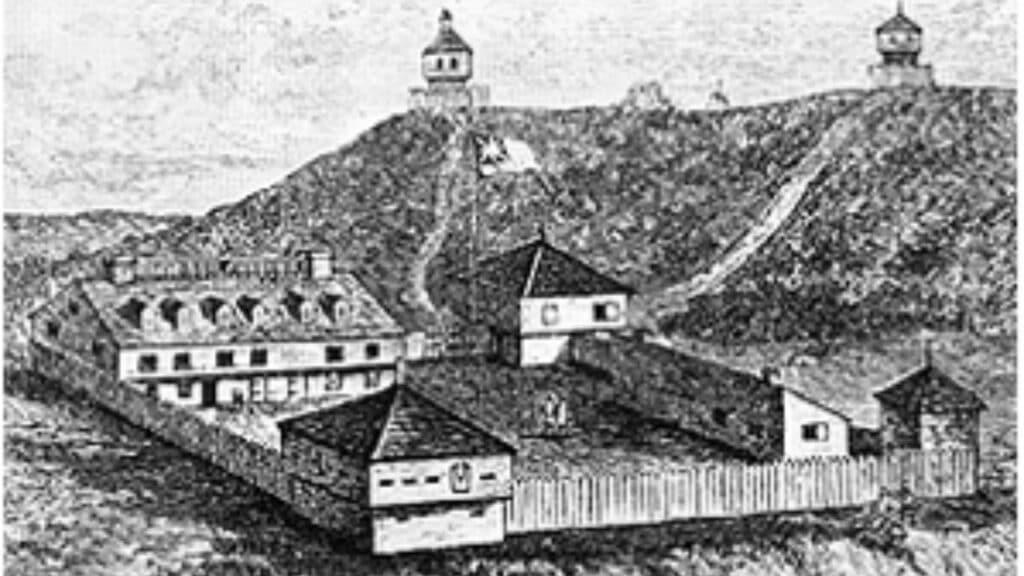
The finished fort had:
- Two main blockhouses
- A barracks
- A main building
- Two more blockhouses on a nearby hill
Only one blockhouse stands today. During the Revolutionary War, locals used it as a tavern, meeting hall, and dance space.
A flood on April 1, 1987, tore the building apart and sent logs 40 miles downstream to the Richmond-Dresden Bridge. Crews gathered the pieces and rebuilt the blockhouse on its original spot.
Now, it’s a National Historic Landmark and still the oldest blockhouse left in the country.
What to See at Fort Halifax
The 0.75-acre site in Winslow holds the oldest surviving blockhouse in the country. The ground once held a much larger fort from 1754, but that’s long gone.
Visitors find interpretive signs, sweeping river views, and open lawns perfect for a picnic.
The Historic Fort Halifax Blockhouse
The blockhouse is the big draw. It’s a two-story log building with an overhanging second floor, letting defenders shoot down at anyone near the walls.
English troops put it up in 1754 and 1755. It’s the only original piece left and has earned National Historic Landmark status.
The building’s story is wild. In April 1987, flooding on the Kennebec ripped the blockhouse apart and scattered its logs downstream—some floated as far as the Richmond-Dresden Bridge, about 40 miles away.
Crews tracked down the timbers and rebuilt the blockhouse right where it started. When it’s open in summer, you can step inside.
The Original Fort Site
The blockhouse sits on just a small patch of what used to be a sprawling military complex.
One of the builders sketched out what stood here in 1755:
- Two main blockhouses
- A barracks
- A main building
- Two more blockhouses on a nearby hill
Major General John Winslow arrived July 25, 1754, with about 600 men. They’d traveled five days from Fort Western in Augusta.
The crews cleared land, cut timber and pickets, sawed boards, made bricks, and hauled stones from the river. By August 7, the fort was ready for defense.
Troops garrisoned the site until 1766. Walking the grounds now, it’s easy to imagine how much space the old fort covered.
Interpretive Signs and Historic Markers
Panels around the grounds explain why Massachusetts built the fort and what daily life looked like for soldiers here.
The signs talk about the wider conflict between England and France. Massachusetts leaders feared French forces could travel down Quebec’s Chaudière River and threaten English settlements in the Kennebec Valley.
Other markers cover the blockhouse’s construction, its role in the French and Indian War, and the 1987 flood and rebuild.
The site is self-guided, so the signs are your tour. Reading them doesn’t take long, but it really adds context to what you’re seeing.
Kennebec and Sebasticook River Views
The fort sits exactly where the Sebasticook and Kennebec Rivers meet. That’s why the British picked this spot—it controlled river travel both ways.
The riverbank offers open views of the water and the far shore. Taking a stroll along the edge is honestly one of the best things to do here.
The spot draws anglers and paddlers too. Waterfowl and other wildlife are common, especially in the morning.
Park Grounds and Picnic Areas
Fort Halifax Park surrounds the historic site with mowed green space. It’s nice for walking, tossing a ball, or just sitting down for a bit.
Picnic tables near the river make it a decent lunch stop if you’re driving through central Maine.
| Detail | Information |
|---|---|
| Location | 70-98 Bay Street (Route 201), Winslow |
| Size | About 0.75 acres |
| Access | Across the bridge, north of the Routes 201 and 137 intersection |
The park sometimes hosts events. Fort Halifax Days brings French and Indian War reenactors, and there are occasional historical talks throughout the year.
Things to Do at Fort Halifax State Historic Site
The main attraction is the blockhouse. You can walk up to the wooden structure, read the interpretive signs, and get a sense of how it fit into the old fort.
The site sits right at the meeting point of the Sebasticook and Kennebec Rivers. That made sense for defense in 1754, and now it’s just a great spot for river views.
Common activities include:
- Self-guided touring – Signs explain the fort’s construction and its role in the French and Indian War.
- Walking – The park has open green space and paths along the riverbank.
- Picnicking – Tables and grassy areas make it a solid stop for lunch.
- Photography – The blockhouse and river views are popular subjects.
- Fishing and paddling – The nearby rivers draw anglers and boaters.
The site hosts events during the year. Fort Halifax Days features French and Indian War reenactments, with folks in period clothing showing off camp life and military drills.
Visiting Fort Halifax doesn’t take a whole day. The historic site covers about three-quarters of an acre, so most people spend under an hour at the blockhouse.
Many combine the stop with time in the larger park next door. The entrance is on Bay Street (Route 201) in Winslow, and there’s parking on site.
No admission fee, which is always nice. Hours are seasonal, so it’s smart to check the Maine Bureau of Parks and Lands website before heading out.
Is Fort Halifax Worth Visiting?
If you’re into colonial history, it’s a yes from me. The blockhouse here is the oldest one still standing in the country, dating all the way back to 1754.
That said, it’s a small spot—less than an acre—and the blockhouse is the only original part left.
Reasons to stop by:
- It’s a National Historic Landmark
- The park sits where the Sebasticook and Kennebec Rivers meet
- Picnic tables and river views make it a pleasant rest stop
- Admission is free, and it takes about 20 to 30 minutes to see
Things to keep in mind:
- The blockhouse interior isn’t always open
- No large exhibits or a full visitor center
- If you’re looking for a half-day activity, this might feel too brief
The site works best as a quick stop, not a main destination. Lots of people visit while driving between Waterville and other towns along Route 201.
Families with kids who like hands-on history should try to visit during Fort Halifax Days, when reenactors set up camp and show what French and Indian War life looked like.
The nearby Fort Halifax Park adds walking trails and open green space, so you’ve got more to do after checking out the blockhouse. Together, the two spots make the trip feel more complete.
Tips for Visiting Fort Halifax
The site sits at 70-98 Bay Street in Winslow, right along Route 201. If you’re coming from Waterville, just cross the bridge and look for the entrance on the north side, close to the junction of Routes 201 and 137.
Plan for a short stop. The historic site covers less than an acre, so most people spend maybe 20 to 45 minutes wandering around.
Here are a few things you might want to know before heading over:
- Season: The blockhouse interior usually opens during warmer months. In winter, you can still check out the structure from outside.
- Cost: There’s no admission fee.
- Parking: There’s a small lot near the entrance.
- Footwear: The grounds are grassy and slope down toward the river, so comfy shoes are a good call.
Photographers tend to get the best light early in the morning or later in the afternoon. That’s when the sun hits the timber walls just right.
Right next door, Fort Halifax Park has picnic tables, walking paths, and river access. If you want more than a quick history stop, you can easily combine both areas in one visit.
Fort Halifax Days—a French and Indian War reenactment—happens in some years. If you’re hoping to catch it, definitely check Winslow’s schedule ahead of time.
Restrooms aren’t always open year-round. You might want to stop in Waterville first, which is only a few minutes away and has restaurants and shops.
Nearby Attractions
Fort Halifax is in Winslow, just across the Kennebec River from Waterville. That puts several other interesting stops within a short drive.
Places within a few minutes:
- Downtown Waterville – Shops, restaurants, and the Waterville Opera House are about a mile away, just across the Ticonic Bridge.
- Colby College Museum of Art – Free art museum on the Colby campus, with American and contemporary collections.
- Head of Falls – A riverfront park in Waterville with walking paths and Kennebec River views.
The park connects to the Kennebec Messalonskee Trails network. Walkers can follow paths down to where the Sebasticook and Kennebec Rivers meet.
A few options a bit farther out:
| Attraction | Location | Approximate Drive |
|---|---|---|
| Maine State Museum | Augusta | 20 minutes |
| Old Fort Western | Augusta | 20 minutes |
| Lake George Regional Park | Skowhegan/Canaan | 25 minutes |
| Belgrade Lakes | Belgrade | 25 minutes |
Old Fort Western pairs well with a visit to Fort Halifax. It’s another 18th-century fort on the Kennebec, built two years before the Winslow blockhouse.
Anglers often stop along the Sebasticook River nearby. The river’s famous for its alewife run each spring, which draws eagles and osprey.
If you’re heading north, Skowhegan is about half an hour away. The town has a state fairground, a historic downtown, and more Kennebec River access.
Frequently Asked Questions
Fort Halifax was built in 1754 in Winslow, Maine. Its single remaining blockhouse is the oldest surviving wooden blockhouse in the United States.
The site sits where the Sebasticook River meets the Kennebec River. Now, it’s a small park with river views, picnic space, and interpretive signs.
What is the history of Fort Halifax?
Major General John Winslow arrived at the site on July 25, 1754, with about 600 men. He traveled five days from Fort Western, in what’s now Augusta.
His crews cleared the ground, cut timber, sawed boards, made bricks, and pulled stone from the river. By August 7, the fort was ready to defend.
The finished complex had two main blockhouses, a barracks, a main building, and two more blockhouses on a nearby hill. Troops stayed there from 1754 until 1766.
Only one blockhouse remains. In April 1987, a flood tore it apart and carried logs nearly 40 miles downstream, as far as the Richmond-Dresden bridge.
Crews recovered the timbers and rebuilt the structure on its original spot.
What is the historical significance of Fort Halifax?
In the 1750s, Massachusetts governed Maine. Leaders worried about French forces reaching the Kennebec Valley via Quebec’s Chaudière River, so they ordered Fort Halifax as a northern outpost to guard that route.
The site is a National Historic Landmark. Its blockhouse is the oldest one of its kind still standing in the country—a rare example of colonial military building methods.
What can visitors see and do at the site?
The main attraction is the blockhouse itself, a squared-log building with an overhanging upper floor. Interpretive panels explain how the fort was built and why it’s here.
The surrounding park has open lawn, picnic areas, and riverbank access. Many people just walk, watch the water, or eat lunch by the confluence.
Fishing and paddling draw people to this stretch of river, too. The grounds are open seasonally, and the blockhouse interior has limited hours, so it’s smart to check ahead.
Are there events or Fort Halifax Days celebrations held there?
Yes. Fort Halifax Days brings French and Indian War reenactors, plus demonstrations of period skills and camp life.
The town of Winslow also uses the park for community gatherings and summer events. Dates change every year, so it’s best to confirm with the town or the Maine Bureau of Parks and Lands.
Where is the park located, and is there a map available?
The entrance is at 70-98 Bay Street, also marked as Route 201, in Winslow. It’s across the bridge on the north side of the junction of Routes 201 and 137.
Waterville sits directly across the Kennebec River. Parking is on site, and you’ll find maps of the grounds on the Maine Bureau of Parks and Lands website and on signs near the blockhouse.
How does Fort Halifax relate to Old Fort Western and Fort Pownall?
All three forts formed a defensive chain that Massachusetts built along the Kennebec River and the Maine coast in the 1750s. Supplies traveled upriver from one post to the next, which honestly makes you wonder how challenging that must’ve been back then.
Old Fort Western, located in Augusta, was built in 1754. It served as the supply base for men moving north to construct Fort Halifax.
The place still stands today and even operates as a museum. If you haven’t visited, it’s worth a look.
Fort Pownall arrived later, in 1759, at Stockton Springs near the mouth of the Penobscot River. These three posts marked the outer edge of English control in the region during the French and Indian War.

Cory is a website owner and content creator who enjoys fishing, history, coin collecting, and sports, among other hobbies. He is a husband and father of four.
Romans 15:4 For whatever was written in former days was written for our instruction, that through endurance and through the encouragement of the Scriptures we might have hope.