
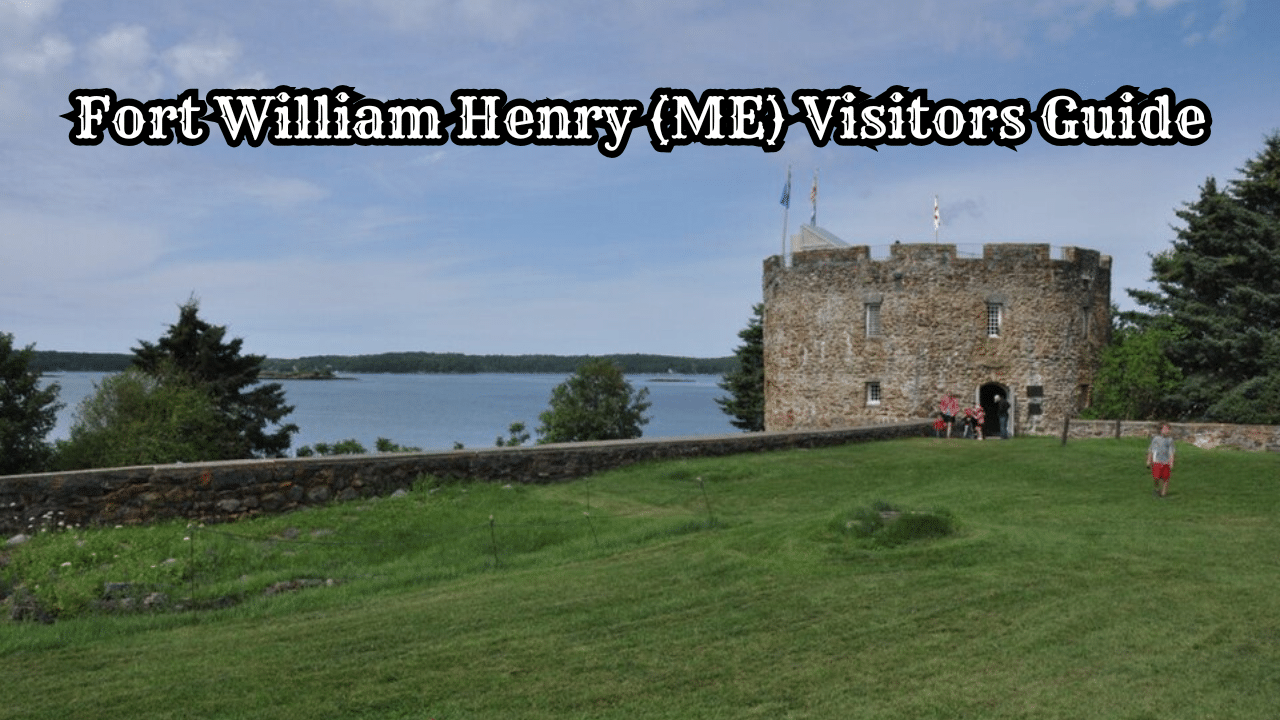
Fort William Henry is a reconstructed stone fort at Colonial Pemaquid State Historic Site in New Harbor, Bristol, Maine. It’s open to visitors during the warm-weather season.
The tower and low walls you see today were built in 1908. They’re meant to represent the original fort from 1692.
That first fort was one of the biggest building projects in early New England. Governor Sir William Phips spent about two-thirds of Massachusetts’ entire budget on it, using roughly 2,000 cartloads of stone for walls that reached 22 feet high.
It only lasted four years. French forces and their Native allies attacked in 1696, and Captain Pasco Chubb surrendered after the walls turned out to be weaker than they looked.
Now, the site mixes history with a relaxed coastal visit. Pemaquid Beach and Pemaquid Point Lighthouse are just a short drive away.
The on-site museum displays coins, pottery, and musket balls found in the area.
BOOK YOUR TRIP TO FORT WILLIAM HENRY HERE
Fort William Henry Visitor Information
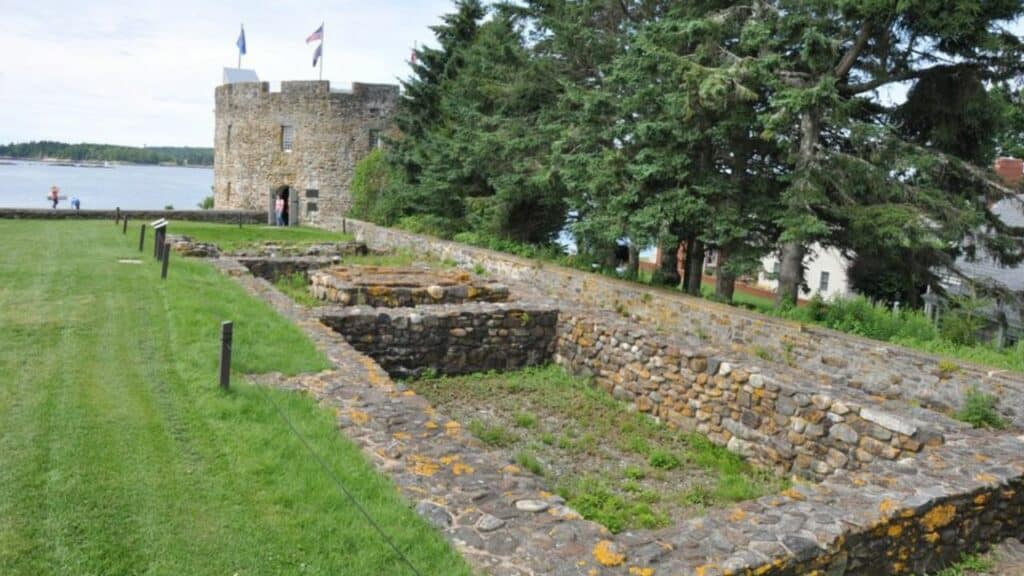
Fort William Henry sits inside Colonial Pemaquid State Historic Site in the New Harbor village of Bristol, Maine. The stone tower is a 1908 reconstruction built on the grounds of the old 1692 fort.
Location and contact details:
| Detail | Information |
|---|---|
| Address | Colonial Pemaquid State Historic Site, P.O. Box 117, New Harbor, ME 04554 |
| Park season phone | 207-677-2423 |
| Off-season phone | 207-624-6080 |
| Parking | Free on-site parking |
Visiting Fort William Henry makes for a good half-day stop. Most people spend an hour or two walking the grounds, but history fans often linger longer.
What visitors can see on site:
- The reconstructed stone bastion, with exhibit panels inside
- Low stone walls marking the original fort’s footprint
- A museum with artifacts like musket balls, coins, pottery, and old tools
- The Fort House, dating to the 1880s
- Archaeological remains of village buildings from the 1600s and 1700s
The top of the bastion gives wide views of Pemaquid Harbor and the water. Stairs lead up, so guests with mobility concerns might want to plan ahead.
The site is open seasonally, usually from late spring through early fall. Hours and fees can change, so it’s smart to call ahead or check the Maine Bureau of Parks and Lands website.
Pemaquid Beach and Pemaquid Point Lighthouse are both close by.
BOOK YOUR TRIP TO FORT WILLIAM HENRY HERE
History and Strategic Role
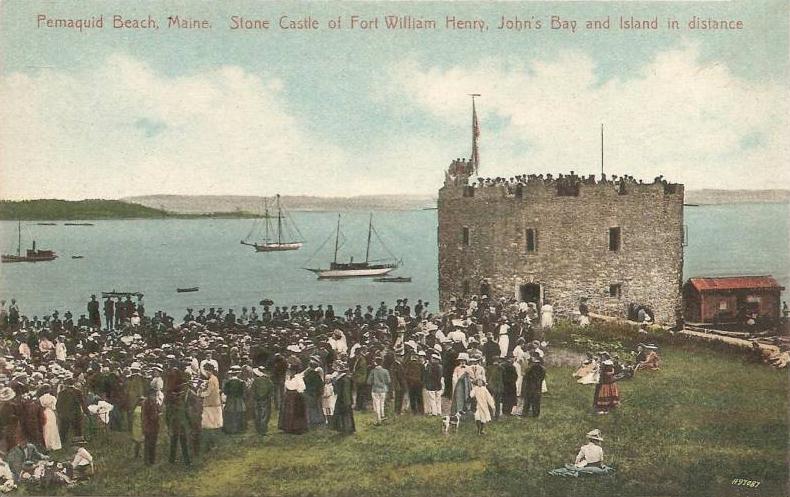
Fort William Henry was built in 1692 at Pemaquid Point, now part of Bristol, Maine. It was the third fort on this spot, replacing the wooden Fort Charles, which French and Wabanaki forces had captured in 1689.
The English wanted a strong post at the northeastern edge of their territory. Pemaquid sat between Massachusetts settlements to the south and French Acadia to the north, so it worked as a border outpost during King William’s War.
Massachusetts Governor Sir William Phips backed the project and spent about £20,000 on it. That was nearly two-thirds of the colony’s budget at the time.
Key features of the 1692 fort:
| Feature | Detail |
|---|---|
| Wall height | 10 to 22 feet |
| Stone bastion | About 29 feet tall |
| Stone used | Around 2,000 cartloads |
| Cannon | Nearly 20 |
| Garrison | About 60 soldiers |
On paper, it was the biggest fort in New England. In reality, it had serious flaws: the mortar was poor, the interior buildings couldn’t withstand attack, and the water supply lay outside the walls.
In August 1696, a combined French and Wabanaki force attacked. Facing larger numbers and heavy fire, Captain Pascho Chubb surrendered, and the fort was destroyed.
The English left Pemaquid after the loss. Later, Fort Frederick was built on the same site in 1729, and a replica of the stone bastion was built in 1908.
What to See
The site packs a lot into a small area. There’s a rebuilt stone tower you can climb, the outlines of the original 1692 fort, a museum of artifacts, and the traces of an old village.
The water views from the grounds are a nice bonus.
The Reconstructed Stone Bastion
The tall round tower is the first thing most people notice. It was built in 1908 as a reconstruction near where one of the original bastions stood.
You can go inside and climb to the upper level. Narrow window openings look out toward Pemaquid Harbor, and you can see why the English picked this spot.
The original fort’s stone walls ranged from about 10 to 22 feet high, and one tower reached roughly 29 feet. Reading those numbers is one thing, but standing next to the rebuilt version really puts the scale in perspective.
Inside, displays explain how the fort was built and why it fell so quickly.
Original Fort Foundations and Site Layout
Low stone walls on the ground mark the footprint of the 1692 fort. They form a large rectangle around the bastion, so walking the perimeter takes just a few minutes.
These lines help visitors picture the layout—where the walls ran, where the corners sat, and how much ground the garrison had to defend.
Interpretive signs along the walls explain what happened here.
Colonial Pemaquid Museum
The museum sits on the same grounds and houses objects unearthed over decades of excavation.
Items on display include:
- Musket balls and other military hardware
- Coins from the colonial period
- Pottery fragments from household use
- Early hardware like nails, hinges, and tools
Most pieces are small, but together they show what daily life looked like for soldiers, traders, and families here in the 1600s and 1700s.
Staff and exhibit panels connect the artifacts to the different forts built at Pemaquid over time. The museum is a good first stop, since it gives context before you walk the outdoor areas.
Archaeological Remains of the Colonial Village
Beyond the fort walls, excavated foundations mark where a village once stood. Archaeologists have uncovered cellar holes, building outlines, and remains of older fortifications from the 1600s and 1700s.
Markers identify individual structures, so you can walk between them and see how the settlement was arranged.
This part of the site is usually quieter than the tower. It rewards people who slow down and read the signs.
A cemetery on the property adds another layer, with headstones from the colonial era. Pemaquid was settled and rebuilt several times, and the ground here holds evidence from more than one of those attempts.
Coastal and Harbor Views
The grounds sit right on Pemaquid Harbor, and the shoreline is open for walking. Water views come standard with the visit.
From the tower’s upper level, the view stretches across the harbor and toward the river mouth. It’s easy to imagine a lookout spotting approaching ships from here.
Nearby stops make the trip even better:
| Nearby Site | Distance from Fort |
|---|---|
| Pemaquid Beach Park | About 1 mile |
| Pemaquid Point Lighthouse | About 5 miles |
Many visitors combine the fort with the lighthouse, since the drive between them is short. The beach falls roughly in between the two.
Things to Do at Colonial Pemaquid
Colonial Pemaquid State Historic Site packs several attractions into one small piece of land in Bristol, Maine. You can move between them on foot in an afternoon.
Climb the fort tower. The stone bastion of Fort William Henry holds interpretive panels and artifact displays. Its roof gives a wide view of Pemaquid Harbor and the surrounding water.
Tour the museum. The visitor center displays items unearthed on-site, including musket balls, coins, pottery, china, and early tools and hardware. The exhibits explain how English settlers, Native people, and the French all shaped this stretch of coast.
Walk the village ruins. Low stone foundations mark 17th- and 18th-century homes, a tavern, a jail, and a customs house. Signs help visitors match each outline to what once stood there.
Visit the Fort House. This building dates to the 1880s and stands near the fort walls.
See the cemetery. An old burying ground on the property holds headstones from the colonial era and later.
Other things to know:
| Detail | Information |
|---|---|
| Location | Bristol, Maine, on the Pemaquid Peninsula |
| Season | Late spring through early fall |
| Nearby | Pemaquid Beach, Pemaquid Point Lighthouse |
| Support group | Friends of Colonial Pemaquid |
The grounds are grassy and open, so plenty of people bring a picnic and eat near the shore. Pemaquid Beach Park is a quick drive away, which makes it easy to mix history with a swim.
Photographers often show up in the morning, when sunlight hits the tower and the harbor just right.
Is It Worth Visiting?
Fort William Henry is a quick stop, but it packs a surprising amount of history into a small spot. Most folks spend about an hour wandering the grounds.
Here’s what you actually get out of a visit:
- A climb up the stone tower. The bastion has exhibit panels and lets you look out over Pemaquid Harbor from the top.
- A museum on site. You’ll see artifacts dug up here, like musket balls, coins, pottery, and old tools.
- Archaeological remains. Stone foundations from 17th- and 18th-century village buildings are out in the open, marked so you can walk right among them.
- Free parking. The lot is easy to find, which is a relief if you’re wrangling kids.
Just know what the fort is not. The tower and walls were rebuilt in 1908, so they’re only a partial reconstruction of the 1692 fort.
The real ruins are still on the property, which means you get a mix of replica and original in one visit.
Who tends to enjoy it most:
| Visitor Type | Fit |
|---|---|
| History fans | Strong — ties into colonial New England conflicts |
| Families | Good — open grounds, short walk, water views |
| Photographers | Good — coastal setting near Pemaquid Beach |
| Travelers wanting a full day | Weaker — plan to pair it with nearby stops |
The fort sits close to Pemaquid Point Lighthouse and Pemaquid Beach. A lot of people fold it into a bigger day on the Bristol peninsula.
If you’re already driving that stretch of the Maine coast, this stop is easy to add.
Visitor Tips
Fort William Henry is inside the Colonial Pemaquid State Historic Site in Bristol, Maine. Parking’s free, and the lot is right by the entrance.
The site opens seasonally, usually from late spring through early fall. Double-check the hours before you head out, since the park phone number changes between open and off-season.
What to know before going:
- The tower has stairs to an upper level with views of Pemaquid Harbor.
- The museum displays items found on site, including musket balls, coins, pottery, and old tools.
- Low stone walls mark the outline of the original fort.
- Walking paths cross the grounds of the former village.
The grounds are mostly grass and gravel. You’ll want comfortable shoes for walking.
Wind off the water can make the fort feel chilly, even in summer. A light jacket isn’t a bad idea.
Most people spend one to two hours here. Families with kids often finish faster, especially if they’re mainly interested in the tower and water views.
| Nearby stop | Distance from the fort |
|---|---|
| Pemaquid Beach Park | About 1 mile |
| Pemaquid Point Lighthouse | About 6 miles |
| New Harbor village | About 4 miles |
Pairing the fort with Pemaquid Beach or the lighthouse can fill half a day. Both are short drives, and the roads are easy to follow.
Photographers might want to come late in the afternoon, when the light falls across the harbor side of the fort.
Nearby Attractions
Fort William Henry is in the village of New Harbor, part of Bristol. There are several other good stops within a few minutes’ drive.
Colonial Pemaquid State Historic Site
The fort is part of this larger site. You can walk among the stone foundations of old homes, taverns, and a jail from the 1600s and 1700s.
The site museum holds artifacts dug up by archaeologists—musket balls, coins, pottery, china, and old tools.
Pemaquid Point Lighthouse
This lighthouse stands about two miles south of the fort. Built in 1827, it sits on dramatic tilted rock that draws photographers and geology fans alike.
The keeper’s house now serves as the Fishermen’s Museum. There’s a small park around the tower.
Other Places to Visit
| Attraction | Distance from the Fort | What to Expect |
|---|---|---|
| Pemaquid Beach Park | Under 1 mile | Sandy swimming beach with changing rooms |
| New Harbor | About 2 miles | Working fishing harbor and boat trips to Monhegan Island |
| Damariscotta | About 12 miles | Shops, restaurants, and oyster farms along a tidal river |
| Rachel Carson Salt Pond Preserve | About 3 miles | Tide pools and a rocky shoreline trail |
Food Close By
The Contented Sole sits next to the parking area near the fort. It serves seafood with a view of Pemaquid Harbor and is open seasonally.
There are a few lobster shacks in New Harbor during summer. Their hours change a lot, so it’s smart to call ahead.
Frequently Asked Questions
The stone fort at Pemaquid Harbor raises many questions about its 1692 construction, the 1696 attack, and how the 1908 replica bastion fits in now.
The answers below cover the fort’s location in Bristol, its role in colonial New England, and what you’ll find at Colonial Pemaquid State Historic Site.
Where is Fort William Henry located in Maine?
Fort William Henry is in the village of New Harbor, part of Bristol, Maine. It’s within the Colonial Pemaquid State Historic Site, right near Pemaquid Harbor on the midcoast.
The mailing address is P.O. Box 117, New Harbor, ME 04554. Bristol sits about 15 miles south of Damariscotta, at the end of the Pemaquid peninsula.
What is the history of Fort William Henry?
They built the fort in 1692 under orders from Sir William Phips, governor of Massachusetts colony. It replaced Fort Charles, an earlier fort at the same spot that the French and their Wabanaki allies had taken.
Phips spent about £20,000 on the project—about two-thirds of the colony’s yearly budget. Crews hauled 2,000 cartloads of stone to raise walls between 10 and 22 feet tall, plus a bastion that reached 29 feet.
At its peak, the fort held close to 20 cannon and a garrison of about 60 soldiers. No other fort in New England matched it in size at the time.
In 1696, French forces and Native allies attacked. The mortar holding the walls together was poor, the interior buildings couldn’t survive bombardment, and the water supply sat outside the walls.
Captain Pasco Chubb surrendered after being badly outnumbered. The English abandoned Pemaquid again, and the 1908 partial reconstruction of the bastion and low walls is what stands there now.
What happened during the Fort William Henry massacre?
The famous Fort William Henry massacre didn’t happen in Maine. That event took place in August 1757 at a different Fort William Henry, on Lake George in New York.
After the British garrison there surrendered to French forces under Montcalm, Native allies of the French attacked the departing column. James Fenimore Cooper later used the episode in The Last of the Mohicans.
The Maine fort’s story is different. It fell in 1696, more than 60 years earlier, and ended with a surrender—not an attack on retreating troops.
What is Fort William Henry famous for?
People mostly remember it for its size and cost. No other fort in New England matched it in 1692, and few colonial projects chewed up such a big share of a colony’s budget.
It’s also known for how quickly that investment failed. A fort described as unusually strong lasted only four years.
The site was added to the National Register of Historic Places on December 1, 1969. Archaeologists have found artifacts from all three forts built on the ground, along with remains of the colonial village.
Can visitors take tours of Fort William Henry?
Yes, you can. Visitors walk through the reconstructed bastion, which has interpretive panels and artifact displays, and climb to an upper level for views of Pemaquid Harbor.
The grounds include the outlines of the fort walls, the village excavation site, a museum with items found on site, and an old burying ground. Staff at Colonial Pemaquid offer guided walks and programs during the summer season.
Just note: the Haunted History ghost tours and living history programs you might see online are offered by the Fort William Henry resort in Lake George, New York—not the Maine site.
What are the operating hours for Fort William Henry?
Colonial Pemaquid State Historic Site usually opens daily from late May until mid-October. The hours run from morning to late afternoon.
But honestly, the exact days and hours can change each year. It’s smart to call ahead and double-check before planning your visit.
You can reach the park during the season at 207-677-2423. In the off-season, try the Bureau of Parks and Lands at 207-624-6080.
Admission isn’t too expensive. There are different rates for adults, kids, and Maine seniors, and they collect fees right at the entrance during the season.

Cory is a website owner and content creator who enjoys fishing, history, coin collecting, and sports, among other hobbies. He is a husband and father of four.
Romans 15:4 For whatever was written in former days was written for our instruction, that through endurance and through the encouragement of the Scriptures we might have hope.