John Jacob Astor’s Pacific Fur Company built Fort Astoria, Oregon, in 1811, and it became the first American-owned settlement on the Pacific coast of North America.
It stood on the south bank of the Columbia River, about seven miles from where the river meets the ocean.
The fort did not stay in American hands for long. In 1813, during the War of 1812, the British North West Company bought it and renamed it Fort George. The Hudson’s Bay Company took it over in 1821 as part of the vast Columbia District.
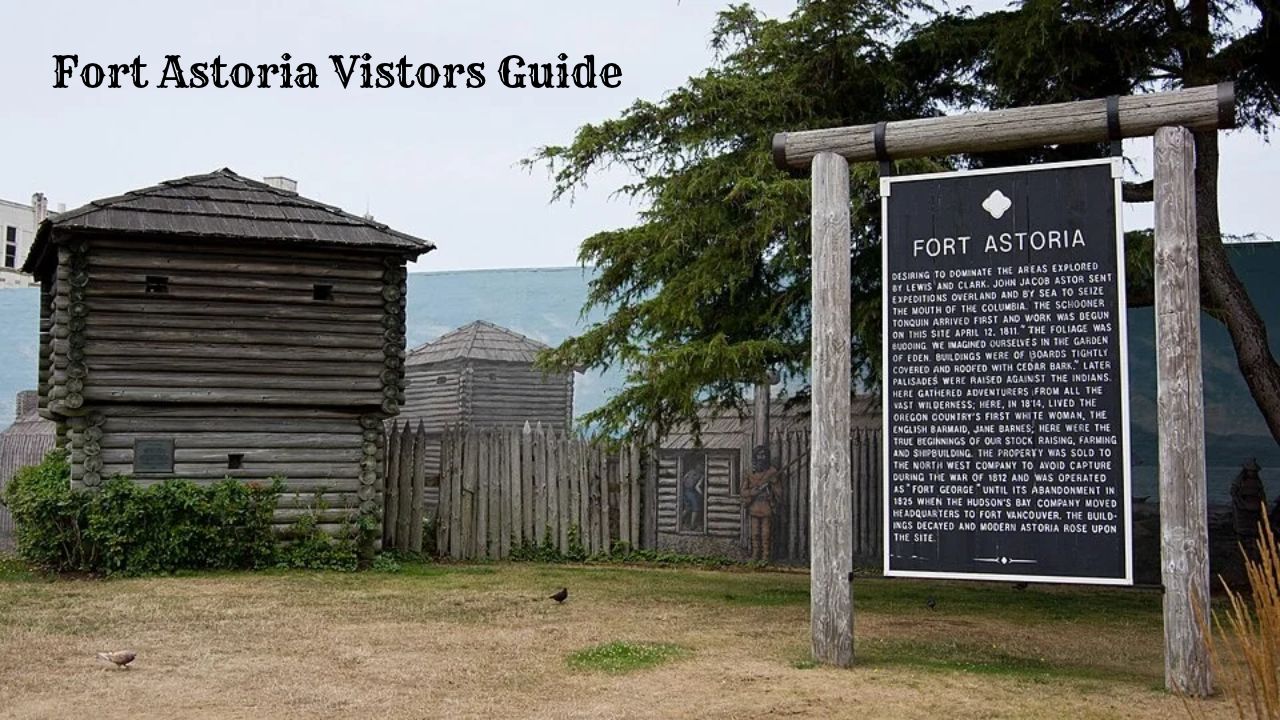
Today, the site sits in downtown Astoria, Oregon’s oldest city. Visitors can see a replica blockhouse and a painted mural.
The fort’s history connects to the global fur trade, the War of 1812, and the dispute between Britain and the United States over the Oregon Country.
BOOK YOUR TRIP TO ASTORIA, OREGON HERE
Fort Astoria Visitor Information
Visiting Fort Astoria is a short and simple stop. The site is a small city park in downtown Astoria, Oregon, located where Astor’s fur traders built their primary coastal outpost in 1811.
The park does not contain the original fort. Instead, it features a partial replica of the wooden blockhouse and a large painted mural showing the fort’s appearance in 1813.
| Detail | Information |
|---|---|
| Address | 1498 Exchange St, Astoria, OR 97103 |
| Location | Corner of 15th Street and Exchange Street |
| Managed by | Astoria Parks and Recreation |
| Type of site | Small historical park |
| Main features | Replica stockade blockhouse, historical signs, painted mural |
| Admission | Free |
Most visits take 10 to 20 minutes. Because the park is small, visitors usually combine it with a walk through downtown Astoria or along the nearby Riverwalk.
The site is about one block from the Astoria Riverwalk. Nearby attractions include the Columbia River Maritime Museum, the Astoria Column, and Lewis and Clark National Historical Park at Fort Clatsop.
The History of Fort Astoria
Fort Astoria was founded in 1811 by John Jacob Astor’s Pacific Fur Company. Sold to a British company during the War of 1812, it was renamed Fort George before returning to full U.S. control under the Oregon Treaty of 1846.
John Jacob Astor and the Pacific Fur Company
John Jacob Astor was a German-born merchant in New York City who earned a massive fortune in furs and real estate. In 1810, he created the Pacific Fur Company to build an overland and coastal network across the Pacific Northwest.
Astor intended to ship pelts directly to China and trade them for porcelain, silk, and tea. President Thomas Jefferson backed the plan, eager to establish a permanent American foothold on the Pacific Coast.
The base became the first permanent American settlement on the Pacific Coast. Today, the location is recognized as a National Historic Landmark.
The Tonquin and the Overland Astorians
Astor sent two separate expeditions west to establish the post. One traveled by sea around Cape Horn, while the overland party crossed North America.
| Group | Leader | Departure | Arrival |
|---|---|---|---|
| Sea party (Tonquin) | Captain Jonathan Thorn | New York, Sept 1810 | Columbia River, March 1811 |
| Overland party | Wilson Price Hunt | St. Louis area, 1810–1811 | Fort Astoria, early 1812 |
Aboard the Tonquin were key partners Duncan McDougall, Alexander McKay, and David Stuart. McDougall oversaw construction of the fort and built trade relations with Chief Comcomly of the Chinook tribe.
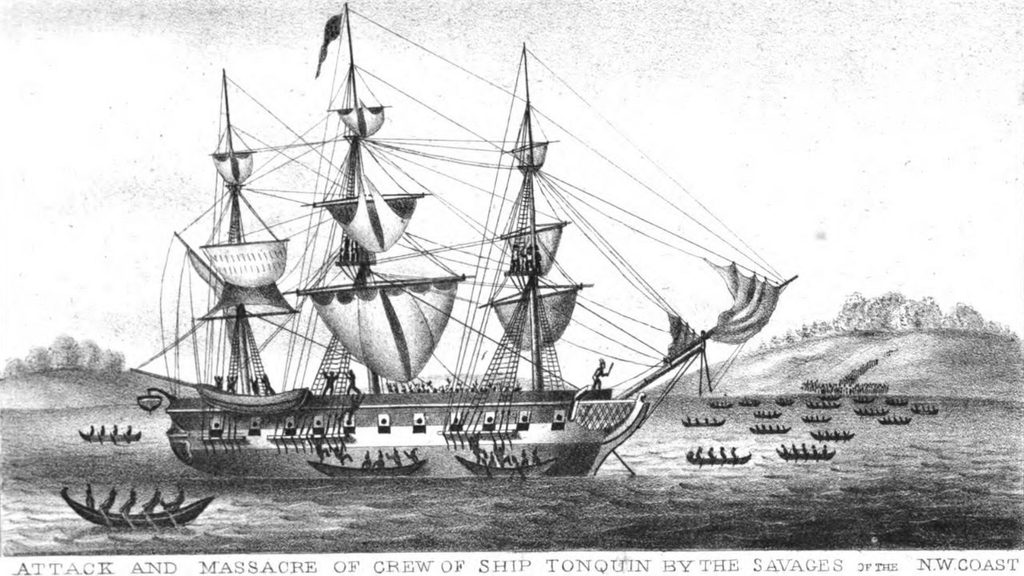
Tragedy struck both parties. The Tonquin lost eight crewmen while crossing the Columbia River bar, and the ship was later destroyed off Vancouver Island during a violent clash.
The overland group endured severe starvation and brutal terrain before reaching the Columbia.
In 1812, partner Robert Stuart led a return trek east to deliver dispatches to Astor. On this journey, Stuart discovered South Pass in Wyoming, which later served as the primary route for the Oregon Trail.
War of 1812, Fort George, and Treaty of 1846
The outbreak of the War of 1812 isolated Fort Astoria from American naval support. Fearing capture by British warships, the resident partners sold Fort Astoria to the Montreal-based North West Company in October 1813.
Two months later, the British sloop HMS Racoon arrived under Captain William Black. Black raised the Union Jack, broke a bottle of wine on the flagpole, and renamed the post Fort George.
The 1814 Treaty of Ghent and the 1818 Anglo-American Convention restored formal claims to the United States while permitting joint occupancy.
In 1821, the Hudson’s Bay Company absorbed the North West Company and shifted regional operations inland to Fort Vancouver in 1825.
Fort George reopened in 1829 as a smaller regional trading outpost. American sovereignty over the fort and surrounding settlement was finally cemented in the Oregon Treaty of 1846.
Further Reading: 10 Historic Forts in Oregon
What to See at Fort Astoria
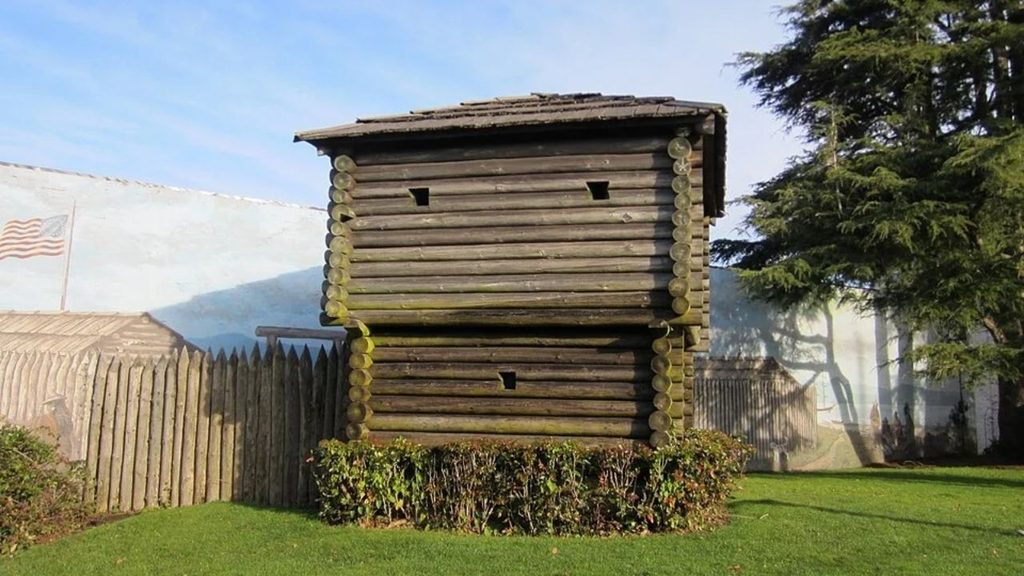
The current park sits at 15th and Exchange Streets. Although modern city streets cover the original footprint, several historical features remain on view.
The Reconstructed Blockhouse
The primary feature is a reconstructed wooden blockhouse. This structure replicates the two-story corner bastions that guarded the original palisade against potential attacks.
Built with heavy interlocking logs, it reflects classic early 19th-century frontier defense engineering. Visitors can examine the log craft up close, though the interior is closed to entry.
Mural and Historical Markers
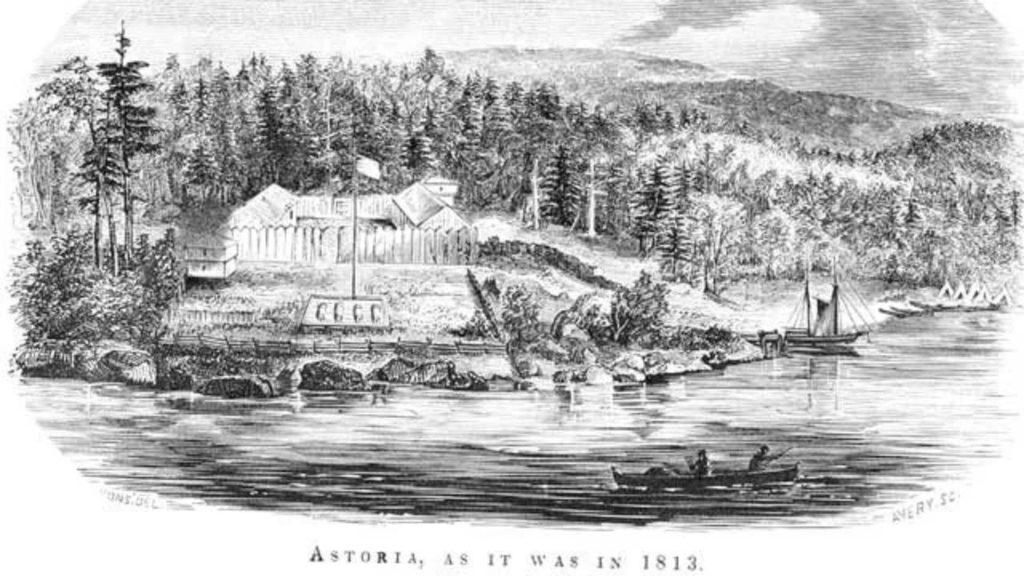
Behind the blockhouse stands a vibrant painted mural depicting Fort Astoria as it looked in 1813, set against the Columbia River and surrounding forest.
Several plaques detail the Pacific Fur Company’s journey, the handover to British forces, and its designation as a National Historic Landmark in 1961.
Nearby stands a memorial marker to Ranald McDonald, born at Fort George in 1824, who became the first English teacher in Japan.
BOOK YOUR TRIP TO ASTORIA, OREGON HERE
Comparing the Three Historic Forts of Astoria
Visitors often confuse the three historic forts located around Astoria. Each represents a distinct period in regional history.
| Feature | Fort Astoria | Fort Clatsop | Fort Stevens |
|---|---|---|---|
| Built | 1811 | 1805 | 1863–1864 |
| Builder | Pacific Fur Company | Corps of Discovery | U.S. Army |
| Purpose | Commercial fur trading | Winter expedition camp | Coastal military defense |
| Location | Downtown Astoria | 5 miles southwest | Point Adams, 10 miles west |
| Today’s Site | City park with blockhouse | National park replica fort | State park with gun batteries |
Fort Clatsop sheltered Lewis and Clark during their rainy winter before returning east. Fort Astoria established civilian trade five years later. Decades later, Fort Stevens guarded the river mouth through World War II.
Self-Guided Historic Walking Route
Visitors can easily connect Fort Astoria with neighboring historic landmarks on a scenic walking tour through town.
| Stop | Year Built | Significance |
|---|---|---|
| Flavel House | 1886 | Queen Anne Victorian mansion of river bar pilot Captain George Flavel |
| Hiram Brown House | 1852 | Oldest surviving house in Astoria, originally relocated by river barge |
| Grace Episcopal Church | 1885 | Historic church built with regional Douglas fir craftsmanship |
| First Post Office Site | 1847 | Marked by a granite monument commemorating early mail delivery |
| Fort Astoria Park | 1811 (site) | Reconstructed bastion, history plaques, and Ranald McDonald memorial |
| Maritime Museum | 1962 | World-class exhibits on the Columbia River bar and Pacific shipping |
This walking route avoids the areas wiped out by the devastating downtown fires of 1883 and 1922. The walk takes about one hour to complete at an easy pace.
Nearby Attractions & Where to Stay
Because Fort Astoria takes little time to explore, travelers generally pair it with other prominent spots around town.
- Astoria Column: A 125-foot tower offering views of the river, Pacific Ocean, and Coast Range.
- Columbia River Maritime Museum: Interactive galleries highlighting local shipwrecks and river pilots.
- Oregon Film Museum: Located in the old county jail, featuring sets and props from The Goonies.
Downtown lodging choices like the Hotel Elliott, Commodore Hotel, and Norblad Hotel allow visitors to walk directly to Fort Astoria.
Waterfront options such as the Bowline Hotel and Cannery Pier Hotel provide immediate access to the Riverwalk and views of cargo ships along the Columbia.
Frequently Asked Questions
Where was Fort Astoria located?
Fort Astoria stood on the south shore of the Columbia River in modern-day downtown Astoria, Oregon. The preserved park is situated at the intersection of 15th Street and Exchange Street.
Who was Fort Astoria named after?
The post was named for merchant John Jacob Astor, who organized and financed the Pacific Fur Company. Astor never visited the post in person.
Why was Fort Astoria renamed Fort George?
Facing British warships during the War of 1812, Astor’s partners sold the outpost to the Montreal-based North West Company in 1813. Captain William Black claimed the site for Britain, rechristening it Fort George after King George III.
What remains of the original fort today?
No original timber buildings survive above ground. Visitors can view a reconstructed corner blockhouse, historical plaques, and a scenic wall mural outlining the fort’s 1813 boundaries.
How does Fort Astoria differ from Fort Clatsop?
Fort Clatsop was a temporary winter encampment built by the Lewis and Clark Expedition in 1805. Fort Astoria, built in 1811, was a commercial fur-trading settlement that led directly to the founding of modern Astoria.

Cory is a website owner and content creator who enjoys fishing, history, coin collecting, and sports, among other hobbies. He is a husband and father of four.
Romans 15:4 For whatever was written in former days was written for our instruction, that through endurance and through the encouragement of the Scriptures we might have hope.