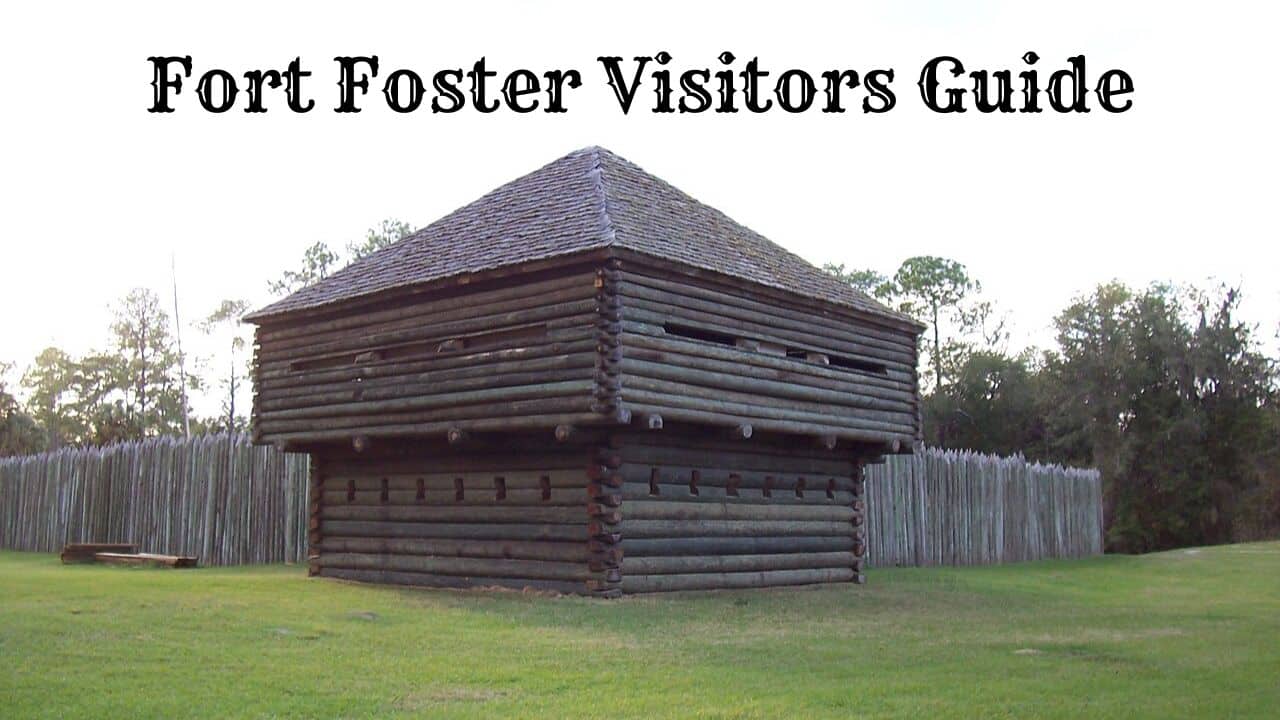
Fort Foster State Historic Site sits inside Hillsborough River State Park in central Florida, about 20 miles northeast of Tampa.
This reconstructed fort from the Second Seminole War lets you step back into 1836 and imagine what life was like for soldiers guarding the Hillsborough River bridge.
Colonel William S. Foster and his 430 men built the original fort using only hand tools. Today, you’ll find a full reproduction, an interpretive center with over 100 artifacts, and living-history demonstrations that make the era feel real.
You can wander the wooden fortifications, get a sense of both U.S. military and Seminole perspectives, and catch special events throughout the year.
BOOK YOUR TRIP TO FORT FOSTER HERE
Fort Foster Visitor Information

Fort Foster State Historic Site is inside Hillsborough River State Park at 15402 U.S. 301 North, Thonotosassa, Florida 33592. It’s about 20 miles northeast of Tampa.
Location & Parking
Park at Hillsborough River State Park, across U.S. 301 from the fort. The parking lot gives you access to restrooms and the interpretive center.
Your park entrance fee covers both the interpretive center and Fort Foster. Easy enough, right?
Hours & Tour Schedule
The fort isn’t open for daily walk-in visits. Tours happen only on certain days:
- Mid-January through April: Every third Saturday at 10:00 a.m.
- Other months: Check with the Ranger Station for the current schedule
Some sources mention Saturday tours at 2:00 p.m. and 4:00 p.m., plus Sunday tours at 11:00 a.m., weather permitting.
Admission Fees
Fort tours cost $2 per adult and $1 per child ages 6 to 12. Kids 5 and under get in free.
Interpretive Center
The interpretive center features over 100 artifacts from the Fort Foster site. Exhibits cover the Seminole nation and U.S. military sides of the Second Seminole War.
The center is open daily from 9 a.m. to 4 p.m., and you can get there from parking lot 1.
Important Notes
The fort’s terrain is rough, with uneven floors and steep blockhouse stairs. Parents, keep an eye on your young kids.
Please don’t climb on, touch, or place things on the cannons—these artifacts need to last.
BOOK YOUR TRIP TO FORT FOSTER HERE
History of Fort Foster
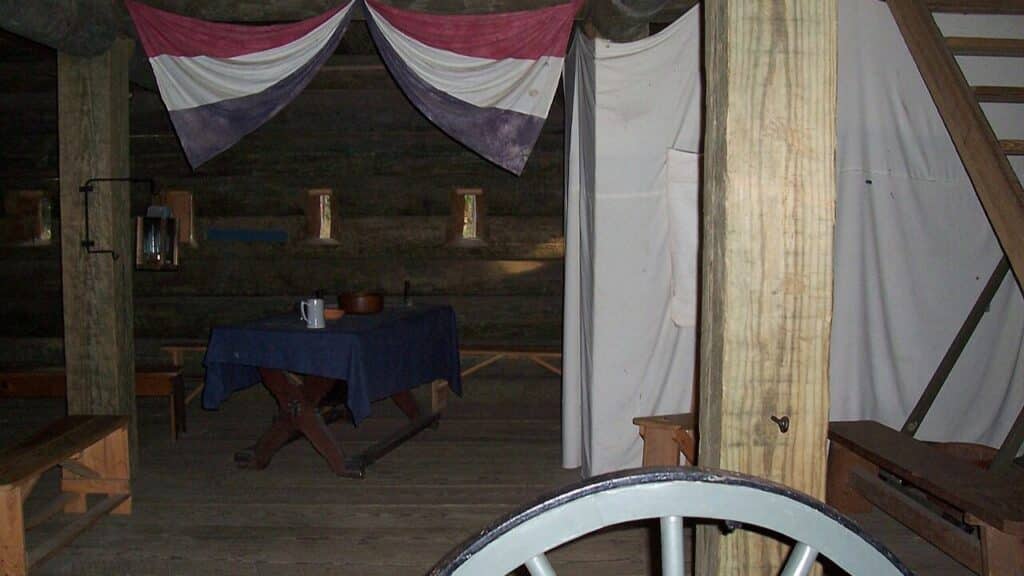
Fort Foster State Historic Site is a reproduction of a military installation first built in December 1836 by Colonel Foster and his 430 men. They finished the original fort in about three weeks, using only hand tools.
This fort was built during the Second Seminole War to serve a crucial defensive mission. Its main job? Protect the bridge over the Hillsborough River and act as a resupply point for soldiers in the field.
This spot became a valuable asset during the conflict. The garrison was active off and on from December 1836 through April 1838.
Between January 1836 and March 1837, sailors mostly staffed the fort. U.S. Navy Lieutenant Thomas J. Lieb led 50 sailors and 20 artillery soldiers to defend the fort and bridge.
Seminole forces attacked several times. The biggest assault came in February 1836, when Seminoles tried to burn the bridge.
Defenders used heavy musket and cannon fire to push them back. The attacks kept escalating, so Lieutenant Lieb called for reinforcements from Fort Brooke in present-day Tampa.
Fort Brooke sent 150 Marines to help the sailors at Fort Foster. Their arrival pretty much ended further Seminole attacks near the bridge.
The site you see today is a historical reproduction inside Hillsborough River State Park. It sits on the east side of U.S. Highway 301, about 20 miles northeast of Tampa near Thonotosassa.
Highlights and Main Sights
The site features a reconstructed 1836 military fort that once protected the Hillsborough River bridge during the Second Seminole War.
You’ll find authentic wooden fortifications, interpretive displays, and living-history demonstrations that make Florida’s military past feel close to home.
Historic Fortifications
The fort is a careful recreation of the original structure built by Col. Foster and his men in December 1836. Wooden walls, blockhouses, and defensive positions match the original military layout.
Walk through the fort’s interior and check out the construction methods soldiers used back then. The blockhouse stairs are steep and uneven, just as they were in 1836.
Rangers and re-enactors give guided tours on weekends—usually at 2:00 pm and 4:00 pm on Saturdays, and 11:00 am on Sundays if the weather holds up.
Gun Batteries and Defensive Positions
The fort features period cannons at key spots along the walls. These artillery pieces defended against attacks, including that February 1836 attempt to burn the bridge.
The 20 artillerymen and 50 U.S. Navy sailors stationed here used musket and cannon fire to keep the crossing safe. Please don’t touch or climb on the cannons; they might look solid, but they’re historical artifacts that need protection.
The defensive setup really shows how the fort protected this vital supply route and bridge during the war.
Scenic Coastal Views
The fort sits inside Hillsborough River State Park, about 9 miles south of Zephyrhills and 20 miles northeast of Tampa. The location overlooks the Hillsborough River, giving you a view of the waterway that made this spot so strategic.
The natural setting—Florida vegetation and river landscapes—still looks much as it did in the 1830s. The site is on the east side of U.S. 301, separate from the main park area.
Parking lot 1 at Hillsborough River State Park is your access point for both the fort and the interpretive center.
Walking Trails and Picnic Areas
Hillsborough River State Park has over 7 miles of hiking trails that connect to the fort area. You’ll find camping, canoeing, and a swimming pool if you want to stick around longer.
The trails wind through natural Florida ecosystems, giving you a chance to see the landscape soldiers and Seminole people knew. Picnic areas and recreation spots are separate from the historic site.
Watch out for rough terrain and uneven ground, especially if you’re with young kids.
Memorials and Historic Markers
The Interpretive Center, accessible from parking lot 1, displays over 100 artifacts recovered from the Fort Foster Historic Site. Exhibits cover both the U.S. military and Seminole perspectives.
Historic markers throughout the site explain the fort’s role from December 1836 through April 1838.
Two annual living history events—Fort Foster Rendezvous in January and the Candlelight Experience in December—feature re-enactors in period dress demonstrating daily life from the Second Seminole War era.
Popular Activities
Fort Foster State Historic Site has plenty for anyone interested in Florida’s military history. The reconstructed fort is the main attraction.
Guided Fort Tours happen on select weekends. Rangers lead these tours, sharing stories about military life during the Second Seminole War.
You’ll learn how the fort defended the Hillsborough River bridge and served as a supply point. Tours usually run from November through April on the third Saturday of each month at 10 am and 1 pm.
The Interpretive Center displays over 100 artifacts found at the site. You’ll get both Seminole and U.S. military perspectives during the conflict.
The center is open daily from 9 am to 4 pm and really helps put the fort’s history in context.
Living-history demonstrations bring 1836 to life through park staff and reenactors. Two big annual events—Fort Foster Rendezvous in January and the Candlelight Experience in December—anchor the calendar.
You can also explore the fort grounds at your own pace. The wooden structure includes blockhouses, defensive walls, and period cannons.
Just a heads-up: uneven terrain and stairs mean you’ll want to watch your step, especially with kids.
Visitor Value and Experience
Fort Foster State Historic Site offers a real glimpse into the history of Florida’s Second Seminole War with its reconstructed 1836 fort.
You can check out authentic military structures, see over 100 artifacts in the Interpretive Center, and walk the same grounds where soldiers once guarded the Hillsborough River crossing.
Ranger-guided tours are free on weekends—usually at 2:00 pm and 4:00 pm on Saturdays, and 11:00 am on Sundays. These tours help you understand both the military and Seminole perspectives.
Annual Events:
- Fort Foster Rendezvous (January)
- Candlelight Experience at Fort Foster (December)
Living history demonstrations happen throughout the year. Re-enactors show what daily life was like for soldiers at this remote outpost.
The site is great for anyone into military history, Florida heritage, or families looking for educational activities. Since the fort sits inside Hillsborough River State Park, you can add hiking, canoeing, or swimming to your visit.
Keep in mind, the fort was built for historical accuracy—not modern safety. The ground is rough, and floors are uneven. Parents should keep a close eye on kids here.
The Interpretive Center is open daily from 9 am to 4 pm and displays artifacts found at the fort. This helps visitors understand the fort’s role during the conflict.
It’s easy to make this a half-day trip, especially if you also want to explore the rest of the state park.
Planning Tips
Fort Foster State Historic Site is part of Hillsborough River State Park on the east side of U.S. 301, about 9 miles south of Zephyrhills. Park in Area #1 at the main park and follow signs to the Fort Foster Interpretive Center.
Best Time to Visit
Cooler months—November through April—are the most comfortable for exploring outside. Summers can get hot and humid, and afternoon thunderstorms are common.
Tour Schedule
Ranger-guided tours run on weekends, usually Saturdays at 2:00 PM and 4:00 PM, and Sundays at 11:00 AM. Weather can change things, so check ahead.
Special Events
The site hosts two annual living history events:
- Fort Foster Rendezvous in January
- Candlelight Experience at Fort Foster in December
Safety Considerations
The fort was designed for war, not comfort. Expect rough terrain, uneven floors, and steep stairs. Parents, keep an eye on young kids the whole time.
What to Bring
- Comfortable shoes with good grip
- Water and sun protection
- Camera for snapping photos of the exhibits
Accessibility
You’ll find accessible parking and port-o-lets. Some ramps help with exhibit access, but they might not meet all modern codes. If you have mobility concerns, talk to park staff before your visit.
The Interpretive Center has over 100 artifacts and is open daily from 9:00 AM to 4:00 PM.
Nearby Destinations
Fort Foster State Historic Site sits inside the larger Hillsborough River State Park, roughly 20 miles northeast of Tampa. You can easily check out both spots in a single trip since they’re connected.
Hillsborough River State Park has camping, canoeing, and even a swimming pool. There are over 7 miles of hiking trails, plus Florida’s only Class II rapids.
There’s an Interpretive Center near parking lot 1 that showcases more than 100 artifacts from the Fort Foster site.
Looking for something else nearby? Here are a few options:
Parks and Natural Areas
- Lettuce Lake Park
- Eureka Springs Park
Historical and Educational Sites
- Miss Emma Hicks Bungalow
Family Attractions
- Dinosaur World
The fort sits 9 miles south of Zephyrhills, Florida, right on U.S. 301. Zephyrhills South is the closest community, and Tampa is the nearest major city for hotels, restaurants, and more things to do.
Just a heads up: Fort Foster in Kittery, Maine, is a totally different place. The Florida fort is a reproduction of an 1836 Second Seminole War fortification, while the Maine spot is a coastal park. They share a name, but that’s about it—no real historical link.
You’ll find a mix of outdoor fun and educational stops around Fort Foster State Historic Site. Most places nearby highlight Florida’s natural beauty and local history.

Cory is a website owner and content creator who enjoys fishing, history, coin collecting, and sports, among other hobbies. He is a husband and father of four.
Romans 15:4 For whatever was written in former days was written for our instruction, that through endurance and through the encouragement of the Scriptures we might have hope.