

Fort Michilimackinac stands as one of Michigan’s most significant historical attractions. You’ll find it in Mackinaw City beneath the Mackinac Bridge.
This reconstructed 18th-century French and British fur trading post and military outpost lets visitors step back to 1775. The site was rebuilt using historic maps and more than 60 years of archaeological excavations.
Fort Michilimackinac is a great destination if you enjoy colonial American history or want to learn about the region’s role in the fur trade and military conflicts of the 1700s. Costumed interpreters, cannon-firing demonstrations, and authentic building reconstructions immerse you in the daily life of soldiers, traders, and families.
The site provides practical information about hours, tickets, and what to expect during your visit. Whether you’re planning a day trip or combining it with nearby attractions like Mackinac Island, knowing what Fort Michilimackinac offers helps you plan your visit.
This guide covers the fort’s history, what you can see and do on-site, and how it might fit your travel interests.
Quick Visitor Information
Colonial Michilimackinac is in Mackinaw City, Michigan, next to the Mackinac Bridge. The site features a reconstructed 18th-century fort and fur trading village based on historic maps and archaeological excavations.
Location & Facilities
Start your visit at the Visitor’s Center, where a 13-minute audiovisual program called “Coming Together at Michilimackinac” plays. The center sells beverages and light snacks.
Picnic tables are in the ticketed area between the Visitor’s Center and the fort entrance. You’ll also find picnic grounds in the free section of Michilimackinac State Park east of the parking lot.
What You’ll Experience
Explore thirteen authentically reconstructed buildings that represent life in 1775. Costumed interpreters lead live demonstrations and interactive programs throughout the summer season.
The site highlights both French and British colonial periods, focusing on fur trading and military life. The fort area requires ticketed admission and is managed by Mackinac State Historic Parks.
Special Programming
The Visitor’s Center theater presents “Attack! at Michilimackinac,” which explores the 1763 capture of the fort during Pontiac’s Uprising. Daily activities and special programs run throughout the summer, making it engaging for families with children.
History of Fort Michilimackinac
The French established Fort Michilimackinac in 1715 at the Straits of Mackinac, connecting Lake Michigan and Lake Huron. This location allowed them to control the lucrative fur trade in the Great Lakes region.
French Period (1715-1760)
The French built the fort as a military outpost and fur trading center. Traders, soldiers, and Native American communities worked together in this busy commercial hub.
British Control (1761-1781)
The British took control after the French and Indian War in 1761. The fort saw major events during their occupation, including Pontiac’s Uprising in 1763 and the early years of the American Revolution.
Key Historical Timeline
| Year | Event |
|---|---|
| 1715 | French establish the fort |
| 1761 | British assume control |
| 1763 | Attack during Pontiac’s Uprising |
| 1781 | Fort relocated to Mackinac Island |
In 1781, the British moved the fort to Mackinac Island because the island was easier to defend. The original site was abandoned and eventually buried under soil.
Archaeological Discovery
Since 1959, archaeologists have excavated the site, making it one of the longest-running digs in North America. Their discoveries, along with historic maps and documents, allowed historians to reconstruct the fort you can visit today.
Exploring the Site
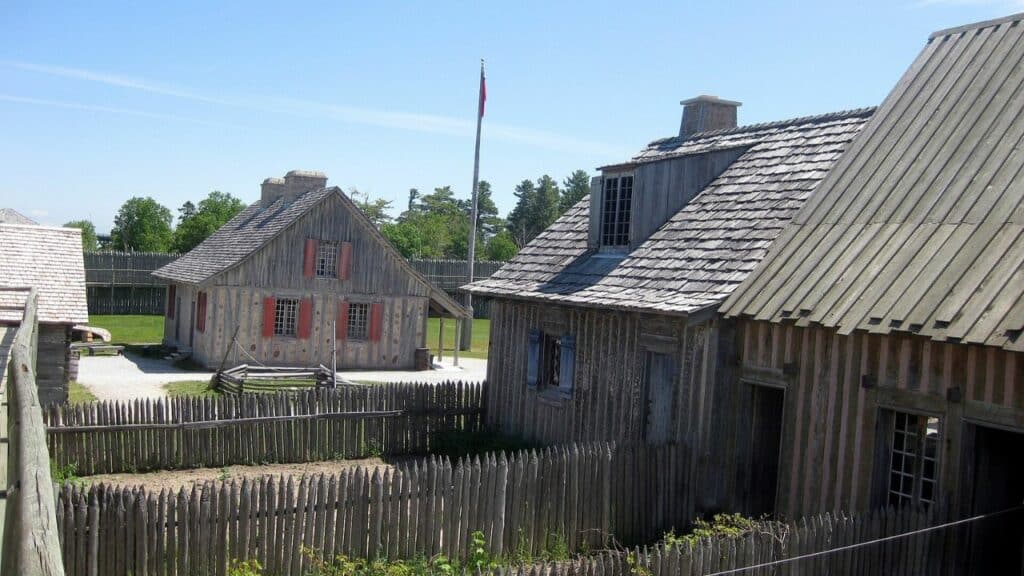
Colonial Michilimackinac covers several acres along the Straits of Mackinac. Reconstructed buildings stand where archaeological evidence and 1770s maps indicated.
The site centers on a wooden palisade fort where you can explore military structures, civilian buildings, and active archaeological dig sites.
The Reconstructed Palisade Fort
Wooden palisade walls surround the entire fort complex, recreating the defensive perimeter from 1775. Enter through the main gate, just as French soldiers, British troops, and traders did centuries ago.
Inside, you’ll find over a dozen reconstructed buildings arranged along period-accurate streets. The fort’s layout follows original maps and archaeological findings.
The wooden structures use authentic construction techniques and materials from the 18th century. Walking the perimeter gives you a clear sense of the fort’s strategic position overlooking the waterway.
The palisade design reflects both French and British military engineering from the colonial period.
Barracks and Historic Buildings
The soldiers’ barracks show cramped living quarters where British troops slept, ate, and stored equipment. Examine reproduction furnishings, military gear, and personal items that illustrate daily garrison life.
The Commanding Officer’s House stands as one of the most impressive structures within the fort. This building contains period furnishings and shows the contrast between officers’ and enlisted soldiers’ accommodations.
Explore the King’s Storehouse, Powder Magazine, and Priest’s House. Each building serves a specific educational purpose, with authentic recreations of 18th-century interiors.
The trading post displays furs, goods, and merchandise typical of the colonial fur trading economy that powered Michilimackinac’s prosperity.
Archaeological Excavations
Active dig sites operate throughout the summer. You can watch archaeologists uncover artifacts and document findings in real time.
Excavations have revealed over three million artifacts since systematic digging began. These discoveries guided the accurate reconstruction of the fort and continue to improve historical understanding of colonial life.
You might see researchers uncovering foundations, analyzing soil layers, or cataloging newly discovered items. An Archaeology Gallery in the Visitor’s Center displays significant finds.
- French and British military equipment
- Trade goods and currency
- Personal items and household objects
- Native American artifacts
- Architectural elements
Living History Demonstrations
Costumed interpreters portray soldiers, traders, and civilians from 1775 throughout the fort grounds. These historians perform daily tasks, military drills, and craft demonstrations using authentic techniques.
Daily activities include musket and cannon firings, which take place multiple times each day during the operating season. You’ll hear the thunder of black powder weapons and learn about 18th-century military tactics.
Cooking demonstrations in period kitchens show food preparation methods. Blacksmiths, carpenters, and other tradespeople practice colonial-era skills.
You can interact directly with interpreters who stay in character while explaining historical context. These demonstrations make history tangible by showing how people lived and worked at this frontier outpost.
Straits of Mackinac Views
The fort’s location provides unobstructed views of the Straits of Mackinac and the Mackinac Bridge. This vantage point shows why French and British forces considered this spot vital for controlling Great Lakes water traffic.
You can see Mackinac Island from the fort walls. The waterway views help you understand the fort’s role in the fur trade network and military supply routes.
Modern shipping still passes through these straits, creating a connection between past and present commerce. The elevated shoreline position offers photo opportunities of both historical structures and natural scenery.
Experiences and Activities
Colonial Michilimackinac brings the 18th century to life with interactive programs and hands-on demonstrations. Costumed interpreters portray soldiers, traders, and residents from 1775, the year the American Revolution began.
Daily demonstrations include musket and cannon firings that show military life at the fort. You can watch interpreters prepare meals over open hearths using period cooking methods.
Craftspeople demonstrate trades like blacksmithing and weaving throughout the day. The fort features thirteen reconstructed buildings you can explore at your own pace.
Interactive exhibits inside these structures explain how the fur trading business worked and what daily life was like for the community. Special activities for children run during the summer season, offering age-appropriate historical experiences and hands-on learning.
The ongoing archaeological work means the fort’s interpretation reflects current historical research and findings. Popular activities include:
- Watching military demonstrations and drills
- Exploring authentic building interiors
- Observing period craft demonstrations
- Participating in seasonal special events
- Learning about fur trade economics
- Viewing archaeological exhibits
Picnic tables are available between the Visitor’s Center and the fort entrance if you want a break. Light snacks and beverages are for sale at the Visitor’s Center. Additional picnic grounds are in the free area of Michilimackinac State Park east of the parking lot.
Assessing the Value of a Visit
Fort Michilimackinac offers a unique experience. The reconstruction relies on more than 60 years of archaeological excavations, giving you an accurate look at 18th-century colonial life.
You’ll get the most value if you enjoy:
- Living history demonstrations with costumed interpreters
- Archaeological significance at one of North America’s longest-running dig sites
- Colonial-era military history from both French and British perspectives
- Fur trading culture and its impact on the region
The admission price includes access to the reconstructed fort, fur trading village, and interactive exhibits. Costumed staff members perform demonstrations throughout the day, explaining daily life for soldiers, traders, and civilians during the American Revolution era.
Plan for 2-3 hours to explore the grounds and take part in demonstrations. The location next to the Mackinac Bridge makes it easy to combine with other area attractions.
Families with children often enjoy the hands-on exhibits and engaging interpreter programs. History enthusiasts appreciate the attention to detail and visible archaeological work.
Arrive with realistic expectations about a reconstructed fort. You’ll see buildings and artifacts that tell the story of the 1770s fur trade and a military outpost, rather than original 18th-century structures.
BOOK YOUR STAY AND FLIGHT HERE
Advice for First-Time Guests
Start your visit at the Visitor’s Center to pick up maps and get oriented. Staff members can answer questions and help you plan your route through the site.
Arrive early in the day to avoid crowds. You will have more time to explore all thirteen reconstructed buildings.
The site covers significant ground. Plan to spend at least 2-3 hours for a thorough visit.
Wear comfortable walking shoes. You will be navigating dirt paths and uneven terrain throughout the fort.
The historical setting does not include modern paving.
Key tips for your visit:
- Bring sunscreen and a hat for sun protection
- Check the daily schedule for live demonstrations and reenactments
- Ask costumed interpreters questions about their roles and daily life in 1775
- Allow children to participate in hands-on activities designed for young visitors
Plan to engage with the interactive exhibits. Demonstrations often include cooking, blacksmithing, and military drills.
Accessible restrooms are located in the Visitor’s Center and along the walkway to the fort entrance. You will also find restrooms within the South Southwest Rowhouse inside the fort.
If you have special accessibility needs, the site welcomes guests with accommodations.
Photography is encouraged, so bring your camera to capture the reconstructed buildings and period demonstrations. The view of the Mackinac Bridge provides a striking contrast between historical and modern Michigan.
Nearby Attractions
Several attractions are within walking distance of Colonial Michilimackinac. Old Mackinac Point Lighthouse stands just east of the fort.
You can tour this restored 1892 beacon and enjoy views of the Straits. The Mackinac Bridge is visible from the fort grounds and creates a dramatic backdrop.
You can walk or drive across this five-mile suspension bridge. It connects Michigan’s Upper and Lower Peninsulas.
Key Nearby Sites:
- Old Mackinac Point Lighthouse – Historic lighthouse with museum exhibits
- Icebreaker Mackinaw Maritime Museum – Retired Coast Guard vessel open for tours
- Mackinac Island Ferry Docks – Multiple ferry companies operate from Mackinaw City
- Wilderness State Park – Natural area with beaches and trails
The Icebreaker Mackinaw Maritime Museum is in the harbor area. You can tour the retired Coast Guard cutter that served the Great Lakes for 62 years.
Ferry services to Mackinac Island depart regularly from docks near the fort. Michilimackinac State Park surrounds the fort and provides picnic areas and waterfront access.
The park’s free sections offer lake views. Downtown Mackinaw City’s shops and restaurants are a short walk from the fort entrance.
Along Central Avenue, you’ll find fudge shops, gift stores, and dining options. If you prefer natural settings, Wilderness State Park is about 10 miles west.
This park features 26 miles of Lake Michigan shoreline with hiking trails and camping facilities.

Cory is a website owner and content creator who enjoys fishing, history, coin collecting, and sports, among other hobbies. He is a husband and father of four.
Romans 15:4 For whatever was written in former days was written for our instruction, that through endurance and through the encouragement of the Scriptures we might have hope.