

Fort Mifflin sits on Mud Island in the Delaware River near Philadelphia. It’s been there since 1771.
This National Historic Landmark is one of the only intact Revolutionary War battlefields in America and the only fort located within Philadelphia’s city limits.
The site played a crucial role in the American Revolution when its small garrison held off the British Navy for six weeks in 1777. That gave George Washington’s army enough time to reach Valley Forge.
The fort served the United States for over 180 years, from the Revolutionary War through World War II. You can walk through the same stone walls where 400 soldiers faced one of the largest bombardments in Revolutionary War history.
Later, the fort became a Civil War prison and a World War ammunition depot before closing in 1954.
Today, Fort Mifflin offers tours, living history programs, and events that bring American military history to life. The preserved buildings and grounds let visitors experience three different wars in one location.
BOOK YOUR TRIP TO FORT MIFFLIN HERE
Fort Mifflin Visitor Information
Fort Mifflin operates from March 1 through December 15. The gates open Wednesday through Sunday from 10 am to 4 pm.
The fort closes to general visitors from mid-December through March, but you can still book private events or appointments during that downtime.
Admission Prices (2025)
| Visitor Type | Price |
|---|---|
| Adults | $16 |
| Seniors | $14 |
| Veterans | $12 |
| Children (6-12) | $10 |
| Children 5 and under | Free |
Active-duty military personnel and their immediate families get in free with a valid ID.
Tours run daily at 11 am and 2 pm on weekends. Cannon demonstrations happen at 1 pm on Saturdays and Sundays.
Some living history events come with extra fees, which you’ll find listed on the fort’s event calendar.
The fort takes Visa, Mastercard, debit cards, and cash. For living history events, cash is preferred at the entrance, but you can buy tickets online with a credit card.
Fort Mifflin is at Fort Mifflin and Hog Island Roads in Philadelphia, Pennsylvania 19153. There’s free parking for all visitors.
School groups and tour groups can visit any day with advance reservations. Just call 856-831-5690.
Leashed pets are welcome on the grounds. There’s a shaded picnic area along the riverfront where you can bring your own food.
The gift shop and museum exhibits are open during regular hours.
BOOK YOUR TRIP TO FORT MIFFLIN HERE
History of Fort Mifflin
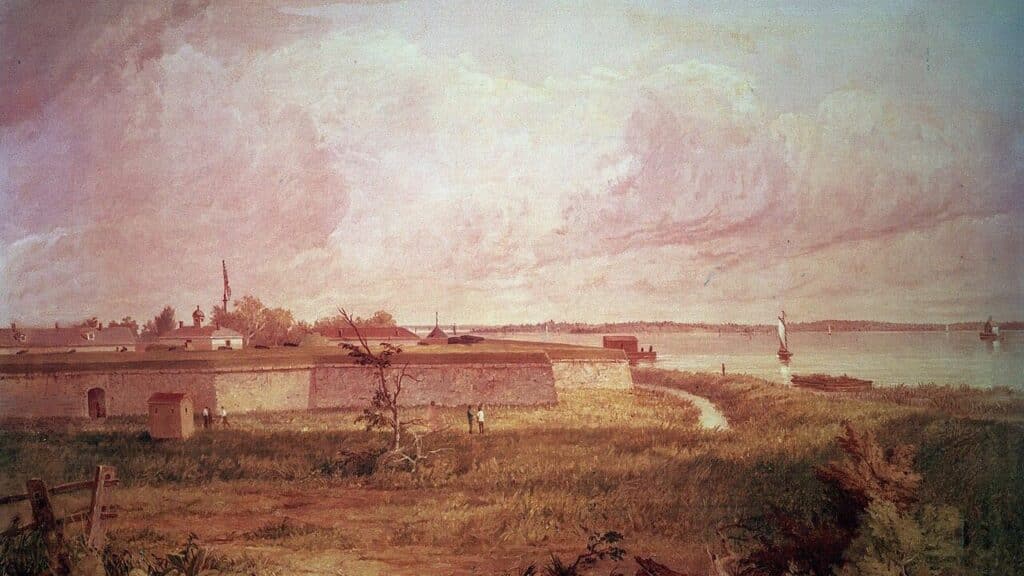
Fort Mifflin was commissioned in 1771 on Mud Island in the Delaware River below Philadelphia. Back then, it was called Fort Island Battery and served as a key defense point for the new nation.
The fort gained its place in history during the American Revolutionary War in 1777. British forces captured Philadelphia that September, but their supply ships got stuck in the Delaware Bay.
Fort Mifflin’s garrison of about 400 men held off British naval forces for nearly six weeks. The Battle of Fort Mifflin peaked on November 15, 1777.
British ships with over 200 cannons surrounded the fort. The Americans had just ten cannons to answer back.
One report claimed that 1,000 cannonballs hit the fort in a single hour. The garrison evacuated after nightfall, leaving the fort in flames but the flag still flying.
Key Military Uses:
- Revolutionary War – Coastal defense and supply line control
- Civil War – Military prison holding Confederate POWs, Union soldiers, and civilians
- World War I – Part of Naval Ammunition Depot
- World War II – Ammunition storage and limited anti-aircraft defense
During the Civil War, Fort Mifflin became a military prison in 1863. It held Confederate prisoners from Gettysburg, Union soldiers awaiting punishment, and civilians suspected of conspiracy.
Conditions were rough, with damp casemates and disease spreading among prisoners and guards.
The federal government decommissioned Fort Mifflin in 1954 after 183 years of service. The City of Philadelphia took ownership in 1962, and the fort received National Historic Landmark status in 1970.
Key Sights and Exhibits
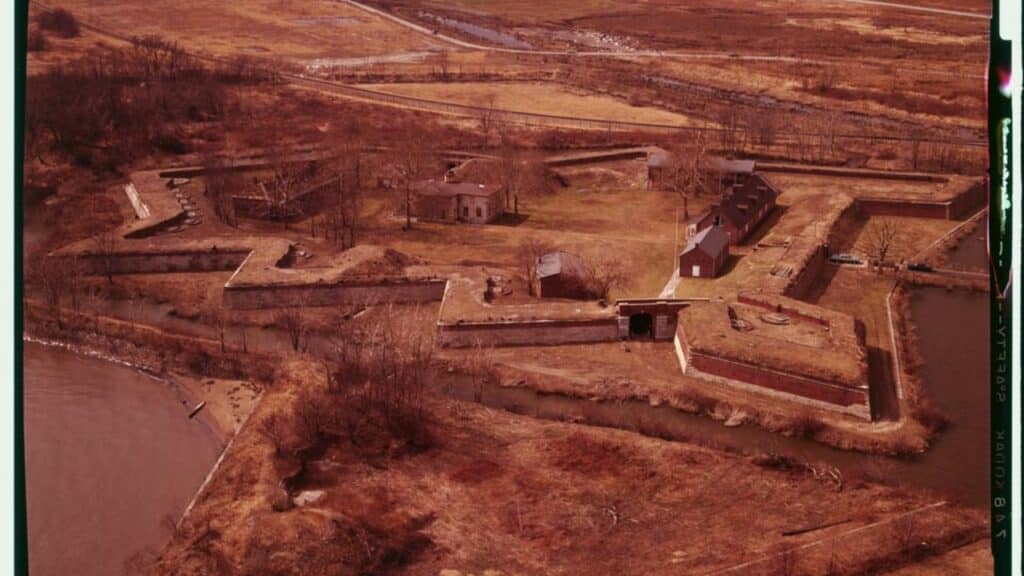
Fort Mifflin’s 50-acre property contains original Revolutionary War structures that survived the 1777 British bombardment. Later military additions from the Civil War era and 20th-century operations remain as well.
You can explore authentic fortifications, barracks, defensive positions, and museum exhibits that really bring American military history to life.
The Original Fortifications
The fort’s outer walls and defensive perimeter date back to 1771-1776, when American forces first built the stronghold on Mud Island. These stone and earthwork fortifications still bear the scars of the British siege during the Revolutionary War.
The walls were designed to protect Philadelphia by controlling access to the Delaware and Schuylkill Rivers. You can walk along the ramparts and see the strategic river positions that made this spot so valuable.
The layout follows 18th-century military engineering principles, with angles designed to maximize defensive fire coverage.
Casemates and Defensive Structures
The casemates are fortified gun positions built into the walls. Soldiers operated cannons and artillery from these vaulted chambers, firing on enemy ships trying to pass through the river.
Multiple casemates remain intact and open to visitors. The fort also includes a moat system that once provided another layer of defense against land attacks.
The defensive structures show how military architects planned for different types of assault, from naval bombardment to ground invasion.
The Soldier Barracks
The barracks buildings housed troops stationed at Fort Mifflin throughout its military service. These structures show how soldiers lived during different periods, from the Revolutionary War through the Civil War and into the 20th century.
Each barracks area displays period-appropriate furnishings and equipment. You can see sleeping quarters, storage areas, and daily living spaces that illustrate military life across multiple centuries.
The buildings survived because of continuous military use and regular upkeep.
Museum Exhibits
Fort Mifflin’s museum exhibits feature artifacts recovered from the site, including weapons, uniforms, personal items, and equipment. The collection covers the fort’s entire operational history.
Excavations still uncover new historical items that add to the displays. Interactive exhibits explain the 1777 siege, which many consider the greatest bombardment of the American Revolution.
Maps and documents show troop movements and battle strategies. The gift shop offers books and historical reproductions for anyone who wants to learn more.
Living History and Special Events
Weekend tours at 11 AM and 2 PM feature costumed interpreters who demonstrate military life and historical practices. Daily cannon demonstrations are held at 1 PM on Saturdays and Sundays, showing how artillery operated during different periods.
These live presentations help visitors understand the practical side of fort operations. Special living history events throughout the season include reenactments and expanded demonstrations with more participants.
The fort’s nature trail and riverfront picnic area offer extra space to explore between programs. Some events may include an extra admission charge beyond regular entry fees.
Activities and Experiences
Fort Mifflin offers a range of activities that bring American history to life. Guided tours led by period-dressed interpreters share stories from the Revolutionary War and Civil War eras.
Educational Programs include hands-on experiences that let you learn about soldiers’ lives across different time periods. Groups can watch uniform and weapons demonstrations, or—if you’re up for it—pay a little extra to see a cannon firing that really shakes the ground.
Visiting Fort Mifflin lets you explore multiple historic structures at your own pace. The barracks, casemates (underground bomb shelters), and fortifications remain open for self-guided exploration.
A riverfront picnic area offers a spot to eat outdoors after your tour. Special Programs Available:
- Revolutionary War soldier life demonstrations
- Civil War military medicine workshops
- Paranormal investigation tours
- Living history reenactments
- Seasonal events throughout the year
The fort welcomes all kinds of visitors, from school groups to curious adults. Educational field trips can be tailored by grade level and interest.
Students in grades 7-12 can even try out specialized programs like the Civil War medicine workshop. Weekend tours run regularly, giving casual visitors easy access to this National Historic Landmark.
The site works as both an educational resource and a place for families to spend time learning together. Ongoing archaeological digs add some extra excitement for anyone who loves discovery.
The gift shop offers history-related items for those who want a piece of the past to take home. The mix of structured programs and open exploration lets everyone create their own experience at Fort Mifflin.
Is It Worth Visiting?
If you’re into Revolutionary War history or military sites, Fort Mifflin is absolutely worth a visit. It’s one of the few intact Revolutionary War forts in the country that are still open to the public.
You can walk the grounds where soldiers withstood one of the fiercest bombardments of the Revolution. The fort played a key role in buying George Washington’s army critical time during the war.
What Makes It Special:
- Living history events with battle demonstrations
- Daily tours on weekends at 11 am and 2 pm
- Cannon demonstrations at 1 pm on weekends
- Interactive activities for families
- Riverfront picnic area and nature trail
- Ongoing archaeological excavations
The site served the nation through multiple conflicts, including the War of 1812 and the Civil War. This gives visitors a broader perspective on American military history beyond just the Revolutionary period.
The fort is less crowded than popular Philadelphia attractions like Independence Hall and the Liberty Bell. That means you can take your time exploring the buildings and grounds without fighting big crowds.
Families will find plenty to keep children engaged. The fort welcomes leashed pets, but you might want to check ahead about cannon demonstrations if your pet gets nervous around loud noises.
The admission price is reasonable for what you get. Adults pay $16, with discounts for seniors, veterans, and kids. Active-duty military members and their immediate families get in free with a valid ID.
Planning Tips
Check the fort’s event calendar before planning your trip. Special living history events might have different admission prices than regular days.
The fort prefers cash at the entrance for these special events, but you can still use credit cards for online purchases. The best time to visit is during off-peak hours if you want to avoid crowds.
Fort Mifflin is open to the public from March 1 through December 15, Wednesdays through Sundays from 10 am to 4 pm. Weekend visits offer guided tours at 11 am and 2 pm, plus cannon demonstrations at 1 pm.
Admission Fees (2025)
- Adults – $16
- Seniors – $14
- Veterans – $12
- Children (6-12) – $10
- Children 5 and under – Free
- Active duty military and immediate families – Free with ID
Bring your own picnic to enjoy in the shaded riverfront area. The fort welcomes leashed pets, but check in advance about cannon and musket demonstrations if your animal gets spooked by loud noises.
If you’re coming from downtown Philadelphia, take I-95 South to Exit 15. GPS users get better results with the address 6400 Hog Island Road, Philadelphia, PA 19153.
Free parking is available on site. The administrative office operates Wednesday through Sunday from 9 am to 5 pm.
School groups and tour groups can visit seven days a week with advance appointments by calling 856-831-5690. The fort accepts Visa, Mastercard, debit cards, cash, checks, and money orders.
Nearby Points of Interest
Fort Mifflin sits close to several historical and cultural landmarks. The Navy Yard complex is right nearby and mixes old naval history with some surprisingly modern development.
Visitors might spot the Tinicum Rear Range Lighthouse, a local maritime landmark. It’s got a charm all its own if you’re into that kind of thing.
The Girard Point Bridge and the George C. Platt Bridge both cross the Schuylkill River. They each offer pretty striking views of the water and the city’s industrial side.
If you’re curious about Revolutionary War history, Fort Billingsport isn’t too far away either.
Notable Nearby Locations:
- The Navy Yard – Historic naval facility with modern uses
- Tinicum Rear Range Lighthouse – Maritime navigation landmark
- Girard Point Bridge – Major river crossing
- George C. Platt Bridge – Connecting Philadelphia neighborhoods
- Fort Billingsport – Revolutionary War era fortification
Philadelphia International Airport sits right next to Fort Mifflin, so getting there isn’t much trouble for travelers. The fort hugs the Delaware River, tucked inside Philadelphia’s southern edge.
From here, downtown Philly is just a short drive away. It’s honestly pretty convenient if you want to see more of the city in one trip.
The Goldfish Building and some Navy Yard structures show off the area’s industrial architecture. You get a real feel for the region’s maritime and military history just by walking around.
The whole area mixes historical sites with busy transportation routes. If you’re planning to visit, you can easily pair Fort Mifflin with other nearby landmarks for a full day out.
Conclusion
Fort Mifflin stands as a testament to American determination during the Revolutionary War. The small garrison, never more than 500 soldiers, held off British forces for nearly seven weeks—from September 26 to November 16, 1777.
The defenders endured constant bombardment. They worked through the nights, patching up damage after each day’s attacks.
They faced overwhelming odds. British land batteries and naval forces, led by Captain John Montresor and Vice Admiral Lord Richard Howe, pressed them hard.
Key outcomes of the siege include:
- Delayed British supply lines to Philadelphia for critical weeks
- Allowed George Washington time to regroup his army
- Demonstrated American resolve despite limited resources
- Forced the British to commit significant military assets
The fort’s spot on Mud Island in the Delaware River made it crucial for controlling access to Philadelphia. Alongside Fort Mercer across the river, these defenses created a blockade that kept British forces in the captured city short of supplies.
Major Simeon Thayer led the last defenders out on the night of November 15, leaving the American flag still flying. The British showed up the next morning and took over the ruins.
Fort Mercer was abandoned soon after, opening the Delaware River to British ships.

Cory is a website owner and content creator who enjoys fishing, history, coin collecting, and sports, among other hobbies. He is a husband and father of four.
Romans 15:4 For whatever was written in former days was written for our instruction, that through endurance and through the encouragement of the Scriptures we might have hope.