

Fort Mackinac stands as one of Mackinac Island’s most significant attractions. You’ll find it perched on a bluff, gazing out over the Straits of Mackinac.
This well-preserved military outpost played a crucial role during the War of 1812. Visitors can wander through historical exhibits, chat with costumed interpreters, watch cannon demonstrations, and enjoy sweeping views from May through October.
The fort’s growth shaped the charming town below. If you want to understand the island’s heritage, this spot is pretty much essential.
Is Fort Mackinac worth your time and money? That’s really up to your interest in military history, hands-on demonstrations, and old architecture.
This guide covers practical details—hours, tickets, and what makes the fort experience stand out.
Inside, you’ll discover historic buildings, daily period demonstrations, and walking trails that link up with other island sights. Knowing what to expect can help you make the most of your visit.
BOOK YOUR STAY NEAR FORT MACKINAC
Fort Mackinac Visitor Information
Fort Mackinac sits high above Mackinac Island and Haldimand Bay. It’s part of Mackinac Island State Park and opens for visitors from May through October.
Location & Access
Fort Mackinac visitor information:
- Location: Fort Mackinac 7127 Huron Road Mackinac Island, MI 49757, USA
- Phone: (906) 847-3328
- Email: info@mackinacparks.com
- Website: https://www.mackinacparks.com
The fort has two ways in: the front ramp on Fort Street or the rear Avenue of Flags off Huron Road. Since cars aren’t allowed on the island, you’ll get there by walking, biking, or hopping on a horse-drawn carriage from downtown.
What’s Inside
There are 14 restored buildings with period furnishings. Michigan’s oldest building stands inside these walls, along with the Officers’ Stone Quarters.
The original British-built walls still surround the fort, adding to the historic vibe.
Daily Programming
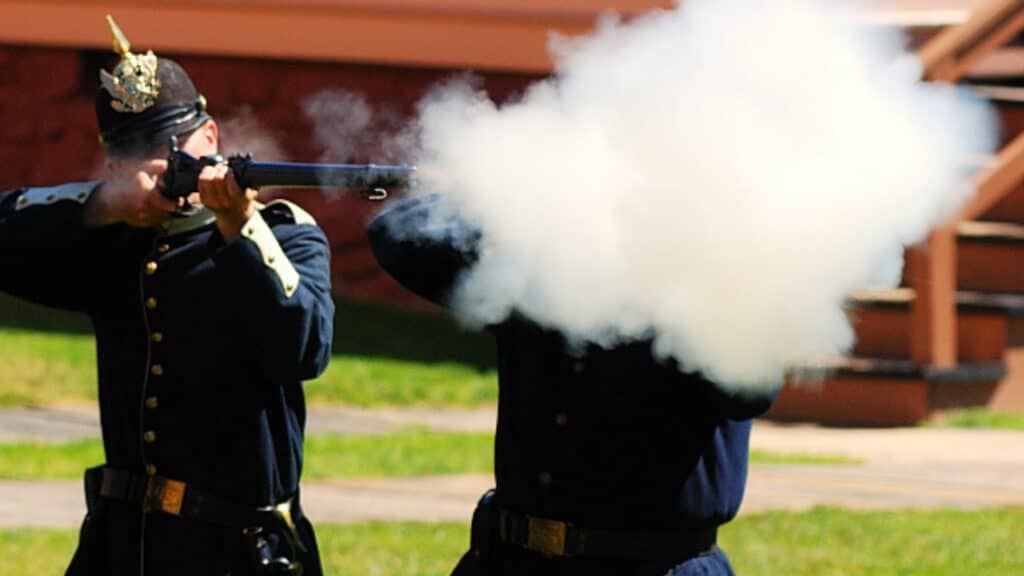
Costumed interpreters lead history sessions all day around the grounds. Regular demonstrations feature period rifle and cannon firings.
Special programs like “Soldier’s Gear and Quartermasters” give a closer look at military life here.
Planning Your Visit
Most people spend about 1.5 to 2 hours exploring. Exhibits cover military training, battles, medical care, and family life inside the fort.
The bluff-top setting delivers some of the best views of the straits and island scenery.
The fort is also a highlight of many horse-drawn carriage tours, which often include other landmarks such as Arch Rock and the Grand Hotel.
BOOK YOUR FLIGHT TO FORT MACKINAC
Historical Background
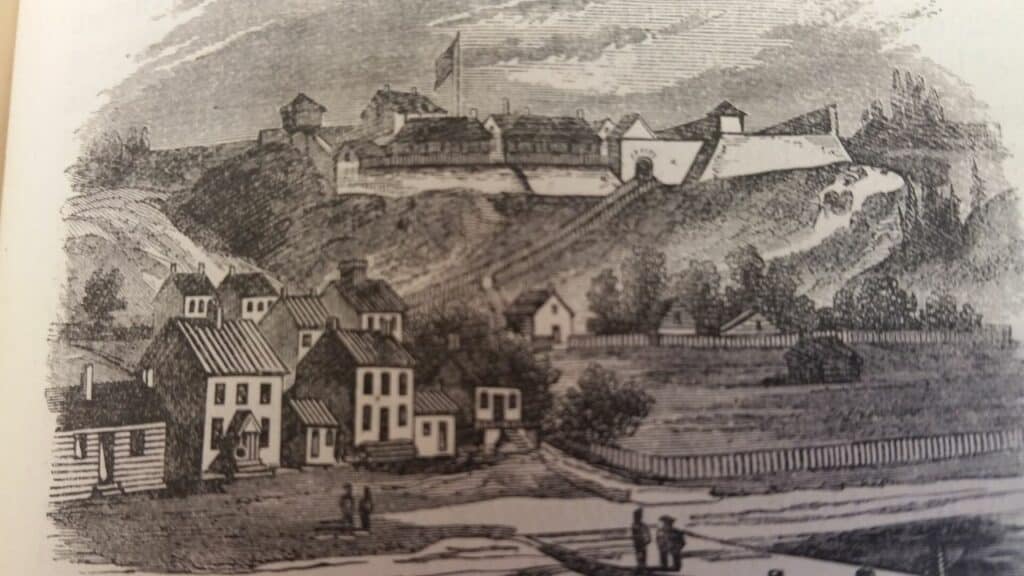
Fort Mackinac rises from a limestone bluff above the Straits of Mackinac. This spot controlled the waterways between Lake Huron and Lake Michigan.
The British built the fort in 1780, moving over from Fort Michilimackinac on the mainland. They knew the high ground offered better defense.
The fort got swept up in the War of 1812. British forces captured it in July 1812 with a surprise attack, before the Americans even realized war had started.
Americans tried to retake it in 1814 but failed, so the British held the straits for the rest of the conflict.
Key Historical Periods:
- 1780-1796: British construction and first occupation
- 1796-1812: First American period after the Jay Treaty
- 1812-1815: British recapture during the War of 1812
- 1815-1895: American military post
- 1895-present: Public historic site and museum
The Treaty of Ghent returned the fort to American hands in 1815. The U.S. Army kept it running as an active post until 1895.
Soldiers stationed here helped keep the peace in the Great Lakes and aided westward expansion. When the Army left, the fort became part of Mackinac Island State Park, preserving its buildings and history for visitors today.
Notable Sights Within Fort Mackinac
Fourteen original buildings from the late 1700s and early 1800s still stand here. Restored fortifications, military quarters, and museum spaces tell stories from over two centuries of military and civilian life.
The fort’s high perch offers commanding views. The architecture and collections dig deep into frontier military history.
The Fort Grounds and Ramparts
Stone walls and earth ramparts wrap around about five acres at the top of a 150-foot bluff. You can stroll along these defenses, imagining soldiers on guard duty over the straits.
Bastions anchor each corner, giving defenders overlapping fields of fire. These spots remain open for visitors to explore.
Key features include:
- Original stone and earth walls
- Corner bastions with period artillery pieces
- Parade ground for military drills
- Wooden palisades and gates
The ramparts offer plenty of vantage points for soaking in the landscape and getting why this spot mattered so much during the War of 1812 and beyond.
Historic Barracks and Officers’ Quarters
The soldiers’ barracks show off the tight quarters enlisted men endured in the 1800s. These whitewashed buildings have been restored with bunks, mess areas, and period storage.
Officers’ quarters look a lot more comfortable, with separate rooms and better furnishings. Some buildings show how rank shaped daily life in the garrison.
Interpreters in uniform often hang out in these rooms during open hours, demonstrating routines and answering questions. The furnishings are a mix of authentic and reproduction pieces from the 1880s, when the fort was an Army post.
The Gunpowder Magazine
This sturdy stone structure kept the fort’s explosives safe. Thick walls and a ventilation system protected gunpowder from dampness and accidents.
Inside, you’ll see how they stored powder kegs and ammo. Displays explain why dry gunpowder was a big deal in the humid Great Lakes climate.
Museum Exhibits
Several museum galleries fill the historic buildings. Collections include uniforms, weapons, personal items, and artifacts from both British and American periods.
The Post Commissary building focuses on:
- Fur trade history and economics
- Native American relationships with the military
- Daily life for soldiers and families
- Medical practices at frontier posts
The Post Hospital displays restored surgical rooms and medical gear from the 1800s. These exhibits highlight the challenges of healthcare in remote outposts.
Other galleries rotate special exhibits—sometimes about War of 1812 battles, sometimes about Victorian-era family life at the fort.
Views of Mackinac Island and Lake Huron
The fort’s setting gives you broad views over the Straits of Mackinac, Lake Huron, and the island. It’s easy to see why military planners wanted this high ground.
From the south ramparts, you can look down at downtown Mackinac Island and the harbor where ferries arrive. On clear days, you’ll spot Mackinaw City and the Mackinac Bridge across the water.
The northern ramparts show off the island’s forests and open lake. Early morning or evening light makes for some great photos and quiet moments.
RELATED POSTS: Historic Forts in Michigan
Popular Activities
Fort Mackinac offers activities that bring its military history to life. Costumed interpreters lead sessions around the grounds, sharing stories about the site’s past and the soldiers who lived here.
Cannon and rifle demonstrations are crowd-pleasers. Staff fire period weapons and talk about their role in frontier warfare. These shows happen at set times each day.
You can wander through several historic buildings—barracks, officers’ quarters, storage rooms—each with exhibits and artifacts from different eras.
Key Activities:
- Guided tours with interpreters in costume
- Weapon firing demonstrations
- Exploring buildings and exhibits
- Military reenactments
- Educational programs about fort history
The ramparts and walls make great spots for observation. Walk where soldiers once kept watch over the straits.
Interactive exhibits let you handle reproduction items and get a feel for daily life in a 19th-century fort. The blacksmith shop shows off metalworking skills used for repairs. Feel free to take photos—there’s no shortage of great backdrops here.
Evaluating the Experience
Fort Mackinac offers extensive historical content through its 14 original structures and daily demonstrations. Costumed interpreters present scheduled talks about military life, medicine, and family experiences at the fort.
You’ll see live rifle and cannon firings that bring 18th and 19th-century military routines to life. The bluff-top location gives you clear views of the harbor and beyond.
Key Experience Elements:
- Authentic buildings, including Michigan’s oldest structure
- Live military drill and weapon demonstrations
- Exhibits on training, battles, and daily life
- Staff in period clothing offering historical interpretation
- Educational value for visitors of all ages
The site fits nicely into a day of exploring the island. Most folks spend 1.5 to 2 hours here, taking in the grounds and demonstrations.
Value Considerations:
Fort Mackinac works as both an educational stop and a tourist attraction. If you’re into Revolutionary War or War of 1812 history, you’ll find plenty to dig into. Families often enjoy the interactive elements like weapon demonstrations.
Be ready for some walking on uneven ground and stairs between levels. If mobility is a concern, plan ahead. For anyone seeking a historical outing in northern Michigan, the experience is definitely worth considering.
Visitor Tips
Fort Mackinac sits on a bluff above the city and Haldimand Bay. You can enter through the front ramp on Fort Street or the rear Avenue of Flags off Huron Road.
If it’s your first time, swing by the Mackinac Island Tourism Bureau booth on Main Street for a free map and the latest info on events. The staff there are friendly and happy to help with questions or planning tips.
Public restrooms are available at several spots in Mackinac Island State Park, including the Visitor Center and around the island. The fort itself has facilities for guests.
Practical Planning Tips:
- Costumed interpreters host history sessions all day
- Rifle and cannon demonstrations run regularly
- The fort is part of Mackinac Island State Park, which has other historic sites
- Walking between sites takes some effort—the island is hilly
Give yourself enough time to catch the demonstrations and interpreter programs. These sessions offer valuable context about the fort’s role, especially during the War of 1812.
Since there are no motor vehicles on the island, you’ll reach the fort on foot, by bike, or by horse-drawn carriage. Wear comfortable shoes—the hill up to the fort is no joke, but the views and history at the top are worth it.
Other Points of Interest Nearby
Fort Mackinac sits inside Mackinac Island State Park. This puts you right next to a bunch of other historic and cultural spots worth checking out.
The fort stands up on a bluff, so it feels like a natural place to kick off your island exploring. You can look out over the landscape and decide where to head next.
Historic Downtown Mackinac sits just below the fort. Here, you’ll find preserved buildings and displays that dig into the island’s fur trade roots.
The Biddle House hosts the Mackinac Island Native American Museum. It’s a good stop if you’re curious about the indigenous peoples who first called this region home.
- Wings of Mackinac Butterfly Conservatory – Step inside and you’re surrounded by tropical plants and exotic butterflies flitting everywhere.
- Benjamin Blacksmith Shop – Watch blacksmiths at work and get a sense of how things were made the old-fashioned way.
- Grand Hotel Stables at Surrey Hill – Open for public tours, and you can meet the famous carriage horses up close.
If you don’t feel like walking everywhere, the island’s carriage tour companies offer packages that include Fort Mackinac admission and other attractions. Since cars aren’t allowed on the island, these tours make it easier to get around.
Walking paths wind from the fort along the bluff. You’ll find panoramic views of the Straits of Mackinac, and on a clear day, you might even spot the Mackinac Bridge from several overlooks.
Mackinac Island’s small size means you can hit a bunch of historic sites in just one day. Most places are an easy walk or bike ride from Fort Mackinac, so you can mix and match stops to fit your mood and schedule.

Cory is a website owner and content creator who enjoys fishing, history, coin collecting, and sports, among other hobbies. He is a husband and father of four.
Romans 15:4 For whatever was written in former days was written for our instruction, that through endurance and through the encouragement of the Scriptures we might have hope.