
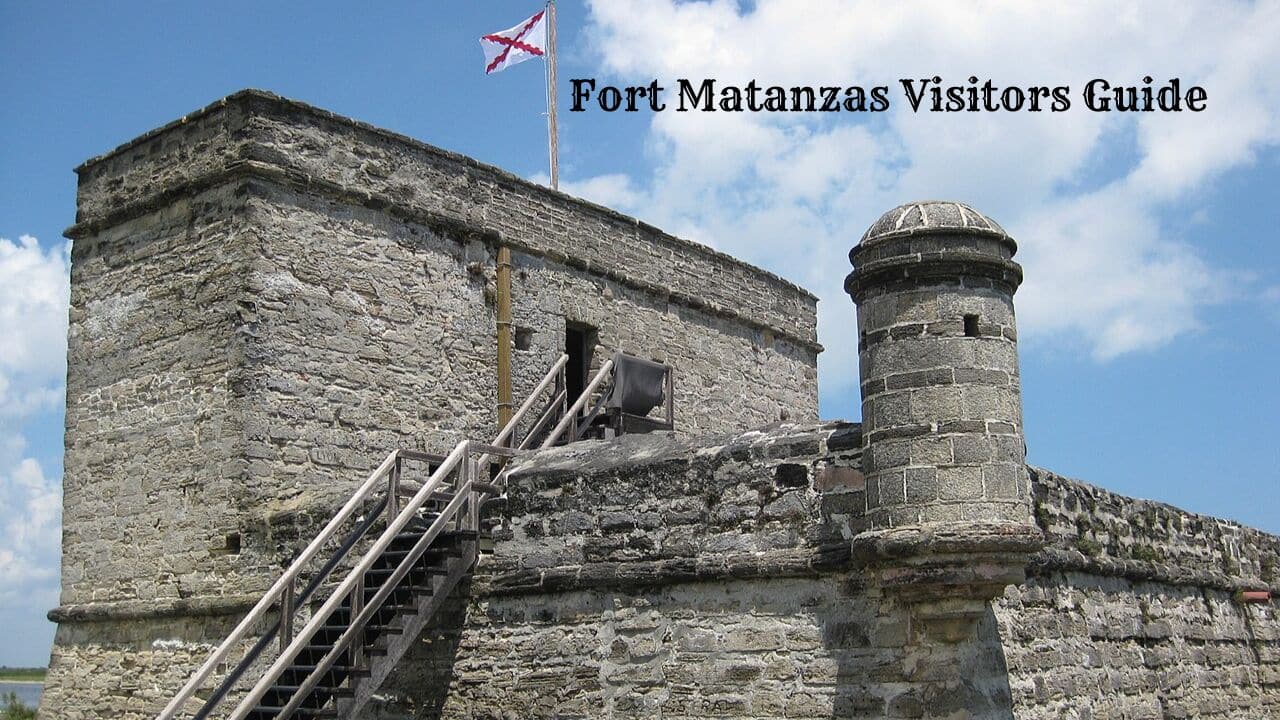
Fort Matanzas National Monument sits on a small island near St. Augustine, Florida. A Spanish watchtower has stood here since 1742.
This free national monument lets you explore an 18th-century fort, ride a ferry across the inlet, and wander through 300 acres of coastal Florida landscape. The site protects both history and nature, including salt marshes, dunes, and maritime forests.
Most travelers focus on the larger Castillo de San Marcos in downtown St. Augustine and miss this quieter gem. The fort was built to guard the southern entrance to St. Augustine from British attacks.
Beyond the historic structure, the monument includes beaches, nature trails, and wildlife viewing spots. It’s worth the short trip south of the city, especially if you want a break from the crowds.
BOOK YOUR TRIP TO FORT MATANZAS HERE
Fort Matanzas Visitor Information
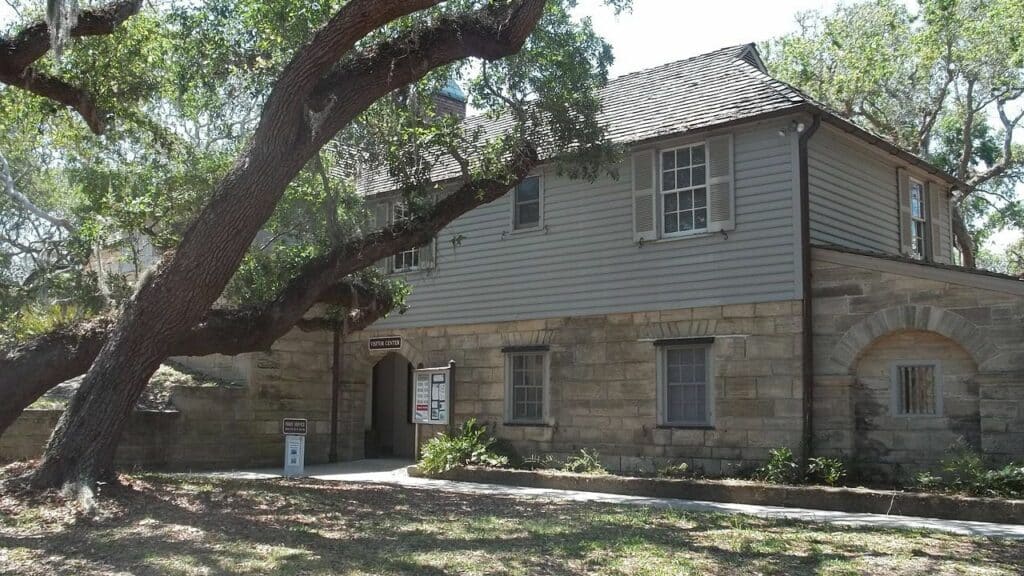
Fort Matanzas National Monument is 14 miles south of St. Augustine’s historic district. The park is open 9:00 AM to 5:30 PM every day except Thanksgiving and Christmas Day.
Entry and Ferry Access
There’s no fee to enter the park or ride the ferry to the fort. The ferry uses a boarding pass system, and you’ll need to pick up passes at the Fort Matanzas Visitor Center—first-come, first-served.
Everyone in your group needs a pass. The ferry doesn’t run on Tuesdays and Wednesdays.
Important Details
| Category | Information |
|---|---|
| Parking | Very limited, built in 1936 |
| Pets | Allowed on 6-foot leash (beach and trails only) |
| Accessibility | Visitor center, restrooms, dock, and boat are wheelchair accessible |
You’ll have to climb 15 steps to enter the fort, so it’s not wheelchair accessible. Service animals are permitted everywhere in the park, including the fort.
What to Bring
A wide-brimmed hat, sunglasses, and sunblock are a good idea for sun protection. Loose, natural fiber clothing helps you stay cool, and a jacket might come in handy in winter.
Wear shoes with good traction—avoid high heels or loose-fitting shoes on the stairs and ladder.
Crowds
Weekends, holidays, and spring field trip season are the busiest times. If you want a quieter visit, try going on a weekday or early in the morning.
BOOK YOUR TRIP TO FORT MATANZAS HERE
The History of Fort Matanzas
The story of Fort Matanzas goes back even before the fort existed. In 1565, Spanish forces killed French Huguenot soldiers at Matanzas Inlet, giving the area its name—”Matanzas” means “slaughters” in Spanish.
The Spanish built the actual fort between 1740 and 1742. They wanted to protect St. Augustine from British attacks coming through the southern waterways.
Why the Fort Was Built
British forces tried to capture St. Augustine in 1702 and again in 1740. Both times, they failed, but Florida’s governor at the time, Montiano, figured they’d try again.
The Matanzas Inlet was an unguarded backdoor to St. Augustine. Whoever controlled Florida controlled key shipping routes from the Spanish Caribbean, and the British wanted that advantage.
Construction and Materials
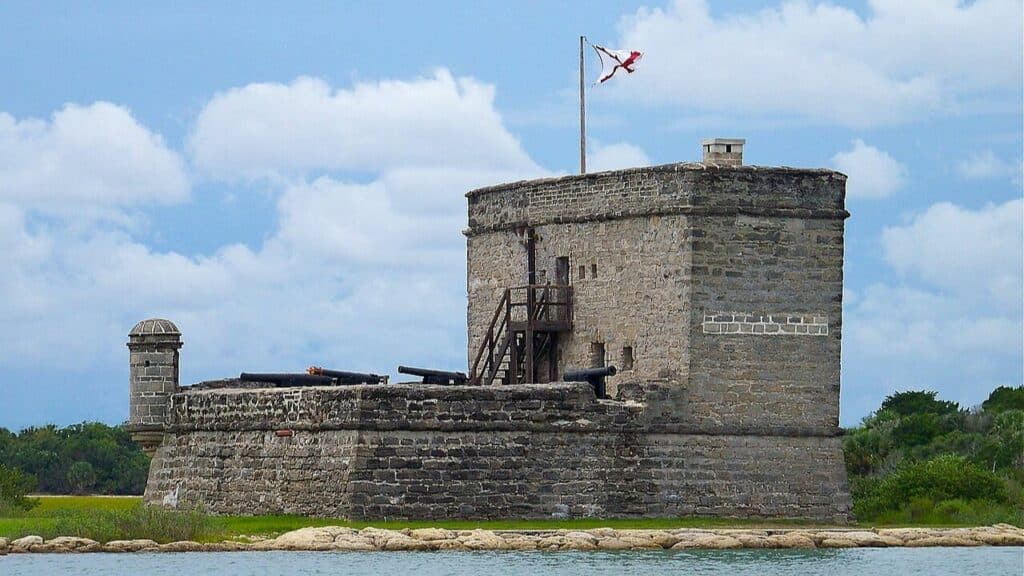
Spanish engineers built the watchtower out of coquina, a local stone made from compressed shells. The fort was finished in 1742 and served as a defensive lookout.
It stands as the only example of Spanish watchtower architecture in the continental U.S. Soldiers kept watch here for years, logging their activities and scanning the horizon for threats.
Fort Matanzas became a national monument on October 15, 1924. The protected site now includes the fort and about 100 acres of salt marsh and barrier islands along the Matanzas River.
What to See at Fort Matanzas
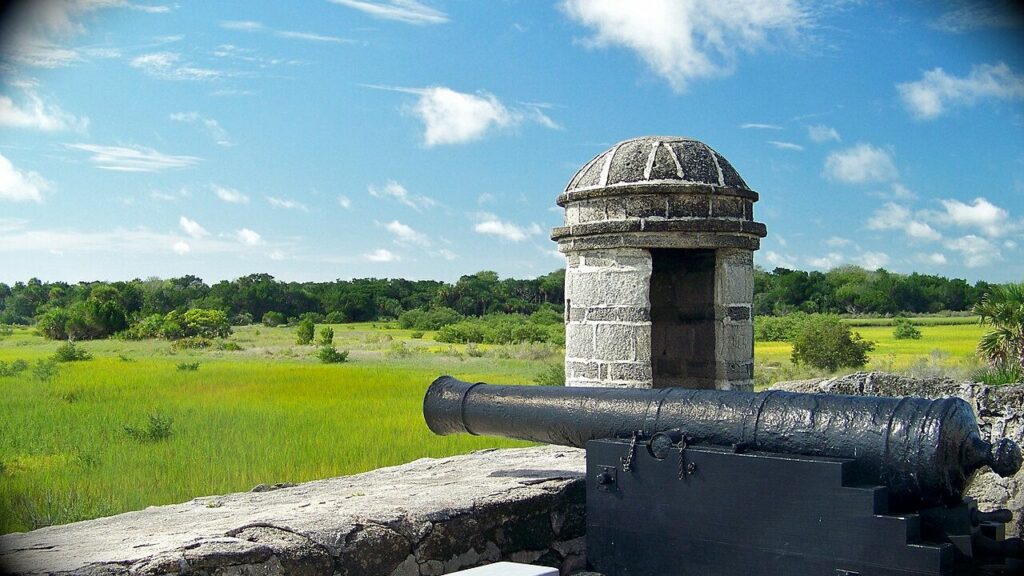
Fort Matanzas National Monument protects around 300 acres of historic and natural areas centered on the 18th-century Spanish watchtower.
You can explore the coquina stone fort, walk nature trails, and learn about Spanish colonial history through exhibits and ranger programs.
The Historic Coquina Watchtower
The fort, completed in 1742, is the main attraction. Spanish soldiers built this defensive structure from coquina, a natural limestone made from shells.
The watchtower defended St. Augustine’s southern approach from enemy ships. You’ll get there by taking a free ferry ride from Anastasia Island.
The small fort rises from Rattlesnake Island and has several levels to check out. Rangers let guests climb inside and see the gun deck, storage areas, and lookout spots.
The design is compact, reflecting its job as a watchtower rather than a full fort. You can still see original features throughout—thick coquina walls, clever defensive details, and the resourcefulness of Spanish engineers.
Matanzas River and Inlet Views
The monument sits at Matanzas Inlet, where the river meets the Atlantic Ocean. This spot offers sweeping water views in all directions.
You can stand where Spanish lookouts once watched for enemy ships. The inlet is a great place to watch boats moving between the river and ocean, and the tidal flows create ever-changing water patterns.
Marshlands stretch to the horizon, and the landscape looks much as it did centuries ago.
Visitor Center and Museum Exhibits
The visitor center is at 8635 A1A, about 15 miles south of St. Augustine on Anastasia Island. Built in 1936, it features classic National Park Service Rustic architecture.
Inside, exhibits explain the fort’s construction, the Spanish colonial era, and the site’s military role. You’ll find artifacts and panels about daily life for soldiers at this remote outpost.
The center also handles orientation and ferry boarding passes for trips to the fort.
Nature Trails and Coastal Ecosystems
The monument protects a mix of dunes, maritime forests, and salt marshes. Over 250 plant species grow within the park.
Trails wind through these habitats, letting you experience different parts of the coastal environment. You might spot threatened or endangered species in their natural homes.
Maritime forests here have live oaks, red cedar, and other salt-tolerant trees. Boardwalks and paths make it easy to explore while protecting sensitive plants.
The trails are good for spotting shorebirds, wading birds, and marine life in the marshes and tidal areas.
Ranger Programs
Park rangers lead programs that bring the fort’s history to life. They talk about Spanish colonial military tactics, fort construction, and the strategic importance of the Matanzas Inlet.
Rangers offer demonstrations and answer questions throughout the day. School groups come for field trips, and the Junior Ranger program gets kids involved with hands-on activities about history and ecology.
There are also distance learning options for those who can’t visit in person. Volunteers help rangers with programs and visitor services.
Taking the Ferry to Fort Matanzas
The Fort Matanzas ferry gives free rides to the historic fort from the Visitor Center dock. It runs Thursday through Monday, with no service on Tuesdays or Wednesdays.
You’ll need to get boarding passes at the Visitor Center before riding the ferry.
Ferry Schedule (Thursday – Monday)
The ferry departs at these times, weather permitting:
- 9:30 AM
- 10:30 AM
- 11:30 AM
- 1:30 PM
- 2:30 PM
- 3:30 PM
Each ferry fits 30 passengers, first-come, first-served. Everyone—including babies—needs a boarding pass.
Passes are only good for the day you get them and can’t be reserved ahead of time or by phone. Tours often fill up before 11:00 AM, so it’s smart to arrive early.
Boarding pass holders must show up 10 minutes before their scheduled tour, or their seats may go to someone else.
Important Rules
No food or drink is allowed on the boat or at the fort, but you can bring water. Pets aren’t allowed on the ferry, at the fort, or in park buildings, but service animals are welcome everywhere.
The whole ferry trip takes about 45 to 55 minutes. Ferry service may be canceled at any time due to lightning or high winds.
The park is open from 9:00 AM to 5:30 PM daily except Thanksgiving and Christmas Day.
Things to Do at Fort Matanzas National Monument
Visiting Fort Matanzas gives you a mix of history and nature. The main draw is the historic fort, a coquina watchtower from 1742 that guarded St. Augustine’s southern approach.
Ferry Tours to the Fort
The only way to reach the fort is by taking the free ferry from the visitor center. Tours leave at 9:30, 10:30, 11:30, 12:30, 1:30, 2:30, and 3:30.
Each trip includes a ranger program about the fort’s history and why it mattered.
Nature Exploration
The monument protects around 300 acres of coastal environment. You can walk the nature trail through maritime forest, dunes, and marsh areas.
The park is home to many native plants and animals, including some that are threatened or endangered.
Self-Directed Activities
You’re free to explore at your own pace. Families can try the Junior Ranger program, which teaches kids about the fort and its ecosystem.
A virtual tour is available for those who’d rather explore digitally.
Wildlife Watching
The park’s varied habitats make it a good spot for birdwatching and observing coastal wildlife. Marshes and forests attract a range of species year-round.
Admission to Fort Matanzas National Monument is totally free. The park opens at 9 a.m. and closes at 5:30 p.m. daily, except Thanksgiving and Christmas Day.
Pick up ferry tickets at the visitor center, and plan to spend a couple of hours exploring the fort and the natural areas around it.
Is Fort Matanzas Worth Visiting?
Fort Matanzas National Monument offers a blend of history, nature, and a bit of adventure. Most travelers will find it’s worth a visit.
The park has free admission and free ferry rides to an 18th-century Spanish watchtower on a barrier island. You can explore the original coquina stone fort, completed in 1742, which once protected St. Augustine from attacks coming from the south.
The ferry ride adds a sense of adventure. Once at the fort, you can climb the stairs, check out the interior, and learn about Spanish colonial defense strategies.
What makes Fort Matanzas valuable:
- No entrance fees or ferry costs
- Access to 300 acres of protected coastal environment
- Nature trails through maritime forests
- Beach access for walking and wildlife viewing
- Less crowded than other St. Augustine attractions
- Educational opportunities about Spanish colonial history
The monument is great for families, history buffs, and nature lovers. Kids usually love the boat ride and exploring the small fort. Birdwatchers appreciate the variety of species in the protected habitats.
But keep in mind—the ferry doesn’t run on Tuesdays and Wednesdays. Boarding passes are first-come, first-served and often run out by 11 a.m. on busy days.
The parking lot is tiny and fills up fast, especially on weekends and holidays. The fort isn’t wheelchair accessible because of the fifteen steps at the entrance.
Plan for sun exposure and bring the right clothing. Most people spend two to three hours here, including the ferry ride and time at the fort.
Tips for Visiting Fort Matanzas
If you want to visit Fort Matanzas, get there early. Ferry passes usually run out by 11 a.m., and they’re free, but you have to grab them at the Fort Matanzas Visitor Center.
Every person in your group needs their own pass, so don’t forget to pick up enough for everyone.
The ferry doesn’t run on Tuesdays or Wednesdays. So, if you’re hoping to see the fort up close, plan your trip between Thursday and Monday.
What to Wear
Honestly, the Florida sun can be brutal. A wide-brimmed hat, sunglasses, and sunblock are your friends. Loose, breathable clothes—think cotton or linen—help a lot. In winter, toss a light jacket in your bag just in case.
Skip high heels or loose shoes; you’ll be dealing with stairs and even a ladder at the fort.
Parking Considerations
The parking lot’s been around since 1936, and it’s tiny. It fills up fast, especially during weekends or holidays. If you’re driving a bus or RV, you’ll need to find somewhere else to park—there just isn’t space for big vehicles here.
Pet Policies
Leashed pets (six feet, please) can tag along on the beach and trails. But only service animals can go inside the visitor center, on the ferry, or into the fort itself. Always clean up after your pets, and never leave them in your car—Florida heat is no joke.
Accessibility Information
Wheelchair users can access the visitor center, restrooms, dock, nature trail, and ferry boat. The fort, though, has fifteen steps at the entrance, so it’s not wheelchair accessible. Service animals can go anywhere visitors are allowed.
Nearby Attractions
Fort Matanzas National Monument sits right along Florida’s Atlantic coast. There are several worthwhile destinations close by, so you can easily explore more than one spot in a single trip.
The Guana Tolomato Matanzas National Estuarine Research Reserve has nature trails and lots of wildlife to see. This protected area really shows off Florida’s coastal ecosystems.
Matanzas State Forest gives you even more hiking and outdoor recreation options. If you want to spend more time outdoors, it’s a solid choice.
Beach Access
Matanzas Beach sits directly across from the monument entrance on A1A and offers ocean access. There’s a parking lot for beachgoers, but it’s smart to check the current status since some areas close now and then for repairs.
The beach near Matanzas Inlet has another access point with a walkover ramp. It’s a quick stroll and usually pretty quiet.
Nearby Parks
Faver-Dykes State Park is close to Fort Matanzas and features both historic structures and natural areas. You can visit both parks in a single day if you’re into exploring the region’s history and environment.
St. Augustine Area
The historic city of St. Augustine is just 14 miles north. You’ll find colonial architecture, museums, restaurants, and shops.
The St. Augustine, Ponte Vedra & The Beaches Visitors and Convention Bureau has info on places to stay and things to do throughout the area.

Cory is a website owner and content creator who enjoys fishing, history, coin collecting, and sports, among other hobbies. He is a husband and father of four.
Romans 15:4 For whatever was written in former days was written for our instruction, that through endurance and through the encouragement of the Scriptures we might have hope.