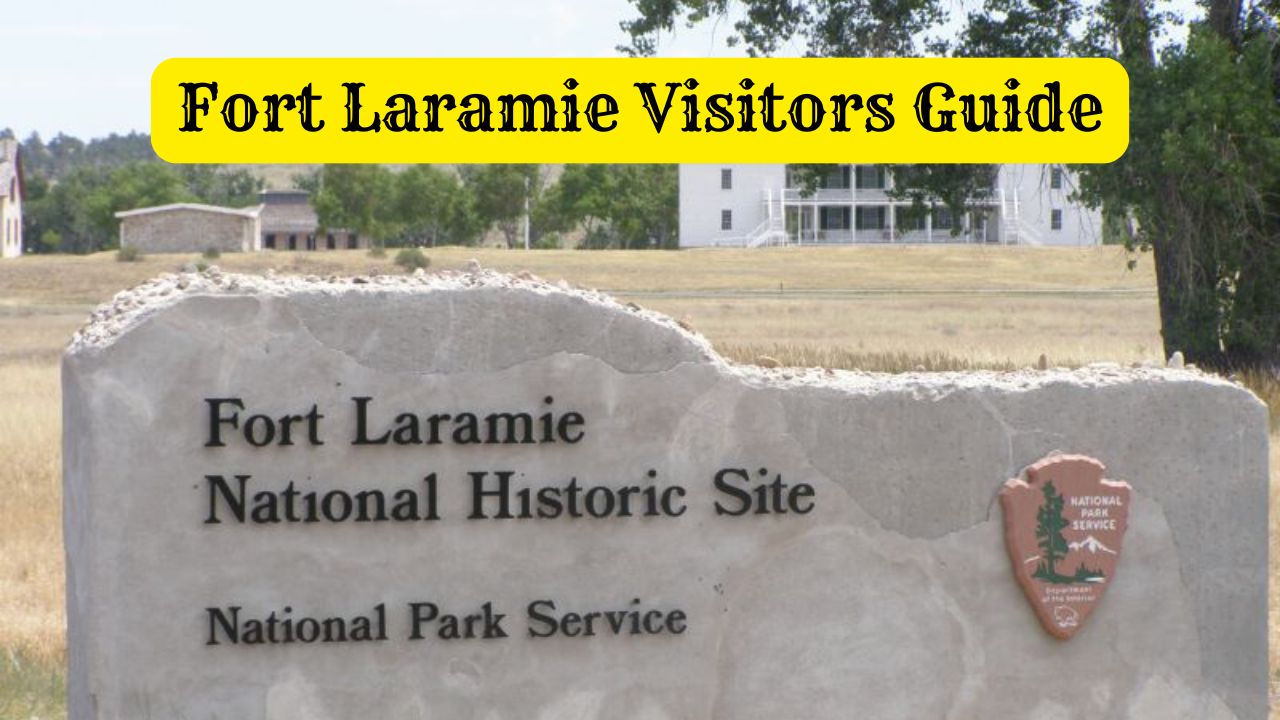
Fort Laramie National Historic Site stands out as a major landmark in the story of westward expansion. From 1834 to 1890, it served as a fur-trading post, a military installation, and a meeting ground for diplomacy.
You’ll find it at the confluence of the Laramie and North Platte Rivers in Wyoming. Over the years, emigrants, traders, soldiers, and Native American tribes all crossed paths here.
The fort started as a private trading post. It eventually became the largest military installation on the Northern Plains.
Major events unfolded here—treaty negotiations, conflicts, and moments that shaped the American West.
Today, you can walk through preserved buildings and get a sense of the diverse people who passed through. The site gives a glimpse into military life, pioneer hardships, and the tangled history of territorial expansion.
BOOK YOUR TRIP TO FORT LARAMIE HERE
Fort Laramie Visitor Information
Fort Laramie National Historic Site is open every day from 8:00 AM to 4:30 PM. You can visit year-round to explore the buildings and grounds.
The Visitor Center sits inside the restored 1884 Commissary Storehouse. Here, you can watch an 18-minute orientation film and check out museum exhibits.
The Fort Laramie Historical Association runs a bookstore inside the Visitor Center.
Key Details:
- Entrance Fee: Free admission
- Location: Fort Laramie, Wyoming
- Operating Hours: 8:00 AM – 4:30 PM daily
- Visitor Center: Located in the 1884 Commissary Storehouse
Check at the Visitor Center or entrance kiosk for the day’s ranger programs. Rangers lead interpretive talks and answer questions about the site’s history.
You can take a self-guided tour of the historic buildings and grounds. Maps and info are available at the Visitor Center to help you plan your visit.
For up-to-date park info, call (307) 837-2221. Park staff can fill you in on conditions, special events, and any closures.
The site is easy to reach by car, and there’s parking near the Visitor Center. Give yourself enough time to explore the historic structures and soak in Fort Laramie’s role in western expansion.
History of Fort Laramie
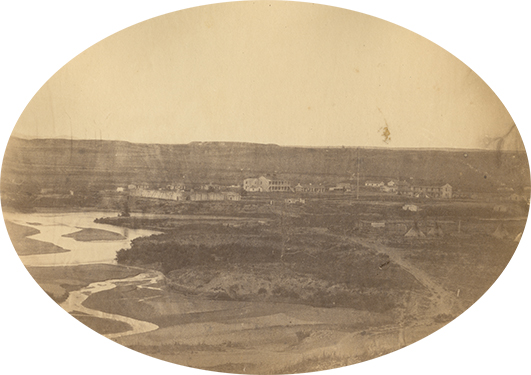
Fort Laramie sits at the confluence of the Laramie and North Platte Rivers in southeastern Wyoming. Its story began in 1834 as a private fur-trading post, first called Fort William and later Fort John, on the Laramie River.
The fort changed hands and purposes over the years. At first, it was a hub for fur trappers and buffalo robe traders.
The spot was perfect for commerce with Native American tribes and mountain men passing through.
Major Periods of Fort Laramie:
- 1834-1849: Private fur trading post
- 1849-1890: U.S. Army military garrison
In 1849, the U.S. Army bought the post and turned it into a military installation. For 41 years, Fort Laramie was the biggest Army post on the Northern Plains.
It became a vital supply point, a communications hub, and a logistics center during the westward push.
Emigrants on the Oregon, California, and Mormon Trails stopped here to rest and resupply. Trappers, traders, Native Americans, missionaries, soldiers, miners, ranchers, and homesteaders all mingled at this crossroads.
The Army left Fort Laramie in 1890 after 56 years of activity. Now, the National Park Service preserves the remaining structures as Fort Laramie National Historic Site.
BOOK YOUR TRIP TO FORT LARAMIE HERE
Landmarks and Sights
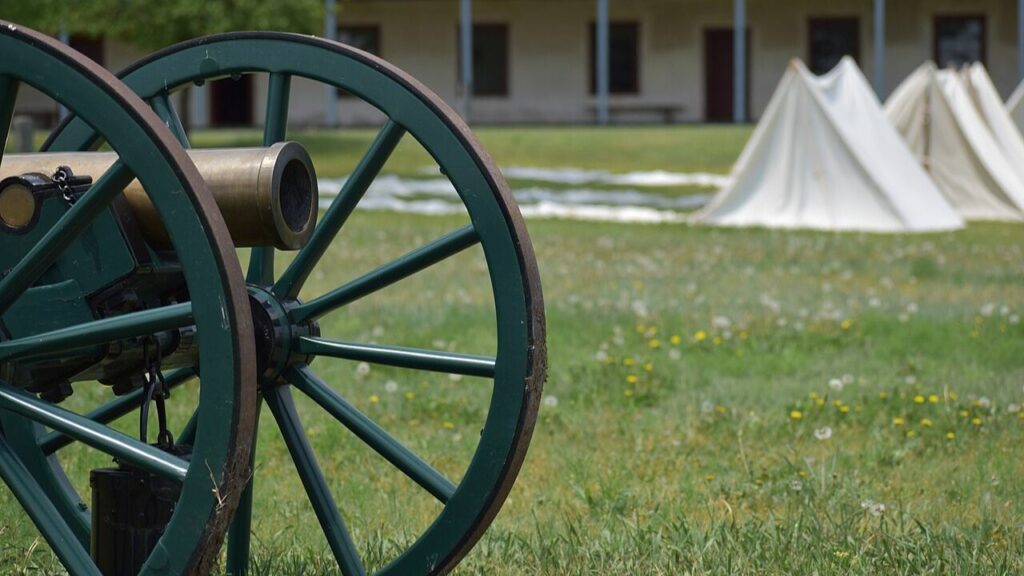
Fort Laramie National Historic Site preserves original and reconstructed buildings from the 1800s. You can see the fort’s journey from its 1834 trading post roots to its final days as the largest military installation on the Northern Plains.
The Restored Historic Buildings
The fort has 22 original structures, all carefully preserved to show different periods of its history. These buildings highlight a mix of architectural styles and construction methods from the 19th century.
Walk among adobe, wood frame, and stone buildings that once housed soldiers, officers, and their families. The National Park Service keeps these buildings in shape to show what daily life was like back then.
Many structures still have original features—wooden floors, old window frames, and door hardware. Some rooms are furnished with period pieces and displays that explain their use.
In summer, park rangers dress in period clothing and demonstrate historic skills. The restored buildings focus on the fort’s busiest years, from 1849 to 1890.
Officers’ Quarters
The Officers’ Quarters show the hierarchy and social structure of frontier military life. These duplex-style homes gave two officer families separate living spaces, with several rooms and nicer finishes than the enlisted quarters.
Inside, you’ll find period furniture, personal items, and household goods typical for officer families out West. Take a look at the dining rooms, parlors, bedrooms, and kitchens to get a feel for daily routines and the effort to keep up eastern standards in a remote spot.
Old Bedlam
Old Bedlam, built in 1849, is Wyoming’s oldest military building. It started as the post headquarters and bachelor officers’ quarters.
The building got its nickname from the lively social gatherings held there. With its wrap-around porch and sturdy, simple construction, Old Bedlam is a classic example of early military architecture on the plains.
It later became officers’ housing, with separate apartments for multiple families. Its long service and solid preservation make it a standout landmark at the site.
Parade Ground
The Parade Ground is the open space at the heart of the fort. Here, soldiers drilled, formed up, and held ceremonies.
The field’s size and layout follow typical Army post planning of the era. You can walk where soldiers once trained and took part in formal events.
Buildings surround the Parade Ground, forming the fort’s classic quadrangle. Interpretive markers point out building locations and explain the ground’s role in military life.
Museum and Visitor Center
The Museum and Visitor Center is in the restored Commissary Storehouse at the entrance. Inside, you’ll find exhibits covering the fort’s full history—from fur trading days to military occupation and beyond.
See original artifacts, photos, documents, and interpretive panels. The museum displays military gear, Native American items, personal belongings, and tools used at the fort.
The center offers orientation films and schedules for ranger-led programs. Staff can provide maps, brochures, and tips for self-guided tours.
Exhibits focus on the interactions between military personnel, traders, emigrants, and tribal nations. You’ll also see displays about treaty negotiations, conflicts, and the fort’s role on the emigrant trails.
Activities and Experiences
Fort Laramie National Historic Site gives you plenty of ways to engage with western history. During summer, the site stays open longer, from late May through early September.
Guided ranger programs run daily at 11:00 am and 2:00 pm in summer. These talks cover big historical themes and rotate locations around the fort.
Living history presentations bring the 1800s to life, with staff dressed in period attire. These informal programs happen daily from 9:30 am to 5:00 pm at different spots around the park.
Black powder demonstrations—think historic firearms and cannons—usually take place on Saturdays and Sundays at 12:30 pm and 2:30 pm, depending on staff availability.
Walking and Hiking Options:
- Historic building paths with wayside exhibits
- Confluence Trail: a 1.6-mile loop from the Old Army Bridge to the river confluence
- Gallery forest exploration along the riverbanks
The Junior Ranger Program is open to all ages. The activity book, created with Guernsey State Park, helps you learn fort history through hands-on exercises.
You can fish in the Laramie River, but only outside the historic area. Check at the Visitor Center for approved fishing spots before you cast a line.
Biking isn’t allowed within the fort grounds. Both rivers run fast and can be deep in places, so use caution near the water.
Is It Worth Your Visit?
If you’re headed through southeast Wyoming or just curious about frontier history, Fort Laramie National Historic Site is worth a stop.
There’s no admission fee, and the site gives you a real look at a military post that shaped the region from 1834 to 1890.
Explore restored buildings and ruins that tell the story of westward expansion and Native American relations. The visitor center has a small museum and film to set the stage before you wander the grounds.
The real magic is walking through the actual structures—standing where soldiers, traders, and travelers once lived and worked. You’ll find:
- Free entry to all buildings and grounds
- Well-preserved historic structures and exhibits
- Friendly, knowledgeable staff ready to chat
- A gift shop with books and resources
- Freedom to explore at your own pace
Plan on at least two hours for a solid visit, but history buffs might want to linger. Old Bedlam and the Old Guardhouse are especially intriguing for a look at military life on the Northern Plains.
Fort Laramie is a bit off the main highways, so you’ll need to make a deliberate detour. That means fewer crowds, but also a bit more travel time. Weather can be a factor, since most buildings are separate and spread out across the grounds.
If you’re passing through the area or love American frontier history, Fort Laramie offers a lot of educational value for free. It fits well as part of a bigger Wyoming road trip rather than as a single destination.
Travel Tips
Fort Laramie National Historic Site is about 125 miles southeast of Casper, Wyoming. Since it’s in a rural area with few services, plan your route ahead of time.
You can make your visit quick—about 30 minutes—or stretch it out to 3-4 hours for the full experience. The Visitor Center has an audio tour you can download to your phone to enhance your self-guided walk.
Best practices for visiting:
- Arrive early in summer to beat the afternoon heat
- Bring water and snacks, since dining options are scarce nearby
- Wear comfortable shoes for exploring the grounds
- Check the park’s official website for current hours before you leave
- Download the audio tour at the Visitor Center for best results
The site sees big temperature swings. Summers can reach 90°F, while winters are cold and may bring snow. Spring and fall usually offer the most comfortable weather for exploring.
Fort Laramie town is tiny, so fill up your gas tank and grab supplies in larger towns like Torrington or Wheatland before you arrive. Cell service can be spotty around the historic site.
If you want to extend your trip, nearby Laramie has more attractions, places to stay, and restaurants. It’s a good base for exploring the region and offers everything travelers might need.
Nearby Points of Interest
Fort Laramie sits in southeastern Wyoming, close to a surprising number of historical and natural attractions. This region mixes pioneer history with plenty of outdoor options.
Historic Sites
Wyoming has several state historic sites just a short drive from Fort Laramie. Oregon Trail Ruts State Historic Site is only 15 miles away.
Here, you can see wagon-wheel ruts carved deep into the sandstone—thousands of emigrants left their mark on the land.
Register Cliff State Historic Site is about 16 miles from the fort. The cliff is covered in names scratched by pioneers who traveled through in the mid-1800s. It’s a little humbling to see those old signatures still there.
Guernsey State Park sits 15 miles out and has its own slice of Oregon Trail history. Plus, there’s camping, boating, and fishing if you’re looking for a break from the past.
National Park Service Sites
The National Park Service looks after a few spots within driving distance. Scotts Bluff National Monument is 52 miles out, and you can’t miss its dramatic rock formations. Emigrants once used them as a guidepost on their journey west.
Agate Fossil Beds National Monument, 78 miles from Fort Laramie, keeps ancient mammal fossils from the Miocene epoch safe for curious visitors. If you’re into prehistoric stuff, this place is worth the trip.
Recreation Areas
Glendo State Park and Hawk Springs State Recreation Area are both 54 miles from the fort. They offer modern facilities for water sports, camping, and general unwinding.
The Laramie River, not far from the fort, has fishing spots outside the historic grounds. Before heading out, it’s best to check with the visitor center about where you’re allowed to fish. Rules can change, and nobody wants a surprise ticket.
Conclusion
Fort Laramie stands out as one of the most important sites in the story of the American West. It started as a fur trading post way back in 1834 and eventually became the largest military garrison on the Northern Plains.
The fort sits right where the Laramie and North Platte Rivers meet in southeast Wyoming, which made it a strategic spot. For over half a century, all kinds of people—trappers, traders, Native Americans, missionaries, emigrants, soldiers, and settlers—crossed paths here.
Key Historical Functions:
- Trading Hub – Central location for fur trade operations
- Military Outpost – Main garrison protecting emigrant routes
- Communication Center – Junction for the Pony Express and transcontinental telegraph
- Treaty Site – Place where major agreements in 1851 and 1868 happened
The treaties signed at Fort Laramie tried to settle conflicts between the U.S. government and Plains tribes. The 1868 treaty with the Lakota and Arapaho nations, in particular, changed the relationship between indigenous people and American expansion.
Today, you can visit Fort Laramie National Historic Site to see the remaining buildings and artifacts.
The National Park Service maintains the grounds, letting visitors wander through history and get a feel for the complex interactions that took place here.
The fort’s story still echoes with the hopes of westward settlers and the determination of Native Americans defending their lands.

Cory is a website owner and content creator who enjoys fishing, history, coin collecting, and sports, among other hobbies. He is a husband and father of four.
Romans 15:4 For whatever was written in former days was written for our instruction, that through endurance and through the encouragement of the Scriptures we might have hope.